
To Promote Community Empowerment, Government Expands Social Assistance Digitalisation
Through Pro-Kesra, the government seeks to change the paradigm of social assistance into an empowerment ecosystem. The utilisation of public digital infrastructure and artificial intelligence (AI) is one strategy to make services more targeted, integrated, and impactful.
Chair of the Government Digital Transformation Acceleration Committee, Luhut Binsar Pandjaitan, stated that expanding the function of social assistance digitalisation can transform the face of government services while driving budget efficiency.
“Digital transformation through the adoption of public digital infrastructure and artificial intelligence as a catalyst for national priority programmes to realise better governance,” Luhut explained in a written statement on Tuesday (12/5/2026).
This was conveyed by Luhut at the Ministerial-Level Meeting on Expanding the Scope of Social Assistance Digitalisation and Empowerment at the National Development Planning Agency (Bappenas) Office in Jakarta on Monday (11/5).
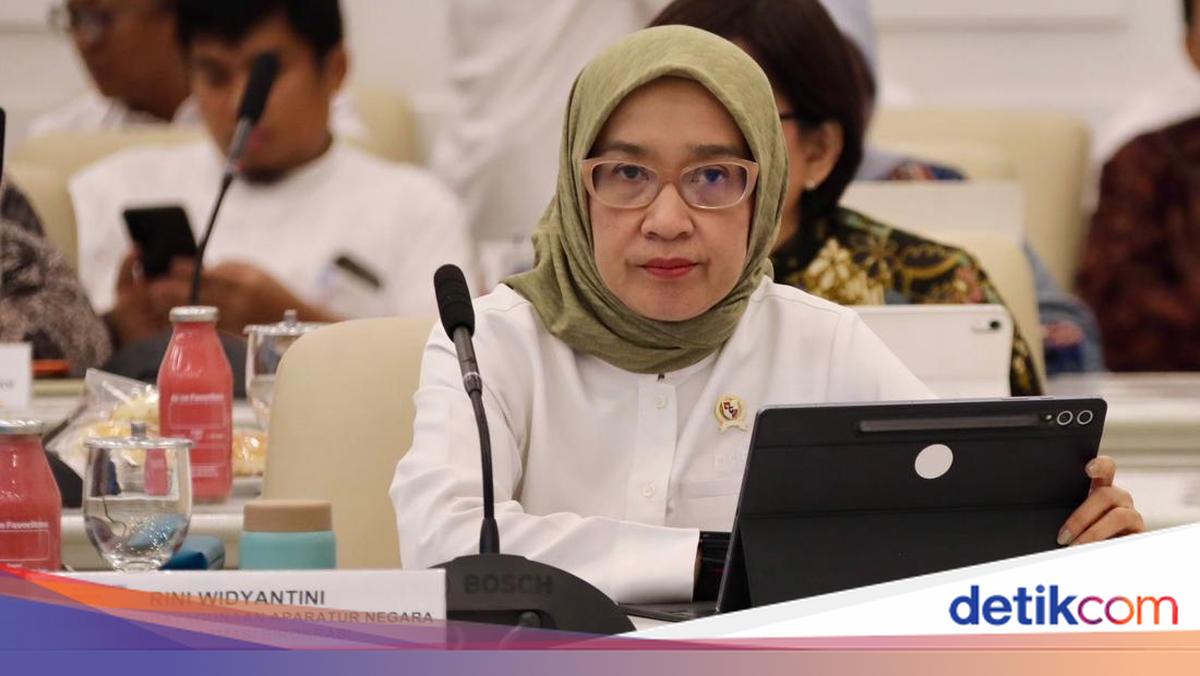
Meanwhile, Minister of State Apparatus Utilisation and Bureaucratic Reform (PANRB), Rini Widyantini, said the social assistance transformation aims to ensure that social aid is not just temporary assistance but also a driver of community independence.
According to Rini, this independence is driven through integrated, precise, and sustainable public services. The government will also tailor services to the needs and characteristics of citizens.
She stated that one strategic step taken is the updating and verification of cross-sectoral data in real-time. This way, government services are expected to be simpler, easier to access, and inclusive.
“Thus, access to services is simpler, easier to understand, and inclusive for all,” Rini remarked.
Rini explained that integrated verification and authentication are carried out to accelerate the service process. The implementation of this programme will be done gradually, in stages, and sustainably.
The Ministry of PANRB will strengthen the programme from the governance and regulatory harmonisation side. Rini also mentioned that the Ministry of PANRB together with Bappenas facilitates the alignment of services and service standards across ministries/institutions managing the Welfare Card and Business Card.
“Its implementation will be expanded gradually towards a national scale that has an impact,” Rini emphasised.
Head of Bappenas/Minister of National Development Planning, Rachmat Pambudy, said Pro-Kesra supports the independence of poor and vulnerable communities through economic empowerment. On a macro level, the programme aims to accelerate poverty graduation so that communities can work and earn.
For business empowerment, the programme includes capacity enhancement, market access, financing or capital access, and partnership access. Meanwhile, for work capacity strengthening, the benefits include training or mentoring, job placement access, and apprenticeship access.
The follow-up of this programme will be carried out through the Social Welfare Information System (SIKS) and the UMKM Service Application System (Sapa UMKM). In general, the target of Pro-Kesra is poor communities and vulnerable groups, including women, the elderly, disaster victims, and people with disabilities.
Source: jawawa.id (https://jawawa.id/newsitem/to-promote-community-empowerment-government-expands-social-assistance-digitalisation-1778561568)
Originally published by detikcom (https://news.detik.com/berita/d-8485381/dorong-pemberdayaan-masyarakat-pemerintah-perluas-digitalisasi-bansos), translated from Indonesian