
To Prevent Recurring Train Collisions, KAI Chief Plans to Implement New Technology
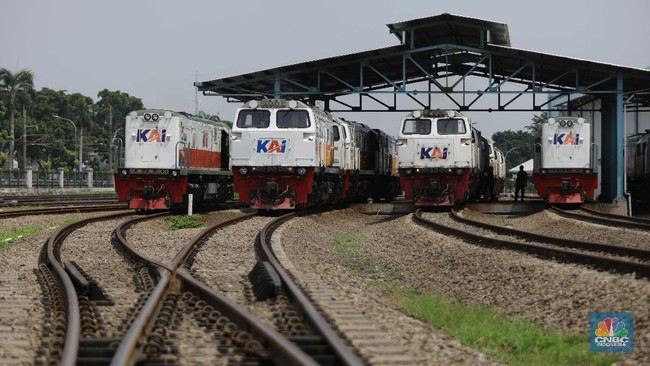
PT Kereta Api Indonesia (Persero) is preparing to implement new technology to improve train travel safety and mitigate the risk of collisions between trains. The proposed technology is Automatic Train Protection (ATP), a system that enables automated monitoring and protection of train journeys.
The President Director of PT KAI (Persero), Bobby Rasyid, stated that currently, the final layer of protection in conventional train operations rests with the train driver. Consequently, the company is planning the implementation of technology that can provide additional protection against potential accidents.
“We are currently planning the implementation of technology called Automatic Train Protection (ATP). At present, the last protection or last defence for train journeys lies with the driver. However, if we look at the LRT, it operates at Grade of Automation (GoA) 3, which is driverless, where computers provide protection against potential train collisions,” Bobby said during a Hearing with Commission VI of the Indonesian House of Representatives (DPR RI) at the Parliament Complex, Jakarta, on Wednesday (3/6/2026).
He noted that this concept has already been applied in modern transport systems such as the Jabodebek LRT, which uses computers to monitor and control train movements to minimise collision risks. “For conventional trains, we are currently planning this, which we refer to as Automatic Train Protection,” he added.
Bobby explained that KAI is considering two technological approaches. The first is a conventional or legacy system that relies on wayside equipment and onboard devices. In this system, sensors are installed on both the train sets and along the tracks to monitor the position and movement of trains in real time. “This will certainly be expensive, heavy, and will take a long time to implement,” he explained.
In addition to the conventional system, KAI is also considering the use of more advanced technology based on satellites and wireless communication. This technology is known as the Future Railway Mobile Communication System (FRMCS), which is being developed in various countries as the next generation of railway communication systems. “There is new technology based on satellites and wireless, the technology we call FRMCS, Future Railway Mobile Communication System,” he concluded.