
To Prevent Landfill Fires, Deputy Environment Minister Calls for Treated Wastewater to Be Used
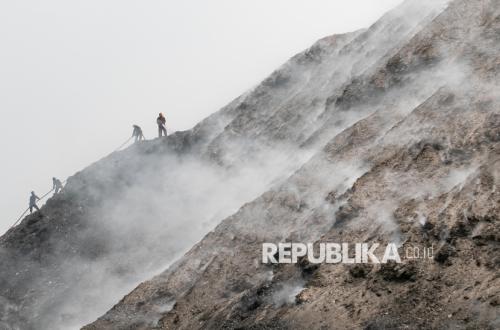
Deputy Minister of Environment/Deputy Head of the Environmental Control Agency (KLH/BPLH), Diaz Hendropriyono, has called for treated wastewater to be used to dampen waste piles at final disposal sites (TPA). The use of such water is considered capable of helping to prevent landfill fires, particularly when waste piles are high and the weather is hot.
“I see that this landfill already has an IPAL (wastewater treatment plant). This IPAL is already well managed, so how can we use the water managed at this IPAL as a water source for regularly wetting the landfill,” said Diaz during an inspection of the Sambutan landfill in Samarinda, East Kalimantan, on Monday (14/9/2026).
Diaz’s visit was conducted to review the implementation of Circular Letter of the Minister of Environment Number 11 of 2026 on Enhancing Preparedness and Anticipation of Fires at Landfills During Extreme Hot Weather Conditions. The circular is addressed to regional governments, particularly governors, regents and mayors, to improve preparedness against the potential for fires at landfills.
“We are currently experiencing El Niño and global warming, so fires can occur more easily. With the circular from the Minister of Environment, regional governments are directed to wet the accumulated waste at landfills,” said Diaz.
Diaz also reminded of the safety of waste pickers working in the landfill area. Waste pickers were asked to avoid active zones or high waste mounds to reduce the risk of accidents.
“Regarding the waste pickers, please pay close attention. There must be no waste pickers in the active zone; their safety must be a priority for all of us. I am confident the province and city also have an interest in ensuring the safety of waste pickers, so let us together pay attention to the safety of Samarinda residents who work at the landfill,” said Diaz.
The Sambutan landfill has two zones. The first zone has been closed in line with the ban on open dumping practices, while the second zone began operating in July 2026 using a controlled landfill system.
The Sambutan landfill is also preparing a 10-hectare site for the construction of a Waste-to-Energy (PSEL) facility. The facility is planned to be capable of processing waste with a capacity of less than 1,000 tonnes per day once regulations are in place to facilitate it.