
To Prevent Illegal Levies, Wayan Koster Promotes Digitalisation of Public Services in Bali
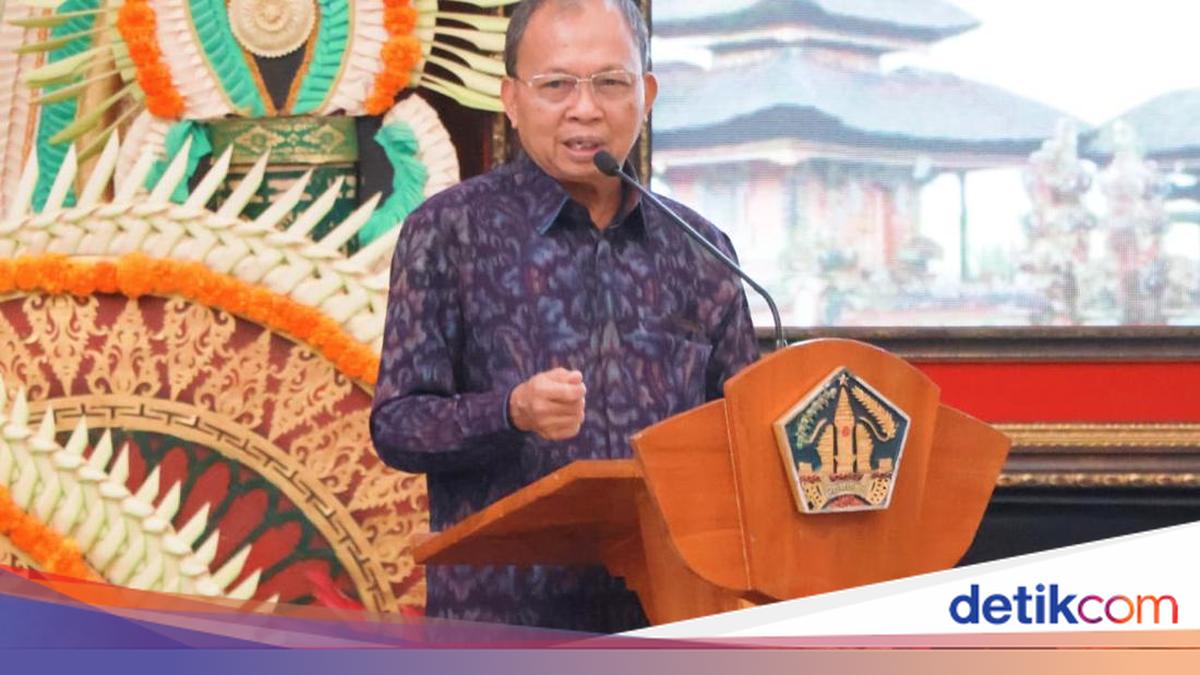
Bali Governor Wayan Koster is encouraging the implementation of digital-based public services. This move aims to accelerate service access while narrowing the space for illegal levies (pungli) to occur.
This step is part of the Bali Provincial Government’s efforts to build a clean, accountable, transparent, and corruption-free governance system. Koster believes that digitalisation can reduce interactions that potentially open doors to misconduct, while simultaneously increasing the effectiveness and transparency of services. However, he emphasised that a good system must still be supported by the integrity of the individuals operating it.
“No matter how good our digital system is, if the individuals lack integrity, it will all be in vain. That is why the role of the family is crucial in monitoring their partners, especially if they hold official positions,” Koster stated on Monday (21/9/2026).
These remarks were made during the Technical Guidance for Families of Integrity, organised by the Corruption Eradication Commission (KPK) RI in collaboration with the Bali Provincial Government at the Wiswa Sabha Utama Building, Bali Governor’s Office, Denpasar, on Wednesday (16/9).
From an institutional perspective, Koster asserted that the Bali Provincial Government has long committed to clean, accountable, transparent, and corruption-free governance oriented towards improving public service quality. This commitment is being realised through bureaucratic reform, including the simplification of the government structure by reducing the number of Regional Apparatuses from 49 to 38. Appointments are also conducted using a merit system based on competence, achievement, and administrative requirements.
“Appointments are made through a merit system, so they are truly based on achievement, administrative completeness, and purely without any ‘pay-to-play’ system,” said Koster.
In addition to strengthening the government system, Koster believes that corruption prevention must begin within the family environment. He expressed full support for the Family of Integrity Programme initiated by the KPK.
He noted that corruption prevention efforts should not only be carried out through the strengthening of government systems but must also start within the family as the primary place for the formation of character, honesty, and integrity.
“Family involvement is very important and is the key to character building from an early age. Therefore, I am very interested if the Family of Integrity Programme is instilled by all parties. Not only in the civil service and private sectors, but all groups must be involved. Let us start with ourselves,” Koster emphasised.
Koster added that families play a vital role in building healthy and responsible lifestyles, including managing finances according to one’s means. He noted that a balance between income and expenditure is essential to avoid economic pressures that could create openings for corrupt behaviour.
“If 10 comes in, let us use 8 so that the remainder can be saved. Do not let 10 come in, but let the expenditure exceed 10. You will then struggle to find a way to cover it, leading to risk and pressure,” he said.
Meanwhile, the Deputy Chairman of the KPK RI, Ibnu Basuit Widodo, emphasised the importance of the family as the primary environment for instilling anti-corruption values, including honesty, responsibility, simplicity, care, morality, and ethics.
According to Ibnu, a simple lifestyle is a crucial part of building a family of integrity. Every family member is expected to live according to their legitimate means and income, and not to let lifestyle and luxury become demands that place pressure on other family members.
Ibnu explained that families hold a strategic position as the first social environment that shapes an individual’s character, values, and behaviour. The family is the first place to instil honesty, responsibility, discipline, and integrity, while also influencing how a person thinks, makes decisions, and faces temptation.
Consequently, a family can serve as a fortress of integrity, but it can also potentially become a source of pressure or an entry point for corruption if integrity values are not maintained. Every family member is expected to perform a monitoring function by reminding one another and not making demands that push other family members towards misconduct.
In the effort to eradicate corruption, the KPK implements three strategies known as the ‘Trisula Pemberantasan Korupsi’ (Three-Pronged Corruption Eradication): community education to build an anti-corruption culture; prevention to close corruption loopholes through system and governance improvements; and enforcement through legal processes and state asset recovery.
The Family of Integrity Programme is part of the community education strategy, positioning the family as the foundation of corruption prevention. Through the family, values of honesty, responsibility, simplicity, and care are expected to be not only understood but applied in daily life.
During the event, data on the handling of corruption crimes in Indonesia was also presented. As of April 2026, a total of 1,996 perpetrators of corruption crimes based on profession/position have been recorded since 2004.
Furthermore, from 2004 to April 2026, 1,820 cases were recorded based on institutions and 1,827 cases based on corruption crime modes.
For information, the Technical Guidance for Families of Integrity was held under the theme ‘Realising Families of Integrity through the Instillation of Anti-Corruption Values’ and was attended by the Heads of Regional Apparatuses within the Bali Provincial Government along with their spouses. The event was also attended by the Deputy Chairman of the KPK RI, Ibnu Basuki Widodo.
Source: jawawa.id (https://jawawa.id/newsitem/to-prevent-illegal-levies-wayan-koster-promotes-digitalisation-of-public-services-in-bali-1789992195)
Originally published by detikcom (https://news.detik.com/berita/d-8672882/cegah-pungli-wayan-koster-dorong-digitalisasi-layanan-publik-di-bali), translated from Indonesian