
To Prevent Human Trafficking at the Border, Pekanbaru Immigration Tightens Departure Checks on Indonesian Citizens
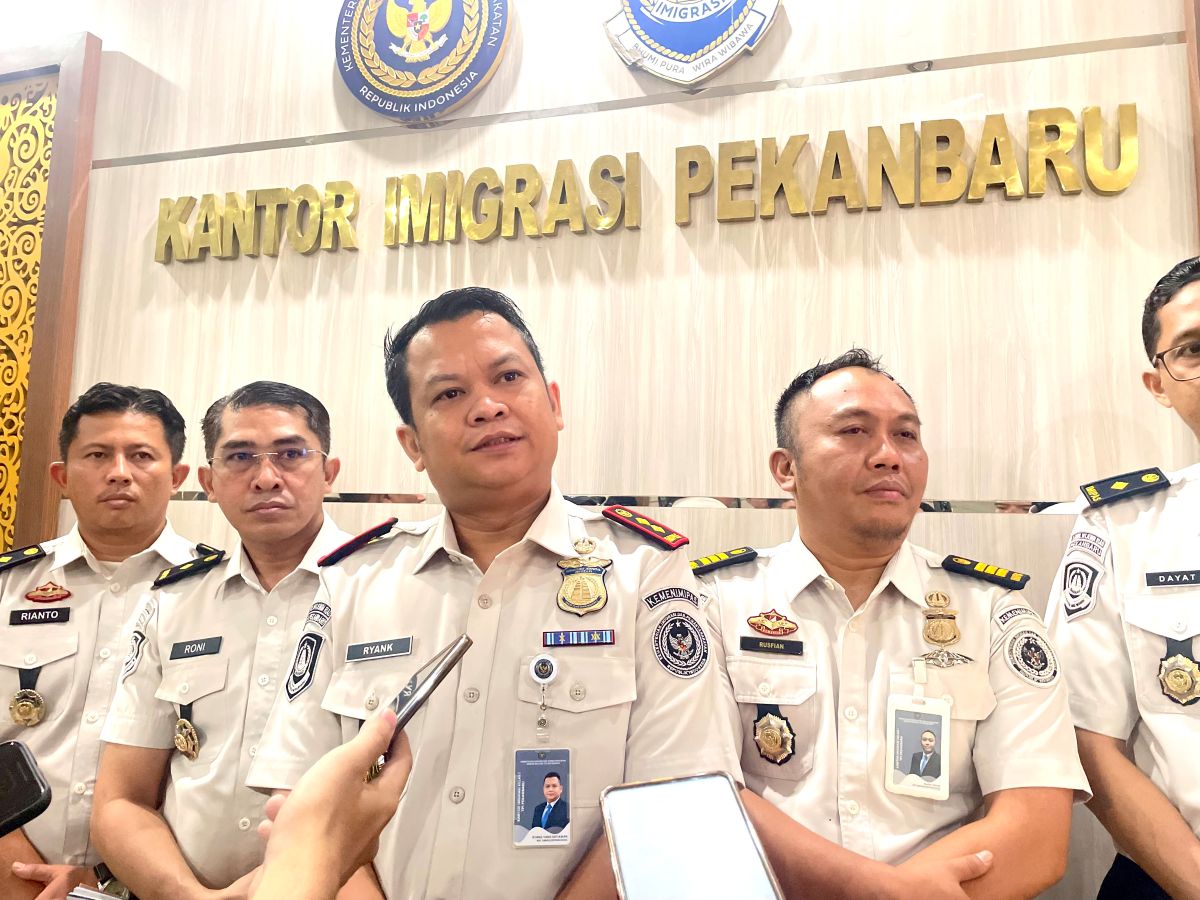
The potential for human trafficking offences (TPPO) has become a key concern of the Class I Immigration Office at the Pekanbaru Immigration Checkpoint (TPI) in monitoring the departure of Indonesian citizens abroad, particularly to Malaysia. Inspections at the TPI have been tightened to verify travel purposes and document completeness before Indonesian citizens leave the country.
Head of the Class I TPI Pekanbaru Immigration Office, Ryang Yang Setiawan, said officers screen passengers through pre-departure inspections. The measure is aimed at preventing Indonesians from departing for purposes that could cause problems in the destination country.
“All flights are subject to this kind of screening. Our TPI officers always carry out the sorting,” Ryang said at the Pekanbaru Immigration Office in Riau on Tuesday (15/9).
According to Ryang, prospective passengers may use various means to convince officers of their travel purpose. Officers therefore tighten inspections of passengers deemed to require further scrutiny.
“Such people may well try all sorts of methods. But, God willing, our TPI prevents such things. Quite a number have already been turned away by our TPI colleagues,” he said.
Inspections involve more in-depth interviews and careful examination of supporting travel documents. Officers also check return tickets and proof of accommodation in the destination country.
“By tightening interviews and looking at their return tickets or accommodation over there,” he said.
In addition to tightening supervision, Pekanbaru Immigration continues to develop service innovations for the public. One of these is the Jemput Bola HAM service, intended for sick members of the public who need passports for specific purposes.
“We prioritise passport processing for sick people, so we go to the hospital. We facilitate those patients so their passports can be made quickly and right on target,” Ryang said.
According to him, passport needs among Pekanbaru residents mainly relate to medical treatment abroad and umrah travel.
“Mostly it is for medical treatment and umrah,” he said.
In terms of issuance, the use of electronic passports at the Class I TPI Pekanbaru Immigration Office has also increased. In 2024, of a total 104,284 passports issued, 62,484 were ordinary passports and 41,257 were electronic passports.
The number of ordinary passports subsequently fell to 4,377 in 2025 and just 16 in 2026. Meanwhile, electronic passport issuance reached 42,776 in 2026.
To prevent gratification, bribery and brokering practices, Pekanbaru Immigration applies the M-Paspor mechanism in its service process. The system allows applicants to schedule their photo sessions and service processes digitally.
“Since M-Paspor is required there, we can schedule when the photo will be taken,” Ryang said.
According to him, the digital system makes the service process more measurable while narrowing the scope for unofficially expediting services.
“Everything goes through M-Paspor, so no one can expedite anything,” he stressed.
Source: jawawa.id (https://jawawa.id/newsitem/to-prevent-human-trafficking-at-the-border-pekanbaru-immigration-tightens-departure-checks-on-indonesian-1789476662)
Originally published by Media Indonesia (https://mediaindonesia.com/politik-dan-hukum/933693/cegah-tppo-di-perbatasan-imigrasi-pekanbaru-perketat-keberangkatan-wni), translated from Indonesian