
To Meet Targets, Tax Directorate Targets Indonesia's Wealthy and Shadow Economy
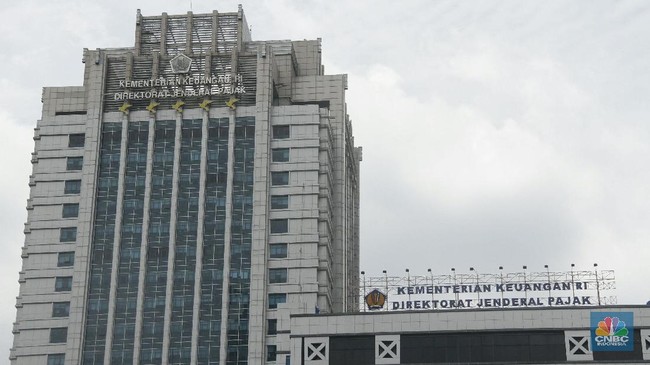
Jakarta, CNBC Indonesia - The Directorate General of Taxes (DJP) has established policy directions to optimise state revenues up to 2029. This is outlined in the DJP Strategic Plan 2025-2029, signed by Director General of Taxes Bimo Wijayanto on 19 December 2025.
In the DJP Renstra 2025-2029, tax revenue optimisation is crucial as the target tax revenue ratio to gross domestic product (GDP) increases year by year. In 2025, the target is 10.24%, rising to 11.52%-15% in 2029.
“The policy direction, which is the task and function of the DJP, is the optimisation of state revenues implemented through extensification and intensification strategies for tax revenues,” quoted from the DJP Renstra 2025-2029, Monday (20/4/2026).
Strategies related to extensification and intensification of tax revenues are outlined in three aspects. First is the enhancement of compliance oversight for Taxpayer (WP) Groups, WPs with transactions influenced by special relationships, and Prominent Individual WPs, alias crazy rich.
Second, expanding the tax base through the utilisation of data and digital technology, and third is strengthening focused oversight on the digital economy and shadow economy.
Specifically, the policy direction for enhancing compliance oversight for WP Groups, WPs with transactions influenced by special relationships, and Prominent Individual WPs is implemented through the Strategic Taxpayer Oversight strategy, focusing on WP Groups, WPs with Special Relationship-Influenced Transactions, and Prominent Individual WPs.
Additionally, by utilising the Cooperative Compliance Mechanism (CCM)/Tax Control Framework (TCF), which is a compliance mechanism emphasising the relationship between DJP and WPs based on transparency, cooperation, and trust.
Meanwhile, the policy direction for expanding the tax base through data and technology utilisation is implemented through the strategy of utilising data for Regional WP Oversight, aimed at increasing oversight effectiveness through data integration, system refinement, and expanding cross-agency cooperation.
Furthermore, by utilising tax gap data, used as national oversight data supporting CRM; and utilising technology to expand the tax database, through the development and utilisation of digital maps as well as spatial data integration for tax database optimisation.
The policy direction for strengthening oversight focused on the digital economy and shadow economy is implemented through the strategy of exploring digital economy potential, through developing oversight patterns and guidelines for exploring digital economy tax potential, intensive handling of high-risk WPs (WP fraudsters) and shadow economy activities, and intelligence activities to explore shadow economy tax potential.
“Low compliance of WP Groups, WPs with transactions influenced by special relationships, and Prominent Individual WPs. Growth in the digital economy and shadow economy has not been detected in terms of taxation aspects,” as stated in the DJP Renstra 2025-2029.
Source: jawawa.id (https://jawawa.id/newsitem/to-meet-targets-tax-directorate-targets-indonesias-wealthy-and-shadow-economy-1776754260)
Originally published by CNBC Indonesia (https://www.cnbcindonesia.com/news/20260420174427-4-728303/kejar-setoran-ditjen-pajak-bidik-orang-kaya-ri-shadow-economy), translated from Indonesian