
To Lam Officially Becomes Vietnam's President, Power Becomes More Centralised
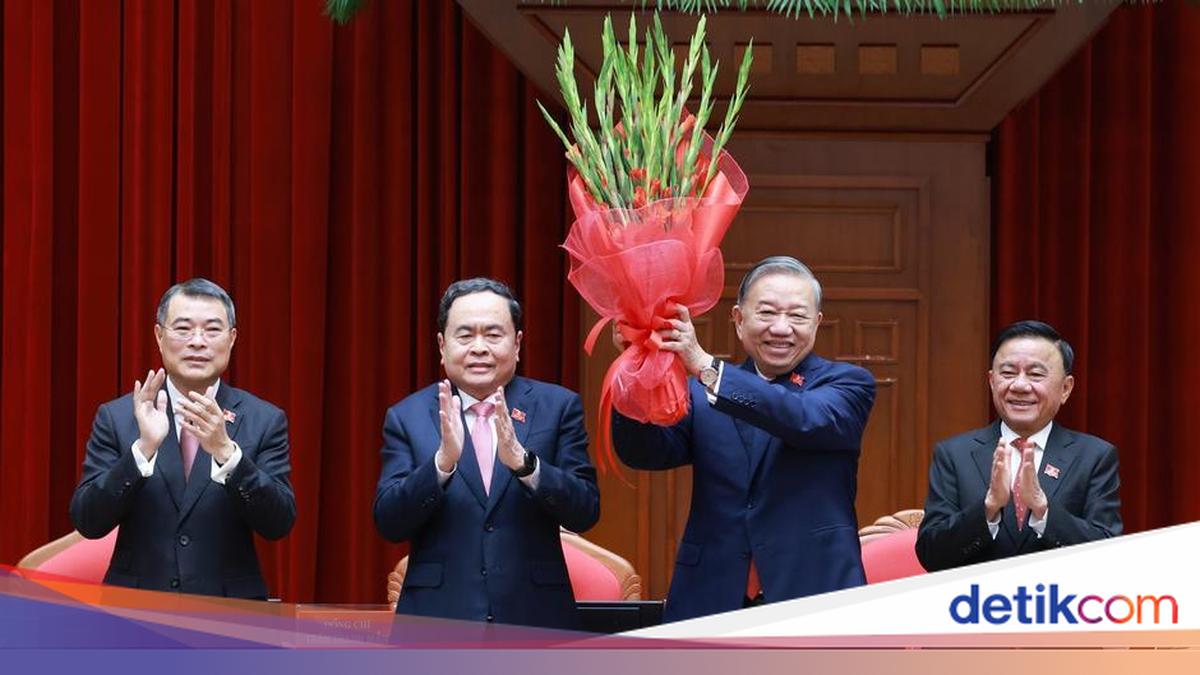
The General Secretary of the Communist Party of Vietnam, To Lam, was unanimously elected by parliament as the country’s president for a five-year term, making him Vietnam’s most powerful leader in several decades.
Following his inauguration ceremony, Lam told the National Assembly that his top priority is to maintain peace and stability, which he described as the foundation for rapid and sustainable growth.
“We aim to improve the people’s welfare so that everyone can enjoy the benefits of development,” he said.
The parliament’s website stated that all 495 attending members of parliament supported the Communist Party’s nomination during Tuesday’s National Assembly session, while five members were absent.
Parliament members will also elect a new prime minister on Tuesday (7/4) to replace Pham Minh Chinh, who is about to end his term.
What has To Lam promised?
To Lam has surprised the country with the speed of his reforms. In less than two years as party leader, Lam has sidelined his political rivals and transformed the country through an aggressive reform agenda, even redrawing the administrative map by merging several provinces and cutting bureaucracy.
He has also changed the governance model by abolishing eight ministries at once while promoting large-scale infrastructure projects.
Lam now proposes a “new growth model” aimed at accelerating decision-making and strengthening the private sector to achieve double-digit economic growth every year for the next five years.
Lam also stated that he will prioritise self-reliance in defence.
He said his main goals are to maintain stability, promote rapid and sustainable national development, and improve all aspects of people’s lives.
Lam’s role in Vietnamese politics
To Lam has emerged as one of the most powerful figures in the country’s politics in recent decades after being elected president, while also serving as head of the ruling Communist Party.
Lam, a long-time security official who previously served as Vietnam’s Minister of Public Security, was unanimously approved by the National Assembly to serve as president for five years. This move “effectively makes him Vietnam’s ‘supreme leader’,” said Le Hong Hiep, senior researcher at the Vietnam Studies Programme at ISEAS – Yusof Ishak Institute in Singapore.
This change has also “shifted the country’s leadership from a consensus-based collective model to a centralised leadership style centred on one figure,” he told AFP.
By simultaneously holding the positions of president, Lam now leads both the party apparatus and the state leadership, giving him significant influence over policymaking and government governance.
Lam, 67 years old, built much of his career in the country’s strong security institutions. As Minister of Public Security since 2016, he oversaw the police and domestic security operations and played a key role in the government’s anti-corruption campaign.
Since rising to the top of party leadership, Lam has moved quickly to overhaul Vietnam’s political and administrative structure. His administration has promoted bureaucratic simplification, reduction of ministries, and acceleration of major infrastructure projects as part of efforts to modernise the country’s governance system.
Lam has also proposed a new economic strategy aimed at speeding up decision-making and expanding the role of the private sector, with the goal of driving faster economic growth in one of Southeast Asia’s most dynamic economies.