
To Drive Industrial Growth, Government Urged to Boost Export Performance
JAKARTA – If the nation wishes to escape the curse of 5 per cent economic growth, policies must be implemented to achieve maximum export performance to drive high industrial growth. Simultaneously, such policies must dynamically attract foreign investment to the country to stimulate the industrial sector. These statements were made by the Rector of Universitas Paramadina, Prof. Didik J. Rachbini, in a written statement received on Saturday (16/5/2026).
According to him, the industrial sector, which should serve as the economic locomotive, is currently growing at a low rate, making high economic growth unattainable. Therefore, a conducive business climate is required so that foreign investment flows in and export performance grows rapidly, signalling that Indonesian products are competitive in the international market.
“However, there are currently structural, competitiveness, and national economic institutional problems. To date, foreign investment has been reluctant to enter Indonesia. Relatively, we are lagging far behind other countries. Indonesia’s foreign direct investment is inadequate, at only 1.8 per cent of GDP. Meanwhile, foreign investment in Vietnam has reached 4.2 per cent, Malaysia 3.7 per cent, and Singapore 27.8 per cent,” he revealed.
The economist from the Institute for Development of Economics and Finance (INDEF) also noted that weak institutional issues have been criticised by President Prabowo, particularly regarding the bureaucracy that hinders many business actors. Investing in Indonesia currently requires waiting for permits for one to two years, whereas in other countries, similar processes can be completed in just two weeks. Complex regulations are seen as creating loopholes for unhealthy bureaucratic practices. Consequently, the President plans to form a special task force for deregulation to slash rules and licensing that are deemed to hinder investment and business activities in Indonesia.
In this regard, he continued, the idea of forming a deregulation task force is logical. Successful industrialising East Asian nations utilised a ‘war room’ for bureaucratic reform directly controlled by the highest political leaders. “For example, Vietnam through the Đổi Mới reforms, which has successfully maintained economic growth of up to 8 per cent. Indonesia achieved this in the 1980s and early 1990s, resulting in 7 per cent growth. All developed nations did this, such as South Korea during its industrialisation era, Singapore under Lee Kuan Yew, and China during the era of Deng Xiaoping. Without bureaucratic reform and institutional improvement, it is impossible for industry and the economy to grow at high rates,” he explained.
He also mentioned that Indonesia’s export performance has fallen far behind new players like Vietnam. Vietnam’s international trade (exports and imports) is growing very rapidly, with a value of 1,000 billion US dollars, which is twice that of Indonesia’s international trade. “Therefore, Vietnam’s economy could grow up to 8 per cent in 2025. As long as export performance and foreign investment are stalled, we should not expect to escape the 5 per cent growth curse,” he said.
There is a broader issue regarding the vision, mindset, and economic orientation of Indonesia, which is regressing. Indonesia’s economic vision in the 1980s was ‘outward-looking’; now, ideologically, we are becoming more socialist with a larger state role and an ‘inward-looking’ orientation. “If this economic vision and orientation continue to be implemented by the government, do not expect high economic growth. Not only the government, but the private sector and SOEs are also regressing towards being inward-looking,” he said.
“This change in mindset causes the external sector to lag far behind newcomers like Vietnam. This shift causes the industrial sector to move slowly and grow at a low or merely moderate rate, as seen currently,” he added.
Weak Foreign Investment
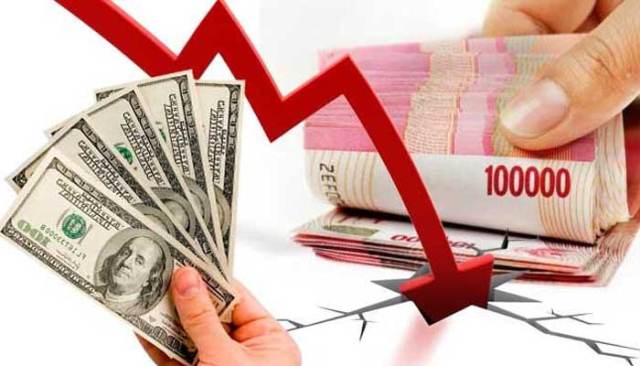
Furthermore, foreign investment is weak and often only attracts low-quality investment, such as restaurants, consultancy services, and extractive economic activities. “This low-quality investment has low added value, does not create technology transfer, offers low-quality jobs, and has a heavy environmental impact. This weakness in Indonesia’s economic structure also makes the exchange rate fragile and vulnerable to capital flight,” he explained.
He assessed that President Prabowo’s idea is economically rational and much needed. Indonesia is already ‘over-regulated’, leading to high economic costs and slowing investment. In this regard, the spirit of deregulation, similar to the PAKTO 88 era in the past, is relevant to reviving economic dynamism. However, it will not be easy because current conditions are more difficult than the 1980s era, as the economic structure is more complex, the bureaucracy is bulkier, rent-seeking interests are larger, and the global landscape has changed.
“Therefore, the key to success is not merely ‘cutting permits’, but institutional reform, law enforcement, central-regional coordination, bureaucratic digitalisation, and the political courage to fight wasteful rent-seeking economics,” he emphasised.
“Deregulation and debureaucratisation policies must be implemented as a milestone for Indonesia’s economic transformation. The examples and ‘best practices’ are right before our eyes, namely the deregulation and debureaucratisation practices of the 1980s, or there is no shame in imitating Vietnam,” he added.
Therefore, these policies need to be aimed at ensuring Indonesia’s economic growth is higher and escapes the 5 per cent stagnation curse. Deregulation and debureaucratisation are intended to accelerate both domestic and foreign investment, new industrialisation, and competitiveness in international markets.