
To Avoid Challenge in Constitutional Court, DPR Will Not Rush Discussion of Election Bill
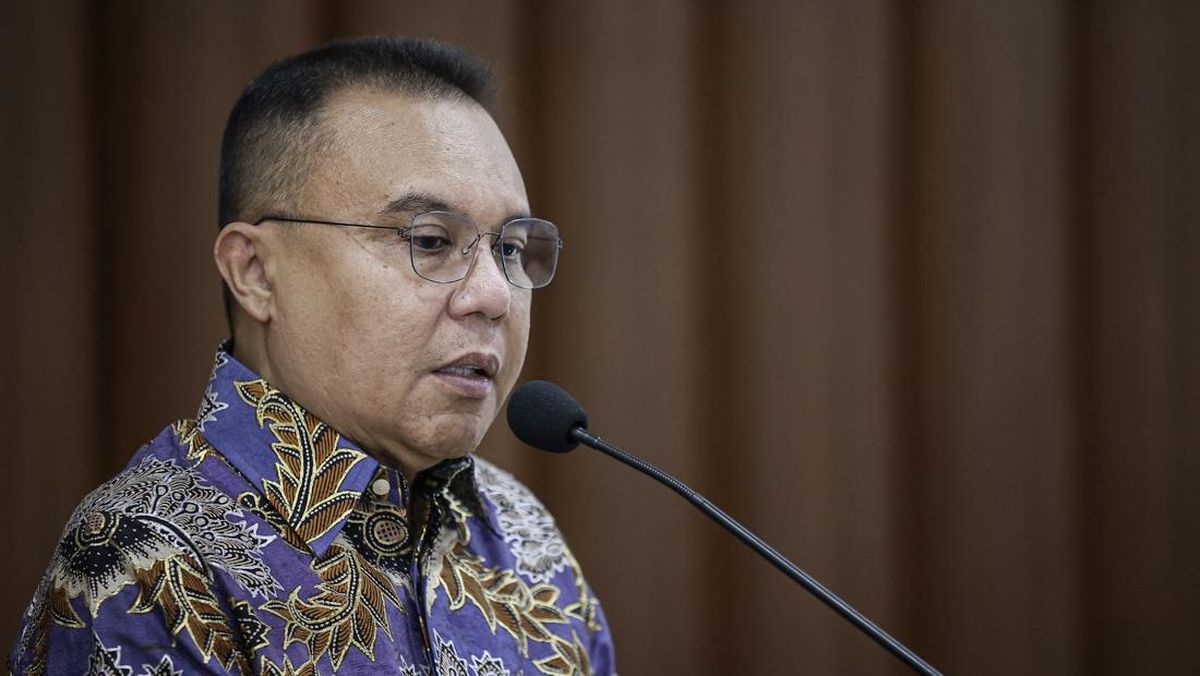
Deputy Speaker of the DPR, Sufmi Dasco Ahmad, has emphasised that the house will not rush to discuss the Election Bill (RUU Pemilu), even though the process must begin by the end of 2026.
Dasco stressed that the election stages set to commence at the end of this year will not be affected even if the RUU Pemilu is not yet finalised.
“Those stages have no connection to the Election Law. With the existing Election Law, those stages can still proceed,” Dasco said at the parliamentary complex on Tuesday (21/4).
The daily chairman of the Gerindra Party’s DPP drew lessons from previous lawsuits against the Election Law decided by the DPR. Dasco admitted he does not want this revision of the RUU Pemilu to meet the same fate.
“We’ve gone back and forth with the Election Law being challenged, the Constitutional Court (MK) annulling it, the MK deciding on this and that, then the MK deciding on others again. So this time, let’s all be patient,” Dasco said.
“We’re not in a hurry; let’s not rush or hurry the Election Law, or else someone will challenge it again,” he added.
Nevertheless, Dasco has not revealed exactly when the RUU Pemilu will be discussed with the government. Currently, parties both in parliament and outside are conducting simulations while deciding when discussions can begin.
“If it’s a target, we can’t set it ourselves. It has to be an agreement among the factions after they finish,” he said.
10 issues for change
Previously, a member of Commission II of the DPR, Ahmad Doli Kurnia, revealed there are 10 issues for change in the RUU Pemilu, some of which stem from mandates in Constitutional Court (MK) decisions.
He outlined the 10 points of change as follows: first, the legislative election system. The RUU Pemilu will reopen discussions on changing the election system, whether it remains an open proportional system, closed, or even a mix.
Second, discussions on changing the parliamentary threshold. Third, discussions on changing the presidential threshold, both based on MK decisions. To date, Doli said, several factions are not yet in agreement on changing the parliamentary threshold, although for the presidential threshold, the MK has requested its abolition.
Fourth, discussions on changing the number of seats per electoral district (dapil). Fifth, the system for converting votes into seats in the DPR. Sixth, the issue of separating local and national elections, referring to Decision Number 135/PUU-XXII/2024. Seventh, discussions on improving the system to curb money politics and vote buying practices.
Eighth, digitalisation in every election stage. Ninth, discussions on changing the election organising body, which Doli said has long been criticised for its professionalism and integrity.
And finally, regarding the resolution of election disputes. For a long time, he said, he has been pushing for the establishment of a special judicial body for election dispute resolution.
“Those are some or 10 issues, 5 contemporary and 5 classic ones that we will definitely discuss in the election law deliberations,” Doli said.