
TNI's New Doctrine Amid Indo-Pacific Strategic Shifts
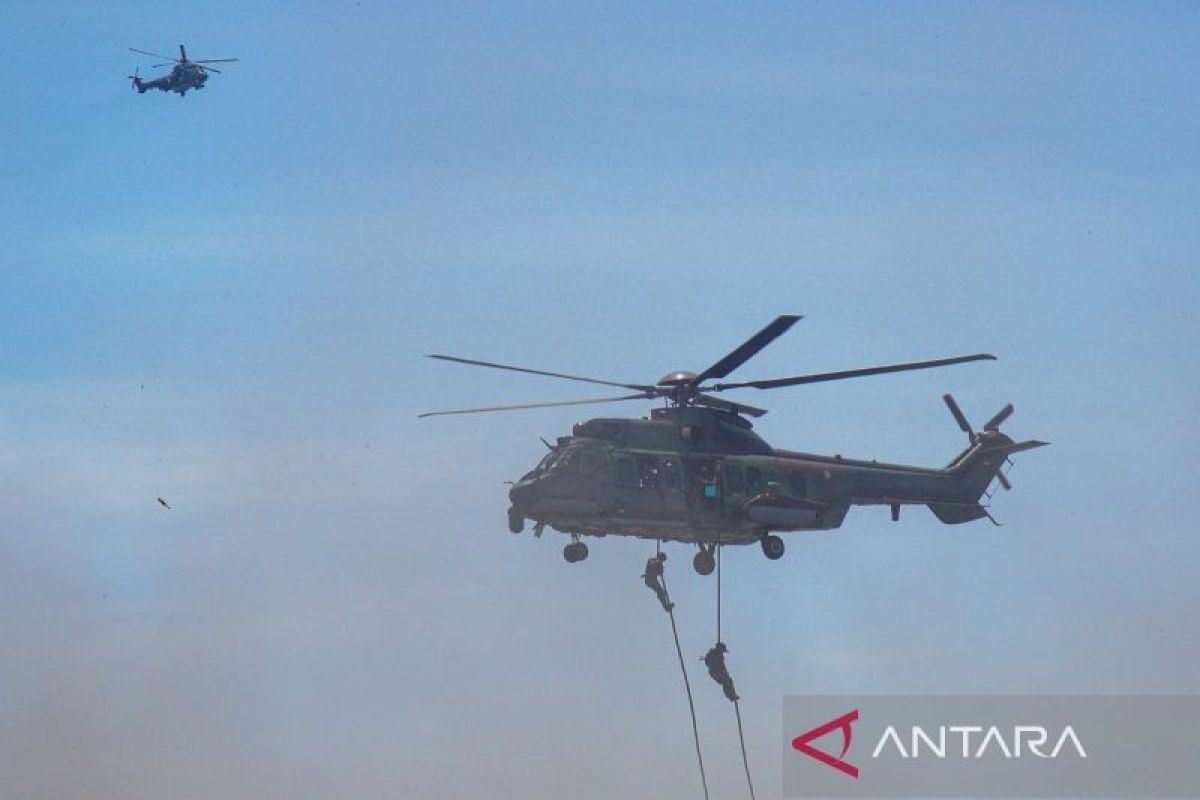
Jakarta (ANTARA) - Amidst rising geopolitical rivalry in the Indo-Pacific region, Indonesia has finally taken a significant step by updating its military doctrine to ‘Perisai Trisula Nusantara’. This move is not merely a change in terminology, but an effort to build a new national defence paradigm that is more relevant to the dynamics of 21st-century warfare.
For decades, Indonesia’s defence doctrine has been primarily oriented towards conventional threats, such as direct military aggression against national territory. However, global developments show that modern conflict has fundamentally changed. The Russia-Ukraine war has demonstrated the dominance of drones, satellites, artificial intelligence, and electronic warfare. Conflicts in the Middle East have highlighted the importance of multi-layered air defence systems and precision strike capabilities.
Meanwhile, tensions in the South China Sea confirm that great power competition is occurring simultaneously through diplomacy, economics, technology, cyber warfare, and information operations. As an archipelagic nation situated at the crossroads of two oceans and two continents, Indonesia faces much more complex challenges than many other nations. Threats to undersea communication cables, satellites, strategic ports, energy refineries, national data centres, and disruptions to logistics supply chains can have strategic impacts without the need for a formal declaration of war.
Therefore, the new TNI doctrine needs to strengthen synergy with other ministries and agencies, including cyber security managers, intelligence services, coast guards, the defence industry, and local governments, as part of an integrated national defence system. In this context, ‘Perisai Trisula Nusantara’ serves as a strategic response to ensure the TNI does not fall behind in the evolution of modern warfare. This doctrine places the integration of the three military branches as its primary foundation, while also opening space for integration with the cyber, intelligence, space, and information operation domains.
Conceptually, Indonesia is moving towards an approach that aligns with various modern doctrines in the Indo-Pacific region. The United States is developing Joint All-Domain Operations (JADO), which connects all land, sea, air, space, and cyber forces into a single integrated operational network. Australia, through its 2023 Defence Strategic Review, has shifted its military orientation from continental defence to a ‘strategy of denial’, aiming to prevent adversaries from entering strategic territories through long-range capabilities, missiles, and maritime strength. Similarly, Japan has adopted the Multi-Domain Defence Force concept, which emphasises the integration of missile defence, space, cyber, and retaliatory strike capabilities against regional threats.