
TNI Psychologist Reveals Major Regret of Defendants in Andrie Yunus Acid Attack Case
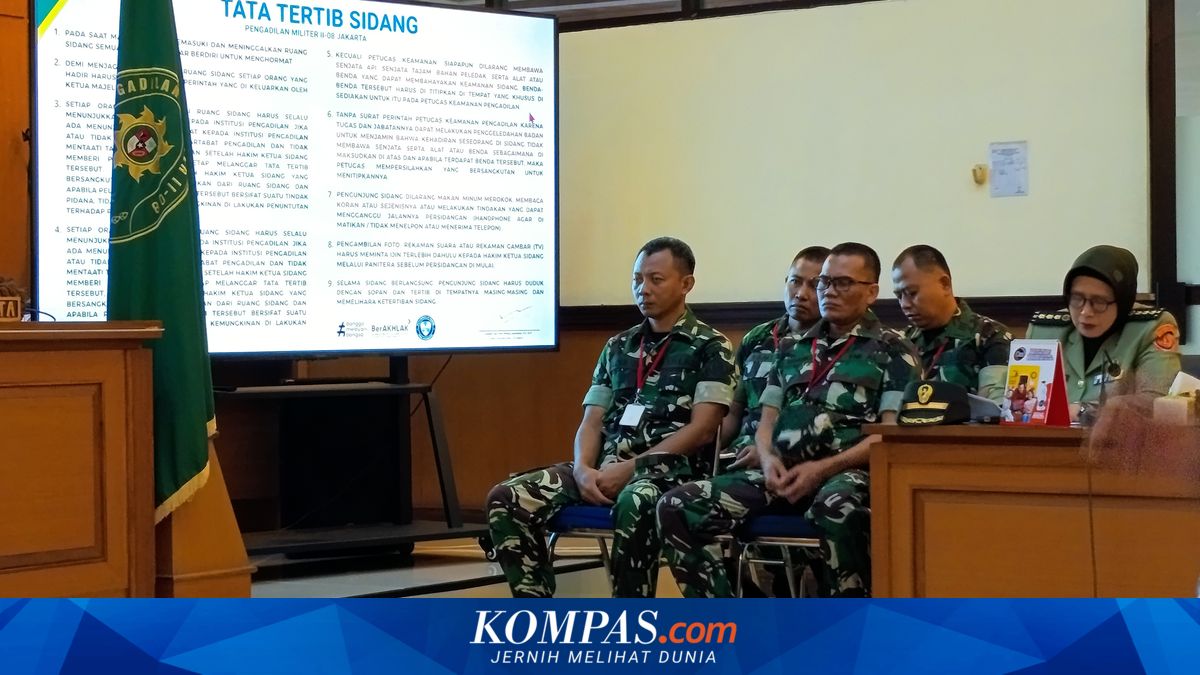
JAKARTA, KOMPAS.com - TNI psychologist Colonel Arh Agus Syahrudin stated that several defendants in the acid attack case against KontraS activist Andrie Yunus showed significant regret for their actions. According to Agus, this regret arose because the defendants’ actions impacted not only the victim but also their families and the TNI institution. He conveyed this during his testimony as an expert witness at the Military Court II-08 Jakarta on Thursday (7/5/2026). The four defendants in this case are members of TNI’s BAIS, namely Sergeant Two Edi Sudarko, First Lieutenant Budhi Hariyanto Widhi, Captain Nandala Dwi Prasetya, and First Lieutenant Sami Lakka. “There appears to be considerable regret due to the broad impact of the actions, not only on the individuals concerned but also on the victim, family, and institution. This is the psychological profile overview for Sergeant Edi,” explained Agus. In his statement, Agus revealed the results of the psychological examination of Sergeant Edi. He noted that the defendant has limitations in thinking flexibility, tends to be impulsive, and is less effective in solving complex problems. “His personality tends to be less warm in relationships, formal, with minimal empathy, and there is a tendency towards impulsivity with weak self-control,” he disclosed. Although no pathological indications were found, First Lieutenant Budhi’s thinking processes and personality patterns are said to have potential for risky behaviour. “There appears to be considerable regret due to the broad impact of the actions, not only on the individuals concerned but also on the victim, family, and institution,” said Agus. “His personality is independent, rigid, ignores emotional closeness, and is more task-oriented. No pathological indications were found, but the personality pattern has potential for risky behaviour,” he explained. From the psychological test results, Nandala also expressed regret for the actions that impacted the victim, family, and institution.