
TNI Law Hearing Reveals Testimony on Military Intervention in Labour Unions
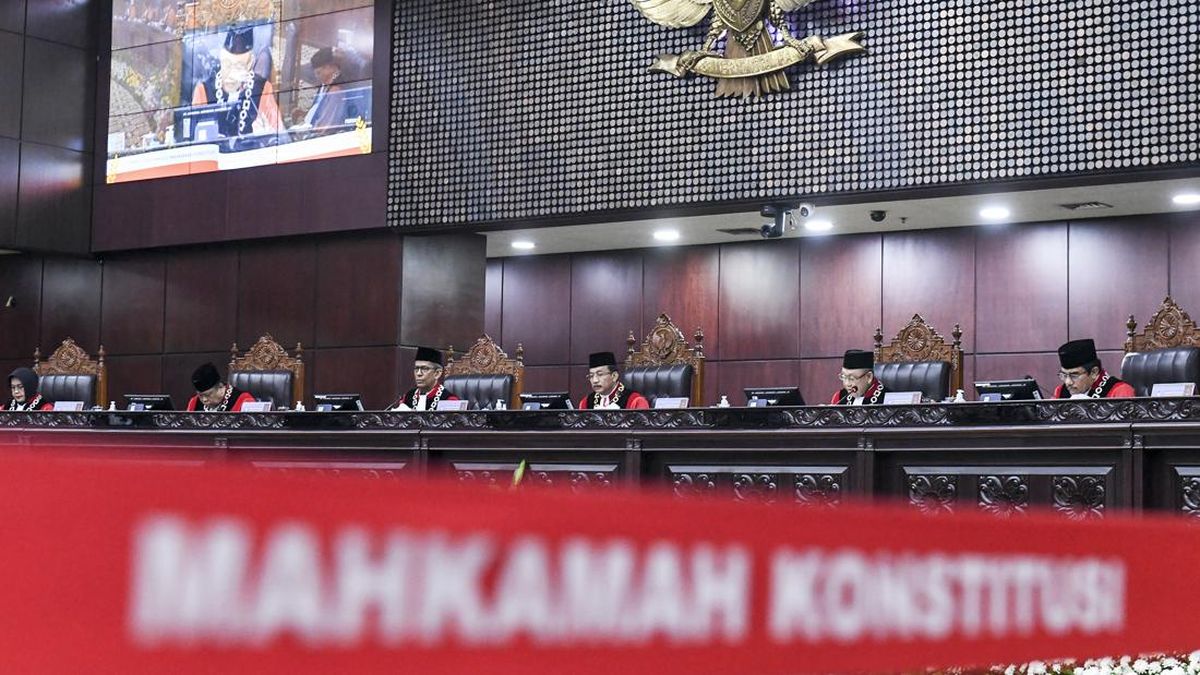
The Constitutional Court (MK) held a hearing for the material examination of Law Number 3 of 2025 on the TNI (TNI Law) on Wednesday (8/4). The hearing agenda involved listening to statements from the applicant’s expert and witness for Application Number 238/PUU-XXIII/2025. The applicants, known as part of the Civil Coalition, presented Laksda TNI (Ret.) Soleman Ponto as the expert. For the witness, the applicants presented Angga Saputra, Secretary General of the Indonesian Airport Workers’ Federation for the 2023-2028 period. Angga, as the witness, detailed the negative experiences of the labour union during negotiations on compensation for hundreds of workers, disrupted by intervention from active military personnel. Angga recounted intimidation during the union’s discussions with the company regarding industrial relations processes involving 500 workers whose rights had been outstanding for three years. On 21 April 2025, he said, his side accompanied the company’s workers in bipartite negotiations concerning the payment of compensation that had not been paid for three years to around 500 workers. “Around 2 p.m., bipartite negotiations were held regarding the issue of the company’s failure to pay compensation obligations for 3 years,” Angga stated during the hearing at the MK building in Central Jakarta. Then, Angga said that members of the TNI, claiming to be from the Jakarta Regional Military Command (Kodam Jaya), arrived and shouted in the midst of the negotiations. “In the middle of the negotiation process, there was an interruption from someone who interrupted with a somewhat raised tone, stating ‘What do you actually want? The company already has good intentions’,” Angga explained. Angga then described how the presence of the soldier created psychological pressure and fear among the workers. This caused the labour union to refuse to continue the negotiations. “We then stated that we rejected the continuation of the negotiation process due to direct intervention from the TNI side, who then acted as representatives of the business owners, defending the interests of the employers,” he said. In fact, many workers subsequently chose to withdraw from labour union activities. “This situation directly caused losses for us as a labour union in terms of freedom of association and the right to negotiate at the workplace,” Angga stated during the hearing. Limits on military in civilian positions Meanwhile, Soleman, in his expert testimony at the hearing, highlighted Article 47 paragraphs (1) and (2). He assessed that the content of these paragraphs could open opportunities for active TNI personnel to occupy several civilian ministries and agencies. Soleman explained that there are 15 institutions whose positions within them can be held by active TNI personnel. Soleman also highlighted that personnel are allowed to hold other civilian positions after resigning or retiring from the TNI. “It is emphasised there that TNI members can only hold civilian positions after resigning or retiring from the military. Here it is clearly civilian positions,” Soleman said during the hearing. The man who served as Head of BAIS from 2011-2013 questioned the lack of clarity in the boundaries between civilian positions and those that can be held by active TNI personnel. “The key question is whether the 15 institutions regulated in Article 47 paragraph 1 are included in civilian positions or outside of them? The implication if not, then the placement of TNI in principle disrupts civilian supremacy because there are no boundaries other than civilian positions; there are other positions,” he said. Therefore, he argued that strict limitations are needed to prevent the expansion of the military’s role into the civilian sphere. “We are not prohibiting norms, but providing clear boundaries. Because without boundaries, national defence will turn into the entire state structure. And if this happens, what is lost is not only institutional boundaries, but the balance between the state and the law,” Soleman stated.