
TMMIN: Industry-Education Synergy Key to Vocational Development
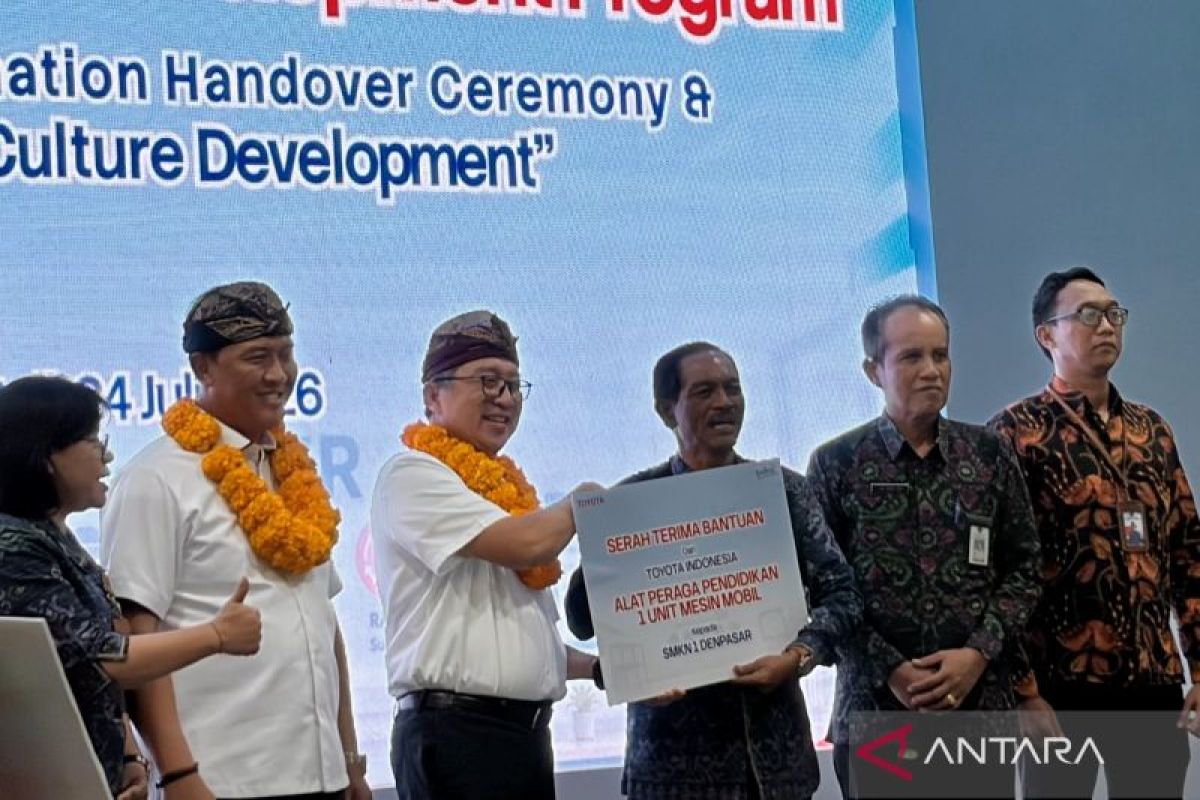
Denpasar, Bali (ANTARA) - PT Toyota Motor Manufacturing Indonesia (TMMIN) considers synergy between the industrial world and education essential for developing vocational education.
“Collaboration between the education sector, government and industry is key to building a sustainable vocational ecosystem,” said TMMIN Vice President Director I Nyoman Winaya Adnyana in Denpasar, Bali, on Friday.
Winaya further stressed that synergy among schools, government and industry is crucial to creating learning relevant to industry needs and preparing a competent, competitive younger generation.
“When schools have access to industry-standard learning, teachers continually develop their competencies, and students gain relevant practical experience, more capable talents will emerge who are better prepared to face future challenges,” he said.
As part of vocational school development, TMMIN also promotes learning based on the application of Toyota’s industrial standards through enhancing teachers’ competencies via basic industrial skills training and aligning the curriculum with industry needs.
Winaya said this approach aims to instil an industrial work culture within the school environment, from discipline and workplace safety to quality and a spirit of continuous improvement.
This, he continued, is expected to make the learning process produce not only technically competent graduates but also those with professional character.
Moreover, the expansion is expected to contribute to the government’s efforts to revitalise vocational education while preparing competent human resources to meet labour demands across various industrial sectors.
Meanwhile, TMMIN’s Vocational School Development programme has been running since 2017 and currently reaches 30 partner vocational high schools (SMK) spread across West Java, East Java, Central Java and the Special Region of Yogyakarta.
In 2026, TMMIN will expand the programme to Bali and Lombok, adding four new partner SMKs and bringing the total number of partner schools nationally to 34.