
TKD Cuts Prompt Eko Suwanto to Advocate Five Steps for APBD Rescue
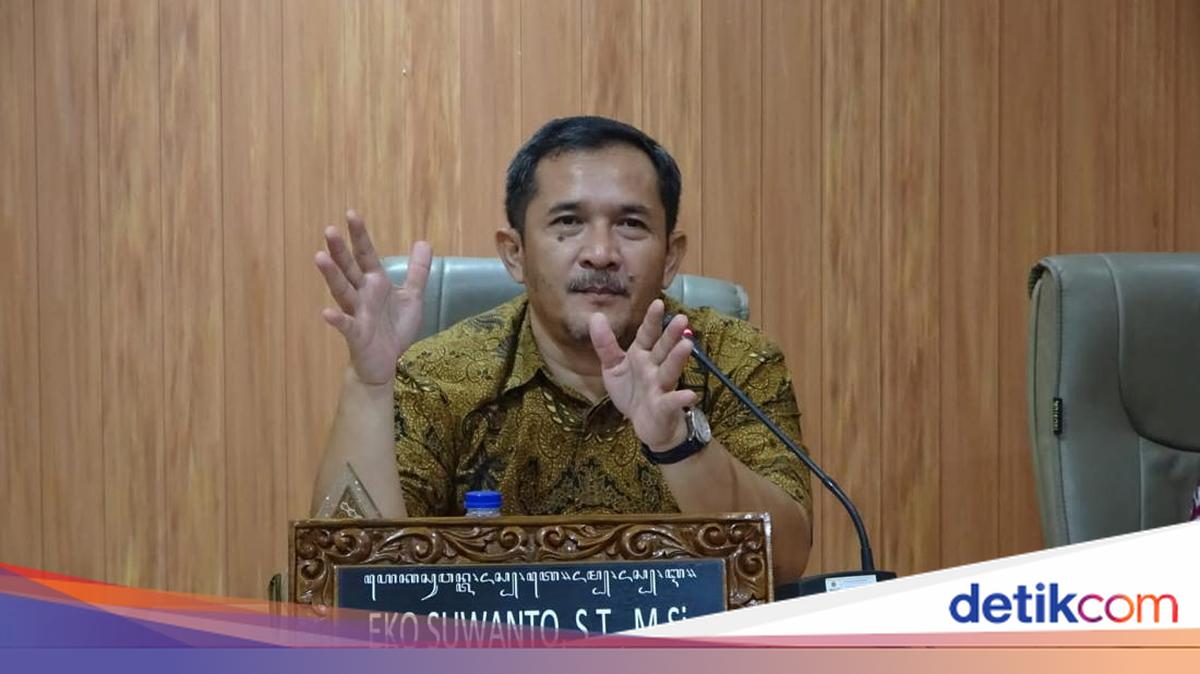
Budget cuts and efficiencies from the central government are impacting fiscal pressures on local governments. Commission A of the DIY DPRD is urging steps to rescue the APBD to ensure development and public services continue uninterrupted.
This was stated by the Chair of Commission A of the DIY DPRD, Eko Suwanto. He said there are five steps that the DIY Regional Government needs to take in response to the situation. According to him, budget constraints could affect development and services to the community.
“Through these five steps, development is expected to continue, and budget constraints will not have a significant impact on the community,” Eko said in a written statement on Monday (27/4/2026).
The first step is prioritised spending to improve public services, alleviate unemployment and poverty, create jobs, and address stunting through support to villages and urban villages.
Eko explained that regional spending realisation in 2024 reached Rp5.68 trillion, but in 2025 it dropped by around 16 percent to Rp4.73 trillion, a reduction of Rp949.88 billion. This downward trend is estimated to continue into 2026.
“The second step concerns optimising the utilisation of assets, both land and buildings, to increase Local Own-Source Revenue (PAD),” he said.
Eko assessed that many assets have yet to be maximised. His side will request that unused land and buildings be reconsidered for boosting PAD.
“For example, the former Hotel Mutiara and land on Jalan Parangtritis, for instance. There are many locations that the Regional Government should start thinking about optimising, empowering them to attract significant PAD,” he elaborated.
In addition, optimising Corporate Social Responsibility (CSR) is also seen as an alternative for development financing. Eko mentioned that the DIY CSR Forum managed to collect around Rp64 billion in 2024 and Rp60 billion in 2025 from various CSR funding sources.
“We hope CSR can become a way out of the budget constraints and funding limitations mentioned earlier. For example, to support poverty alleviation-based development, unemployment reduction, or even infrastructure support,” he hoped.
He cited the Yogyakarta City Mayor’s programme, Hasto Wardoyo, namely house renovations in Yogyakarta City, which continue amid budget limitations by utilising CSR and BAZNAS support.
“(Optimising CSR utilisation) Can also support stunting handling in Yogyakarta City, in addition to the Rp120 million funds per urban village,” he said.
“So our hope is, for example, house renovation programmes carried out by the DIY Regional Government can also garner CSR, not always relying on funds, because the money is indeed limited,” he continued.
The fourth step is to strengthen cooperation, both with the central government and other regions. Eko assessed that DIY has opportunities for cooperation, for example with Central Java for border infrastructure development to disaster mitigation in the Merapi area.
“For example, cooperation with the Central Java Regional Government for matters like border infrastructure, as we already have Regional Regulation No. 3 of 2020, which can build infrastructure, education services, and health in the border areas,” he explained.
“Then we can also cooperate on disaster mitigation, for example with Central Java regarding Merapi which encircles Sleman Regency, Klaten, Boyolali, and Magelang; this should sit together to jointly fund mitigation in Merapi, for instance,” he added.
The fifth step, Eko requested that the central government cancel the budget cut policy and implement consistent decentralisation. He also reminded that the Regional Government should not raise taxes amid the situation.
“We also ask the Regional Government not to increase taxes, whether motor vehicle tax, regional tax, or other regional levies; if anything, provide incentives. The community certainly expects the existing APBD to be implemented properly, without corruption,” he emphasised.