
Tito Urges Strengthening of Soft Approach to Prevent Terrorism
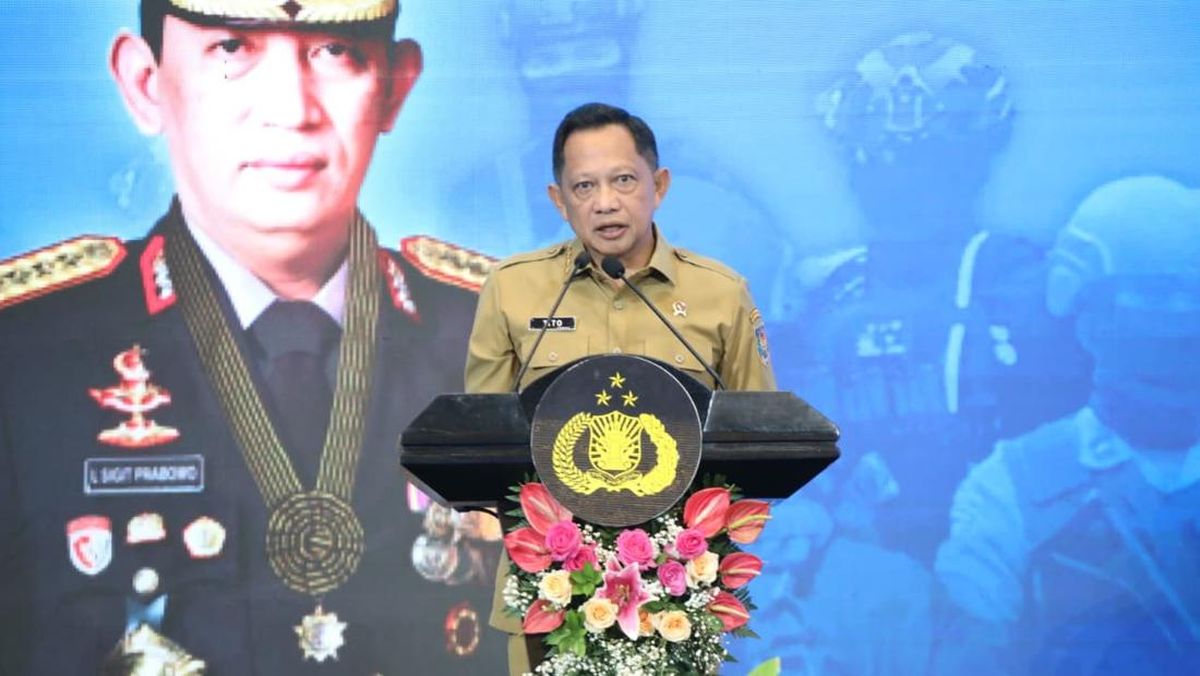
The Minister of Home Affairs, Muhammad Tito Karnaiavian, is pushing for the strengthened implementation of soft approach strategies to prevent the spread of violent extremism and terrorism. Tito stated that preventative measures must be carried out collaboratively, adaptively, and by targeting the root causes, including within digital spaces.
The former Chief of National Police and Head of Densus 88 shared these views while attending the Technical Working Meeting (Rakernis) of the National Police’s 88 Special Detachment (Densus 88) Anti-Terror Unit in Jakarta on Monday. He noted that the spread of violent extremist ideologies occurs through communication patterns involving senders, receivers, channels, and specific social contexts. Prevention, he argued, must involve breaking these chains of dissemination.
“If we can break even just one of these five components, then the process of transferring radical or terrorist ideologies from the sender to the receiver will never occur,” Tito said in a written statement from the Ministry of Home Affairs.
Tito proposed five strategies to be implemented in parallel: deradicalisation, counter-radicalisation, strengthening counter-ideologies, cutting off the channels of radical ideology dissemination, and resolving the social and economic issues facing the community. He emphasised that deradicalisation is essential for those already exposed to radical ideologies to return to moderate understanding and support national values. Meanwhile, counter-radicalisation is necessary to build community resilience against the spread of violent extremist ideologies from an early stage.
Tito also assessed that strengthening counter-ideologies should involve influential figures within specific groups to ensure messages of moderation are more easily accepted. “This is very effective because these groups have their own culture, norms, and ‘insider trust’—they do not trust outsiders, but trust those within their circle,” he said.
Cyber patrols and counter-narratives in digital spaces were also identified by Tito as crucial for cutting off the channels of radical ideology dissemination. He noted that advancements in information technology have allowed the spread of extremist ideologies to occur more rapidly and widely across various digital platforms. Furthermore, addressing the social and economic problems of the community is a vital part of the long-term prevention strategy, particularly in regions vulnerable to violent extremism.
Tito acknowledged that Densus 88 AT Polri has successfully utilised strong law enforcement approaches against active threats. However, he stressed that moving forward, the soft approach must be further strengthened as an early prevention measure. “Once they are suppressed, we must begin bombarding them with soft approach activities,” he concluded.