
Tito Urges BNPP to Strengthen Coordination in Border Region Development
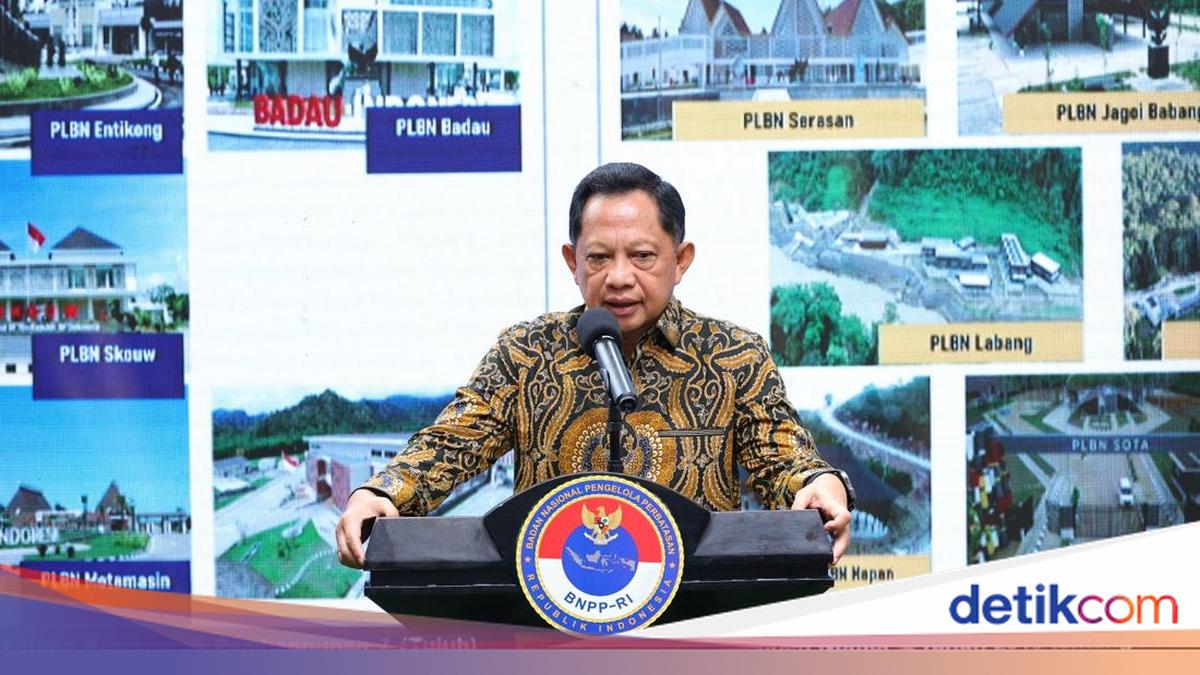
The Head of the National Border Management Agency of the Republic of Indonesia (BNPP RI), Muhammad Tito Karnavian, has utilised the 16th anniversary of the BNPP RI as a momentum for evaluation. This evaluation is necessary to identify achievements, shortcomings, and steps that need improvement to ensure the implementation of BNPP RI’s duties becomes more directed.
“We are taking the momentum of this anniversary to conduct an evaluation. What are the pluses that BNPP has achieved, what has not yet met expectations, and how will BNPP proceed in the future,” Tito stated in a written statement on Thursday (17/9/202<0xA0>6).
One of the achievements highlighted by Tito is the existence of 15 Integrated Border Posts (PLBN) that have been built and are operating in several Indonesian border regions. The presence of these PLBNs is not only related to cross-border service functions but also serves as a representation of Indonesia in the border regions.
The Minister of Home Affairs assessed that the construction and improvement of the PLBNs have successfully turned them into gateways and showcases for Indonesia in the nation’s frontier territories. He also added that, from his observations, the governance in these border areas has been functioning quite well.
“This is a source of pride for us because they truly serve as gateways and showcases for the Indonesian nation through the improvement and renovation of border posts. As far as I know, the governance is also quite good,” he said.
In addition to the construction of PLBNs, Tito also appreciated several BNPP RI programmes in the border regions. One of these includes efforts to participate in disaster management in several border regencies in Sumatra, as well as resolving border disputes in Sebatik.
Despite these achievements, Tito expressed several areas that still require improvement. One of these is strengthening the capacity of BNPK RI as a coordinating agency capable of coordinating ministries, agencies, and stakeholders in the development of border regions.
“I must also be objective in conveying things that I believe have not yet functioned maximally. Among them is the inability of BNPP to serve as a coordinating agency that can coordinate all stakeholders and ministries/agencies in order to develop border areas,” he revealed.
According to Tito, this strengthening includes the ability to formulate programmes and coordinate budget support. This is essential to ensure that border area development does not proceed in a sectoral manner.
Furthermore, periodic evaluations of the implementation of ministerial and agency programmes in border areas need to be conducted more optimally. This step is required to ensure that various development programmes run in an integrated manner and in accordance with the needs of the border regions.
Tito emphasised that border area development must not only focus on managing national borders. In his view, the direction of development must be part of the effort to increase economic growth, community welfare, and national defence.
“We want to ensure that border areas are not a ‘backyard’, but rather a ‘front yard’ and a centre for economic growth and equitable justice to increase the welfare of citizens, which will have implications for the national defence system at the border lines,” he said.
Tito also stressed the importance of publishing BNPP RI’s performance and activities through various media channels. He noted that transparency of information is a vital part of a public institution’s role in building legitimacy and gaining public trust.
“In a democracy like Indonesia, the key for all public and private institutions to survive is to obtain public legitimacy, public support, and public consent—the people’s blessing—so that we can work,” he remarked.
In his reflection, Tito used the ‘group tent’ analogy to illustrate the importance of working together within an organisation. He noted that a tent stands strong only if all parties within it provide support.
“Happy 16th Anniversary to the National Border Management Agency. Continue to work hard to safeguard our sovereignty and build the front porch of our nation,” Tito concluded.
The 16th anniversary celebrations of BNPP RI also included the presentation of the Satyalancana Karya Satya awards to civil servants, as well as donations and basic food packages for orphans. This series of activities served as both a moment of reflection and a reinforcement of BNPP RI’s commitment to remain present for the communities in border regions.
For information, BNPP RI was officially formed on 17 September 2010, based on the mandate of Law Number 43 of 2008 concerning National Territory. The formation of BNPP RI is part of the government’s efforts to manage national boundaries and border areas in an integrated manner.