
Tito Karnavian Details Stages of Post-Disaster Recovery in Sumatra
Post-hydro-meteorological disaster management in Aceh, North Sumatra, and West Sumatra is entering a new phase. After the emergency response and transition stages, affected areas are preparing for permanent recovery.
Permanent recovery is being carried out through a rehabilitation and reconstruction (rehab-rekon) programme, to be implemented in phases until 2028.
Muhammad Tito Karnavian, Chair of the Sumatra Post-Disaster Accelerated Rehabilitation and Reconstruction Task Force (PRR), said disaster management involves three main stages: emergency response, transition, and permanent recovery.
He noted that the emergency response phase, which began immediately after the disaster, was successfully mitigated through coordinated efforts between the central and local governments, as well as relevant ministries and agencies.
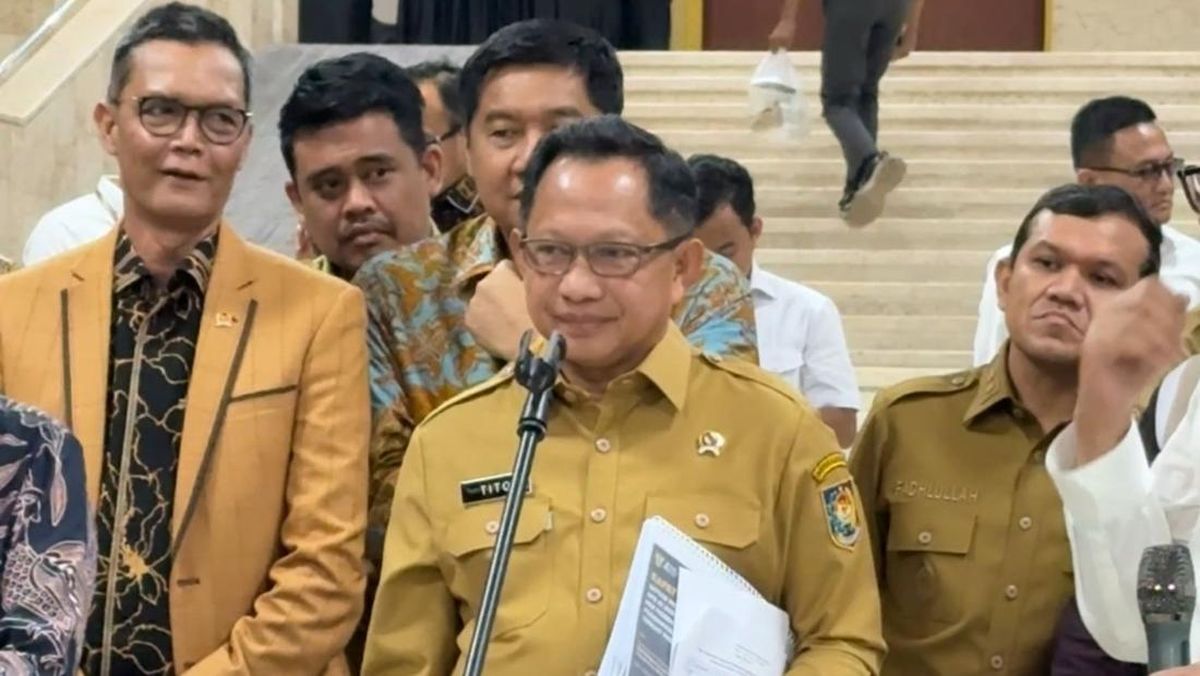
‘The first stage after a disaster is emergency response. It’s directly commanded by the President, with all ministries/agencies and local governments mobilised, and it has been sufficiently mitigated,’ Tito said after a coordination meeting between the PRR Task Force and the DPR RI’s Galapana Task Force at the DPR RI Complex in Jakarta on Monday (25 May).
Tito explained that since the PRR Task Force was established on 8 January, cross-sector coordination has been accelerated to oversee the transition phase.
Several basic services that were disrupted have largely resumed, including local government operations, electricity supply, fuel distribution, internet services, and healthcare facilities.
Regarding connectivity, all national roads have been reconnected, while national bridges are operational again, either through permanent construction or temporary solutions such as Bailey bridges, Armco bridges, pioneer bridges, and suspension bridges.
‘National bridges are functioning, connected, albeit temporarily. Some use Bailey, pioneer, Armco, and suspension bridges, but they are functional for mobility,’ he said.
Progress is also evident in education and survivor housing. Of the approximately 4,922 affected schools, most have resumed classes at their respective schools after repairs, though a small number still use tents, emergency classrooms, or share facilities at other schools, especially in relocation areas. Meanwhile, the number of people staying in tents continues to decline.
With these developments, the government is now focusing on the permanent recovery phase based on the Master Plan (Renduk) for accelerated post-disaster rehabilitation and reconstruction. The document was compiled through consolidation of local government, ministry/agency proposals, and coordination with the Ministry of National Development Planning/Bappenas and the PRR Task Force.
‘Now we will proceed towards permanent recovery. From the three stages—emergency response, transition—we enter the permanent phase, which we call rehab-rekon, and the key is Renduk,’ Tito explained.
The Renduk recovery plan is designed for 2026-2028, covering 11,512 cross-sector activities, from river, road, and bridge infrastructure to schools and permanent housing. Tito stressed that the primary focus in the first year will be on basic infrastructure and accelerating permanent housing construction to prevent residents from staying in temporary shelters for too long.