
Titiek Soeharto states 4.8 million ton rice reserve prevents scarcity concerns
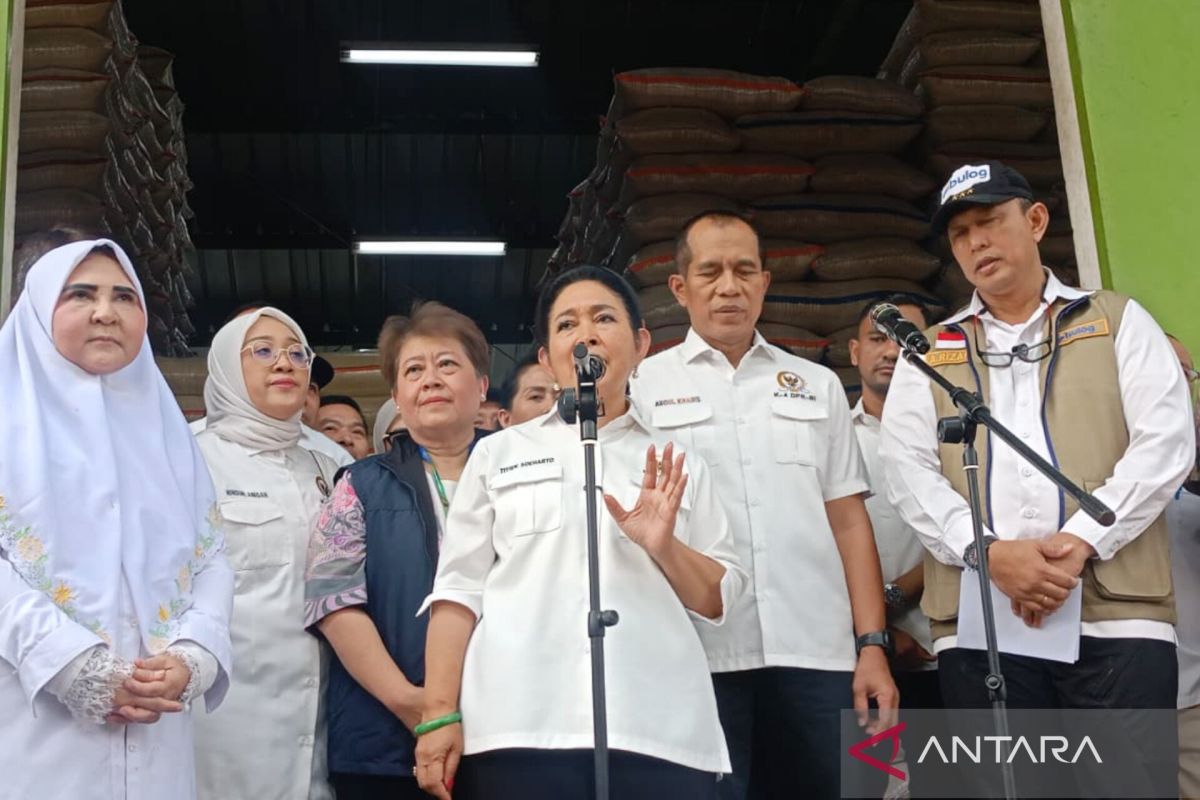
Jakarta (ANTARA) - The Chairperson of Commission IV of the Indonesian House of Representatives (DPR RI), Titiek Soeharto, emphasised that the national rice reserves currently managed by Bulog, which stand at approximately 4.8 million tonnes, can prevent public concerns regarding the risk of rice scarcity.
“The rice requirements for all of Indonesia can be met with sufficient reserves; as of today, the rice reserve is 4.8 million tonnes, so there is no need to worry that we will experience rice shortages,” said Titiek while monitoring rice availability and prices at the Cipinang Rice Wholesale Market (PIBC), East Jakarta, on Friday.
Titiek stated that rice reserves are a crucial factor in maintaining supply and simultaneously controlling price movements in the market. Furthermore, sufficient reserves, even those exceeding requirements, can serve as an anticipation measure in the event of increased public demand or changes in supply conditions.
“If stocks are high, it means prices can be controlled and will not fluctuate uncontrollably,” said Titability.
During her visit, Titiek also personally inspected the condition of rice stocks in several stalls at the Cipinang Rice Wholesale Market alongside the President Director of Perum Bulog, Ahmad Rizal.
“The important thing is that no one can manipulate rice prices to the point where they become too high and unaffordable for consumers,” she said.
She also expressed appreciation for the domestic rice production conditions, which are deemed capable of meeting public needs, thereby reducing dependence on imported rice. The daughter of Indonesia’s second President, Soeharto, ensured that the rice currently available in the market originates from domestic production.
“The important thing is that we no longer need to import; everything is produced domestically. There is no rice scarcity, stocks are continuously available, and even favourite varieties are in stock,” said Titiek.
According to Titiek, the increase in domestic production is not only related to meeting national food requirements but also impacts the income of farmers as producers. With high production levels being absorbed by the market, Titiek hopes this condition will provide economic benefits to farmers and encourage an increase in their welfare.
“Alhamdulillah, with such high production, it means farmers are progressing and hopefully can prosper. The issue of rice is not just about stock availability, but also about effective distribution from producers and Bulog to the market,” she added.
Furthermore, Titiek also commended the work of Perum Bulog in maintaining rice reserves to meet the needs of the public in various regions. Although the national stock is reported to be sufficient, Titiek emphasised that the management of reserves must be accompanied by effective distribution.
Rice from both producers and those managed by Bulog, she noted, must be distributed to the market efficiently and subsequently passed on to retailers and consumers. Titiek expressed her hope that the current conditions of rice stocks, production, and distribution, which are monitored to be good, can be maintained to support the fulfilment of the public’s food needs.