
Titiek Soeharto Says Nusakambangan Food Security Programme Is a 'Whip' for Other Ministries
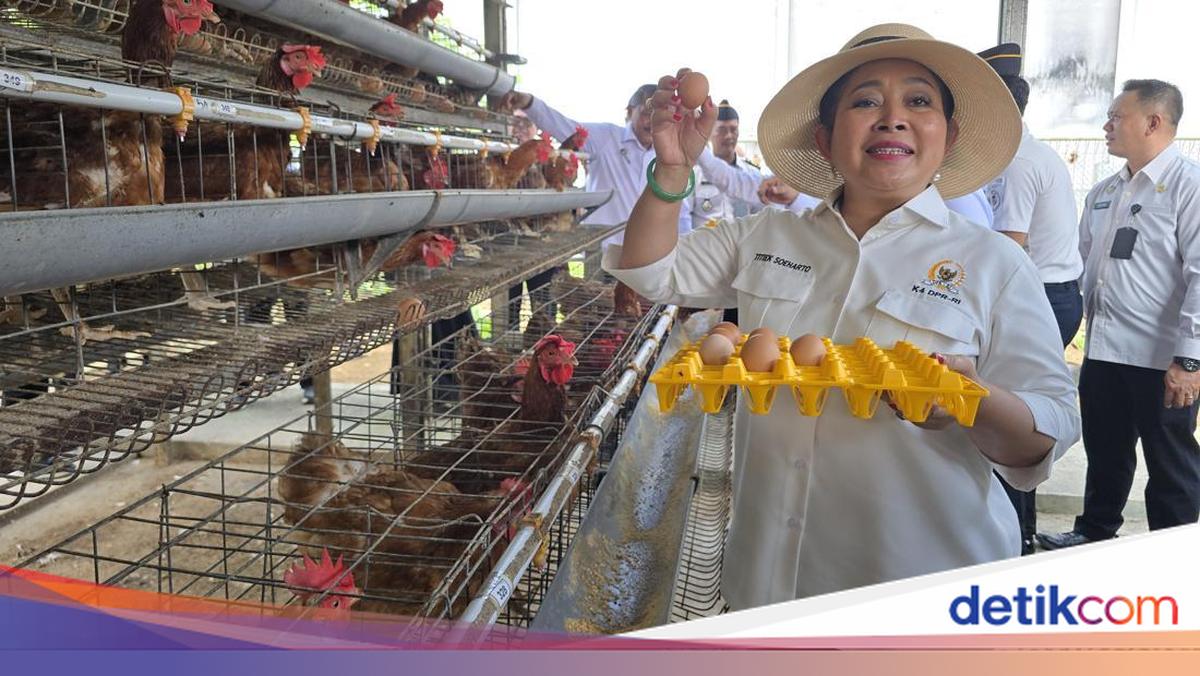
House Commission IV Chair Siti Hediati Soeharto, known as Titiek Soeharto, has stated that the development of the food security programme on Nusakambangan Island serves as a ‘whip’ for other ministries and agencies, particularly those with core duties in the food sector. The whip she refers to is a motivation to collectively strive towards achieving food security.
‘Just imagine, Nusakambangan can be like this. What about other places? Actually, this all comes down to our will. Do we really want to produce these foodstuffs or not?’ Titiek said after touring Nusakambangan in Cilacap, Central Java, on Saturday (20/6/2026).
Titiek had earlier praised the performance of Minister of Immigration and Corrections Agus Andrianto and his staff for transforming Nusakambangan Island, once closely associated with a grim stigma, into a centre for micro, small, and medium enterprise (MSME) job training and food security spanning agriculture, livestock, and fisheries. She noted that Indonesia has been blessed with fertile soil by the Almighty, but it requires will and intention to cultivate this blessing so it can benefit the nation’s progress.
‘If the person, the official, is lazy, they will just sit in office and do the bare minimum. This kind of transformation would not happen. But we must have the will to make the best use of what God has bestowed upon us, this fertile land,’ she said. ‘It comes back to the people, how we cultivate this land and sea for the benefit of all,’ Titiek continued.
For this reason, Titiek hopes the food security programme on Nusakambangan, which she considers quite successful, can inspire the leadership of other ministries and agencies. She expressed hope that Minister Agus would invite his fellow cabinet ministers to Nusakambangan so they could develop creative ideas to contribute to food security within their own domains.
‘The hope is that this is not just here, but other places can do it too. If possible, the Minister should invite his colleagues from the rest of the cabinet to see this place, so they have ideas that can be developed in their respective ministries,’ Titiek said.
Titiek noted that every ministry possesses land assets. She hopes that ministry-owned lands currently lying idle can be made productive, especially in relation to food. ‘Surely every ministry has large tracts of land in other regions that can be duplicated,’ Titiek remarked.
She stressed that efforts to achieve food security are not limited to ministries or agencies tasked with handling food. As long as there is the intention and will to build the nation, anyone can contribute. ‘What does immigration and corrections actually have to do with food security? But because they have the intention to help build this country and to make the President’s programme a success, the minister and his ministry are doing these beneficial things,’ Titiek said. ‘So, this is also a whip for the ministries related to food security to be more diligent in achieving what the President and all of us desire,’ she concluded.
The transformation of Nusakambangan was an idea initiated by Minister Agus after he was appointed by President Prabowo. During the transition of the Directorate General of Corrections from the Ministry of Law and Human Rights to the Ministry of Immigration and Corrections, Minister Agus received a report from the Audit Board of Indonesia (BPK) regarding many ministry assets that were idle. Consequently, Minister Agus sought to revitalise the idle land by building job training centres so that inmates could engage in self-development activities. The aim is for the skills acquired at these centres to serve as a foundation upon their release, preventing them from reoffending.
Training and skill development infrastructure already established on Nusakambangan includes a workshop for bricks and paving blocks made from fly ash bottom ash (FABA) material, a garment production training centre, an organic fertiliser processing centre, eel farming, and waste processing. Also developed on the island are tilapia, catfish, and pomfret farming; Vaname shrimp ponds; cattle, sheep, and poultry farming; a cigarette rolling training centre; Mocaf flour production; and orchid cultivation.