
Titiek Soeharto calls for intensification of agriculture to prevent food crisis
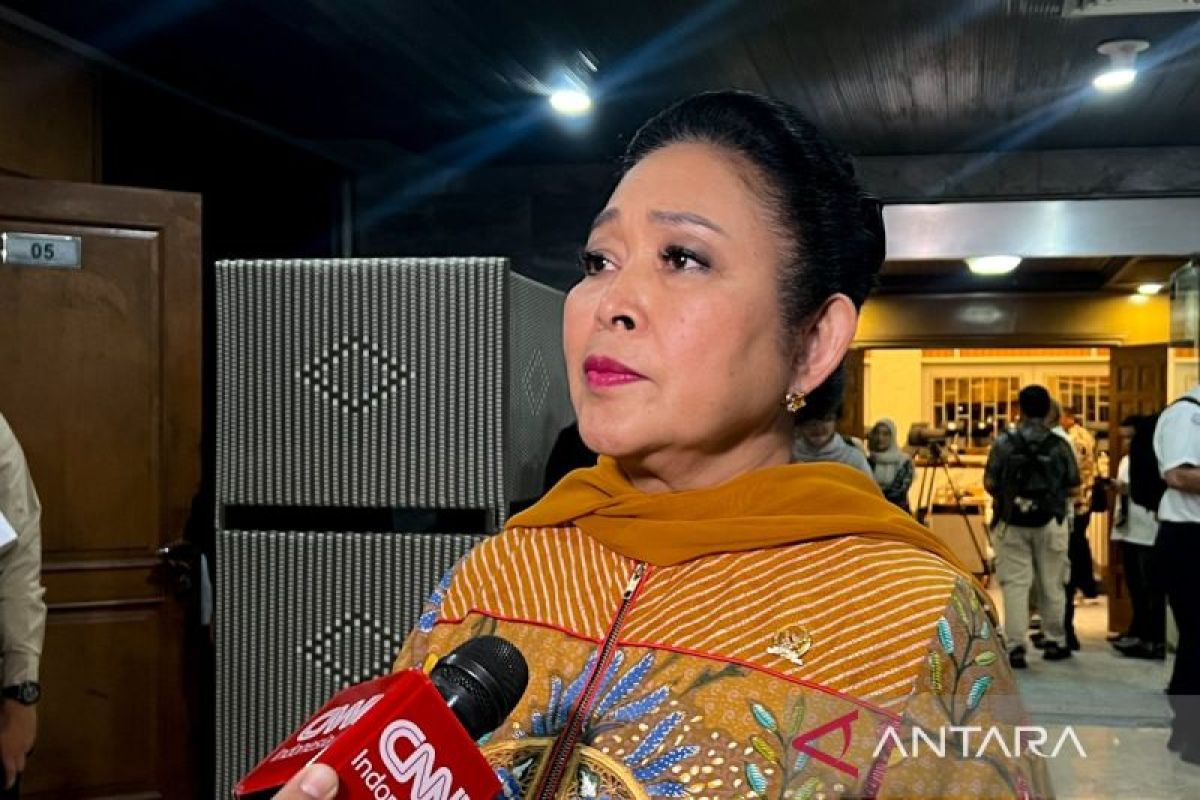
Jakarta (ANTARA) - Chair of Commission IV of the Indonesian House of Representatives, Siti Hediati Hariyadi, or commonly known as Titiek Soeharto, has called for strengthening agricultural intensification as the primary strategy to prevent a potential food crisis amid global geopolitical dynamics and climate change.
“We conveyed to Mr Minister (Agriculture Minister Andi Amran Sulaiman) that regarding food, especially rice, we should not talk too much about extensification of agricultural land, but what is important is intensification,” Titiek said after a working meeting with Minister Amran in Jakarta on Tuesday.
Titiek emphasised that future agricultural policies should not overly focus on land expansion or extensification, which requires significant costs and a long time. Meanwhile, Indonesia currently needs short-term preparations, especially to face the impacts of global geopolitics, including drought due to the El Nino phenomenon.
As an alternative, she encouraged agricultural intensification through increasing planting frequency, such as from once to twice, or from twice to three times a year.
According to her, this step is more efficient and can produce significant production increases without having to open new land that requires large investments.
“Well, the quantity will be the same, rather than extensification, which is expensive,” she said.
In addition to intensification, water availability is a key factor that must be addressed, especially in facing the potential for prolonged drought due to the El Nino phenomenon.
For this reason, she encouraged increasing water pump assistance and repairing irrigation channels so that agricultural productivity remains maintained and national food security is strengthened.
“Water pump assistance should be increased. Then irrigation channels should be repaired so that agricultural yields can increase,” she said.
In the meeting with Commission IV’s working partners, Titiek also said that they discussed the impact of the global geopolitical situation, including tensions between the United States and Iran, which could affect national food stability.
The closure of the Strait of Hormuz and rising fuel prices are concerns because they can impact production and food distribution costs domestically.
In addition, the threat of climate change such as El Nino, which is expected to last a long time, is also a factor that needs to be seriously anticipated by the government.
“The Minister has explained that our stock, Alhamdulillah, insya Allah is sufficient, food stock especially rice,” Titiek added.
Previously, Agriculture Minister and Head of the National Food Agency, Andi Amran Sulaiman, assured that the government’s rice reserve stock (CBP) nationally is 4.6 million tonnes and is safe to face global geopolitical pressures and drought threats due to the El Nino phenomenon.
In the working meeting, Amran said that the rice reserves as of 7 April 2026 reached 4.6 million tonnes, an increase from the previous position of 4.5 million tonnes, and also the highest figure in the history of national food stock management in Indonesia.
“The rice reserves today, as of this morning on 7 April 2026, have reached 4.6 million tonnes. So yesterday 4.5, now 4.6 million tonnes. This is the highest in history,” said Amran.