
Titiek Demands Swift Garlic Self-Sufficiency Without Imports
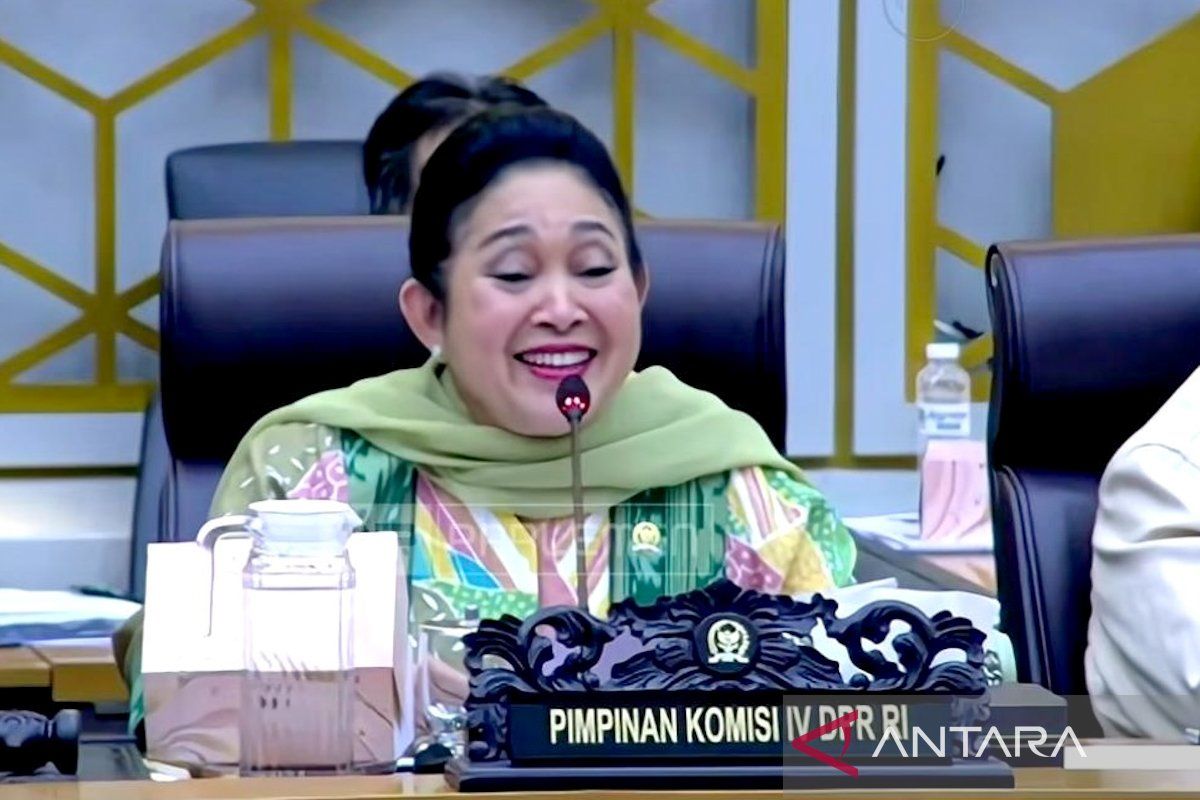
Jakarta (ANTARA) - The Chair of Commission IV of the Indonesian House of Representatives (DPR RI), Siti Hediati Hariyadi, popularly known as Titiek Soeharto, has called on the Ministry of Agriculture to achieve garlic self-sufficiency as soon as possible, given Indonesia’s heavy reliance on imports for this commodity.
During a working meeting with Minister of Agriculture Andi Amran Sulaiman, officials from the Ministry of Agriculture, and the National Food Agency in Jakarta on Wednesday, Titiek questioned why garlic development programmes were not listed within the national priority work programme.
She argued that efforts to achieve self-sufficiency should not merely be a recurring annual discourse.
“For my part, I want to ask again regarding garlic, Mr Minister. Why is it not included in the national priority work programme?” Titiek asked Minister of Agriculture Andi Amran Sulaiman during the in-depth session of the working meeting.
According to Amran, the programme is already included in the planning and has not been postponed until next year.
Amran stated that the Ministry of Agriculture has reallocated an annual budget of IDR 260 billion specifically for garlic development. This step was taken in response to feedback and aspirations presented by Commission IV of the DPR RI to the ministry.
However, Titiek reiterated that the primary issue is not merely budget availability. She questioned why the programme did not appear as a national priority in the documents submitted to Commission IV.
Responding to this, the Minister of Agriculture explained that the omission of the programme was suspected to be due to a clerical error in the documents. He ensured that garlic development remains part of the government’s agenda and that funds have been allocated for the current year.
Titiek responded by emphasising that garlic development is not just an aspiration for specific regions, but a national necessity. In her view, all parties must share the same commitment to reducing import dependency and achieving self-sufficiency.
She reminded the assembly that approximately 80 to 85 per cent of national garlic needs are still met through imports, despite garlic being a commodity used daily by the public for various consumption needs.
“So, we must all agree: we must achieve self-sufficiency. Mr Minister, you must set a target for when this self-sufficiency will be achieved,” Titiek asserted.
Consequently, Titiek requested that the Ministry of Agriculture establish a clear target for when Indonesia can reach garlic self-sufficiency. She noted that measurable targets are necessary to ensure that implemented programmes have a definite direction and evaluation process.
She expressed optimism that such a target could be realised with adequate budget support and the development of production centres.
According to Amran, the main challenge in garlic development lies in the characteristics of the seeds, which have a relatively long dormancy period of approximately six to eight months. This condition prevents the production increase process from occurring as rapidly as other commodities, such as rice.
Amran explained that the government has designated several regions as centres for garlic seed development, including Sembalun in West Nusa Tenggara, Temanggung in Central Java, and Humbang Hasundutan in North Sumatra.
By strengthening seed centres and expanding planting areas—targeted to reach 18,000 hectares next year—the government hopes to achieve garlic self-sufficiency within three to five years.
“Three years at the earliest, five years at the latest. The issue is the dormancy period, Madam. I am sorry, if it were like rice, I could do it in two years (for self-sufficiency), but the dormancy of the seed, its ‘sleep’ period, is six to eight months,” said the Minister of Agriculture.