
Tips for Pledging a Car’s Vehicle Registration Certificate Without Losing Out
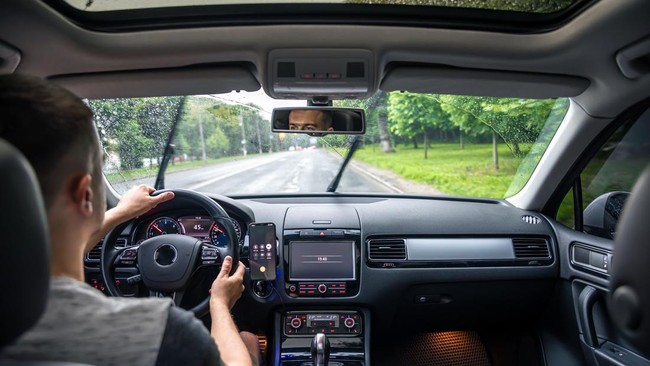
Jakarta, CNBC Indonesia — Pledging a car’s Buku Pemilik Kendaraan Bermotor (BPKB), or vehicle ownership certificate, can be a way to obtain cash without selling the vehicle. The car can still be used for daily activities during the loan period, provided the financing agreement allows it.
Although it may seem convenient, borrowing against a car’s BPKB carries financial risks. The amount received may not be proportionate to the vehicle’s value, while interest and additional charges can increase the total repayment. If instalments are not paid as agreed, the vehicle may also be at risk of repossession under the applicable procedures.
Prospective borrowers should therefore avoid rushing to accept offers of large cash disbursements. There are several points to check before handing over the BPKB to a financing company.
1. Ensure the financing company is licensed and supervised by the OJK
The first step is to check the credentials of the company offering a loan secured by a car’s BPKB. Do not rely solely on advertisements, recommendations from others or an office that looks convincing.
Choose a financing company licensed by the Financial Services Authority (OJK). This information can be checked through the OJK’s official channels, including its directory of licensed and supervised financial services companies.
This check matters because the BPKB is a vehicle ownership document with economic value. Handing it to a party whose legal status and identity are unclear could cause problems if a dispute arises.
Prospective borrowers should also ensure that the company named in the agreement is the same legal entity offering the financing. Do not transfer an advance payment or disbursement fee to a personal bank account without a clear basis.
2. Compare interest rates and total loan costs
Do not immediately choose the offer with the largest disbursement or the lowest monthly instalment. Neither figure necessarily indicates the most favourable loan.
Check every cost component, including interest, administration fees, any provision fees, insurance, survey charges and other costs imposed on the borrower.
Also check whether interest is calculated using a flat or effective method. Under a flat-rate method, interest is calculated on the original principal, whereas under an effective-rate method it is calculated on the remaining principal. These methods can produce different total repayments even when the quoted interest rates appear similar.
For example, a person borrows Rp50 million for 24 months at a flat rate of 1% per month. The calculation is as follows:
These figures do not include administration, insurance or other charges. Ask for a written repayment simulation showing both the net amount received and the total amount payable until the loan is fully repaid.
3. Calculate your ability to repay before applying
The amount approved by a financing company does not automatically mean the borrower can afford it. Repayment capacity should be the main consideration before agreeing to a loan amount.
Calculate monthly net income, regular expenses, other instalments and household needs. Set aside money for unexpected expenses as well, so that repayments do not disrupt your finances.
For example, if someone has a net monthly income of Rp8 million and regular expenses and other instalments total Rp5 million, only Rp3 million remains.
Taking on instalments close to that entire amount would be risky. If an unexpected expense arises or income falls, loan payments could be disrupted.
Choose a loan amount that leaves room for everyday needs and emergency savings. Do not borrow more simply because the company offers a higher credit limit.
4. Check the car’s assessed value
The vehicle’s value is one factor that determines the loan limit. Financing companies usually consider its make, model, year of manufacture, condition, document completeness and market price.
Before applying, find out the approximate price of cars of the same model and year. You can compare listings on several used-car platforms or check with used-car dealers.
This helps borrowers judge whether the loan limit offered by a financing company is reasonable.
A higher valuation is not necessarily an advantage. If a larger loan limit leads to unaffordable instalments, the risk of loss increases. Borrow only what you need rather than taking the maximum amount on offer.
5. Read the financing agreement before signing
The financing agreement is the legal basis for the relationship between the borrower and the company. Do not sign documents based only on an employee’s verbal explanation.
Check the terms carefully, particularly those covering:
The loan amount and net funds received.
The interest rate and how it is calculated.
The term and instalment due dates.
Administration fees and additional charges.
Late-payment penalties.
Early repayment conditions.
The consequences of default.
Procedures for repossessing and selling the vehicle in the event of a breach of contract.
Also pay attention to the terms governing fiduciary security. In financing secured by a BPKB, the vehicle may be the object of a fiduciary guarantee, so the parties’ rights and obligations should be clearly set out in valid documents.
If you do not understand a clause, ask the company’s representative to explain it before signing. Borrowers are entitled to clear information about the costs, risks and consequences of the financing product they choose.
6. Understand the risks of penalties and repossession
Pledging a BPKB does not mean the car is risk-free just because it remains in the owner’s possession. If instalment payments fall behind, the financing company may pursue collection and resolution measures in line with the agreement and applicable law.
Borrowers should understand when late-payment penalties begin, how they are calculated and what steps the company will take in the event of default.
Do not ignore notices or official communications from the financing company if you are having difficulty making payments. Contact the company promptly to discuss possible solutions.
Understanding these terms helps borrowers know their rights while recognising that their repayment obligations remain in force.
7. Keep the BPKB and vehicle documents secure
Before handing over the BPKB, ensure that it is received directly by the financing company named in the agreement.
Ask for a receipt stating the document’s details, the date of handover and the identity of the person receiving it. Keep copies of the BPKB, vehicle registration certificate (STNK), financing agreement and all transaction records in a safe place.
Do not hand vehicle documents to an intermediary whose authority is unclear. Also avoid signing blank forms or documents that have not been completed in full.
Once the loan has been repaid, make sure the BPKB is returned in accordance with the company’s procedures. Check the vehicle details and the document’s physical condition when you receive it.
8. Choose a loan term that suits your finances
A longer loan term usually makes monthly instalments appear more affordable. However, a longer borrowing period may increase the total interest payable.
Conversely, a term that is too short may result in monthly instalments that put pressure on cash flow.
To choose an appropriate term, compare repayment simulations for several durations. Do not look only at the instalment amount; calculate the total repayment through to the end of the loan as well.
If your income is irregular, for example from a business or freelance work, account for the possibility that earnings may fall. Choose a repayment arrangement that remains manageable when income is below its usual level.
9. Use the loan for a clearly defined purpose
Before pledging a car’s BPKB, decide how the funds will be used. A loan secured against a vehicle should be used for a planned purpose, such as productive business capital or an urgent need that cannot be postponed.
Avoid using borrowed money for non-essential consumption, especially if you do not have sufficient income to cover the instalments.
If the funds will be used as business capital, make a simple estimate of potential revenue, operating costs and the time needed to recover the investment. Ensure the business’s returns will not only cover operating costs but also help meet the loan instalments.
This way, pledging the BPKB will not merely solve a short-term financial problem while creating a new burden in the months ahead.
What to avoid when borrowing against a car’s BPKB
There are several practices to avoid so that pledging a BPKB does not result in a loss.
First, do not be tempted by offers of very fast disbursement without checking the company’s credentials. Second, avoid borrowing more than you need just because the vehicle’s valuation allows a larger loan.
Third, do not overlook additional charges that only become apparent after an application is approved. Ensure all fees are explained from the outset to avoid discrepancies between the initial estimate and the actual repayment obligation.
Finally, do not use a new loan to pay instalments on an old one without careful calculation. This practice can create a cycle of debt that becomes increasingly difficult to resolve.
Conclusion
Pledging a car’s BPKB can be an option for obtaining cash when financing is needed. However, the decision should be based on the ability to repay, not merely on how much money can be disbursed.
Before agreeing to a loan, compare several financing companies, calculate the total amount payable, check the agreement and confirm the lender’s credentials. If the instalments could compromise essential spending or your family’s financial position, reconsider the decision.
The BPKB may be only the collateral document, but the car at stake could be your main means of getting to work and earning an income.
Source: jawawa.id (https://jawawa.id/newsitem/tips-for-pledging-a-cars-vehicle-registration-certificate-without-losing-out-1793962249)
Originally published by CNBC Indonesia (https://www.cnbcindonesia.com/mymoney/20261106134655-72-782998/tips-aman-gadaikan-bpkb-mobil-agar-tidak-rugi), translated from Indonesian