
Tin Prices Surge by 34 Per Cent, Driving Acceleration of National Downstreaming
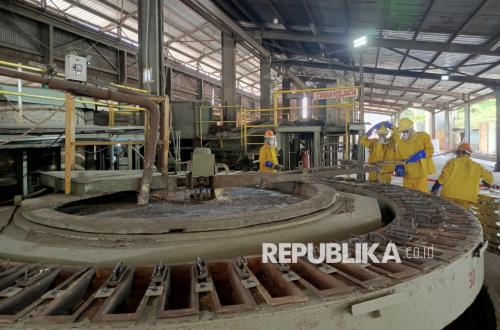
Global tin prices recorded a significant strengthening throughout the first quarter of 2026. This price increase serves as a catalyst for the performance of the national tin industry while opening greater opportunities to accelerate the downstream industrial programme. The average Cash Settlement Price (CSP) of tin on the London Metal Exchange (LME) during this period was recorded at 48,679.68 USD per metric tonne, a 34.7 per cent surge compared to the first quarter of 2025, which stood at 36,134.37 USD per metric tonne.
In terms of demand, the global tin consumption structure shows a positive trend. Approximately 50 per cent of consumption is supported by the solder segment, which is closely linked to the semiconductor and electronics industries. The outlook for this segment remains strong due to the accelerated adoption of Artificial Intelligence (AI), the expansion of data centres, the development of energy storage technologies, and increased investment in electrical infrastructure. This condition presents a strategic opportunity for Indonesia to strengthen the national tin industry through the development of the downstream sector and the enhancement of domestic value-added processes.
According to the CRU Tin Monitor, global tin metal production in the first quarter of 2026 reached 90,645 tonnes, while consumption was estimated at 89,036 tonnes, indicating a relatively solid market balance. In line with global market developments, PT Timah Tbk (TINS), a member of the MIND ID mining industry holding company, recorded significant performance. The company booked revenue of IDR 5.47 trillion, a 160.5 per cent growth compared to IDR 2.10 trillion in the same period the previous year.
Lukman Leong, Chief Analyst at Doo Financial Futures, assessed that this performance improvement was driven by the improving conditions of the global tin industry. “Tin performance was driven by the rise in global tin prices, improved exports, increased production, as well as operational efficiency and a reduction in several cost burdens,” he stated.
From an operational perspective, up to the first quarter of 2026, TINS recorded tin ore production of 6,312 tonnes Sn, an increase of 96 per cent compared to 3,225 tonnes Sn in the same period last year. Tin metal production also rose by 82 per cent to 5,630 metric tonnes Sn from 3,095 metric tonnes Sn. Tin metal sales surged by 113 per cent to 6,009 metric tonnes from 2,824 metric tonnes in the first quarter of 2025. The company also benefited from an increase in the average selling price of tin metal to 49,221 USD per metric tonne, up 51 per cent compared to 32,495 USD per metric tonne in the same period last year.
In terms of market share, sales were still dominated by exports, contributing 97 per cent. China remains the primary destination, accounting for 48 per cent of total exports. Amidst this strengthening performance, MIND ID continues to push the transformation of the national tin industry through the strengthening of downstreaming. Tin is no longer positioned solely as a primary commodity, but as part of a high-value-added industrial ecosystem. The development of derivative products such as solder, tin chemicals, and supporting materials for the electronics industry is the focus to expand Indonesia’s role in the global supply chain. This step is expected to increase domestic value-add while strengthening the competitiveness of the national industry. MIND ID is currently the controlling shareholder of TINS with a 65 per cent stake, while the public holds approximately 34.9 per cent. This position places MIND ID as the consolidator of the national tin industry, integrating resource management from upstream to downstream to strengthen Indonesia’s competitiveness in the global market.