
Timor-Leste highlights broader market opportunities at 23rd CAEXPO
Nanning (ANTARA) - Upon entering the Timor-Leste pavilion, visitors are greeted by an image of a whale leaping from the water as the pavilion’s main backdrop.
Along the walls, a panorama of coffee harvesting activities is displayed, featuring the people of Timor-Leste dressed in bright traditional attire amidst lush, green coffee plantations. They appear to be holding freshly picked red coffee cherries, with their woven baskets filled with the harvest.
“I never knew that Timor-Leste had such excellent coffee and that whales migrate through its waters,” remarked one visitor after touring the pavilion. He admitted to gaining a new understanding of a country he previously knew little about. “Through the China-ASEAN Expo, I have had the opportunity to learn more about Timor-Leste.”
The 23rd China-ASEAN Expo (CAEXPO) is being held from 17 to 21 September 2026 in Nanning, the capital of the Guangxi Zhuang Autonomous Region.
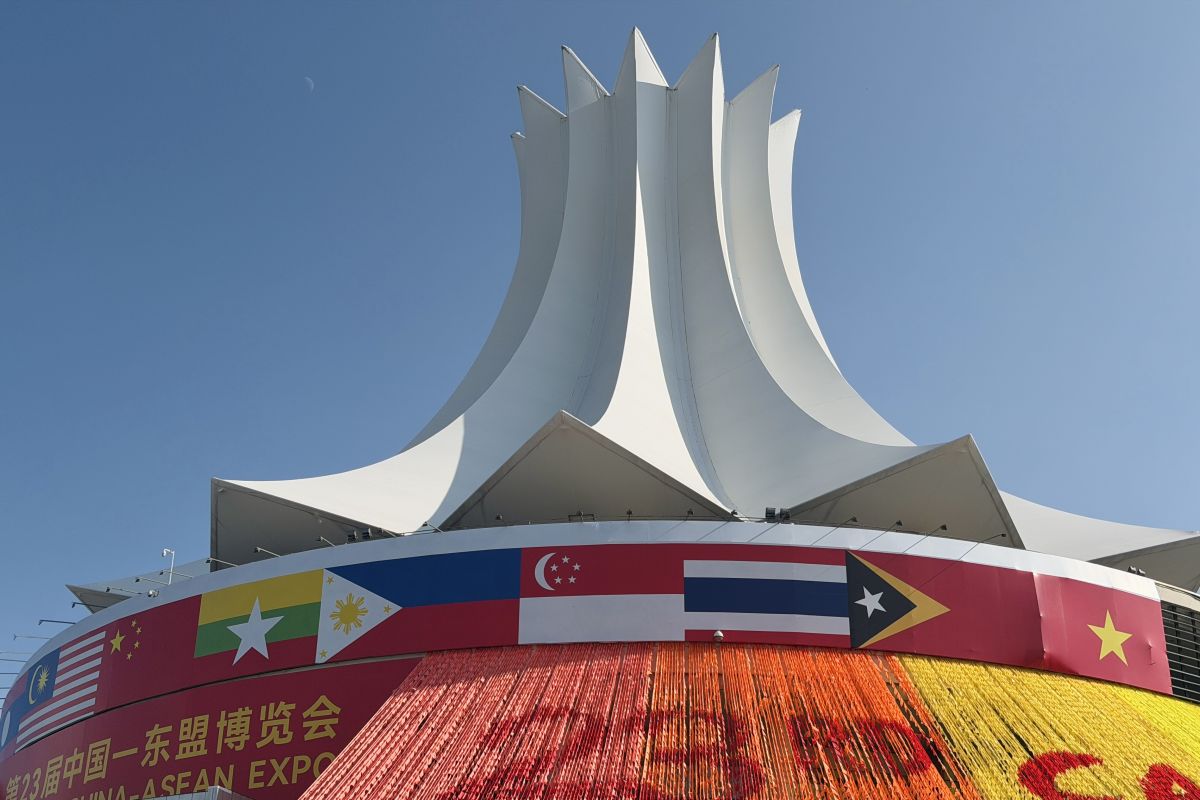
This year, the line of flags outside the Nanning International Convention and Exhibition Centre also features the flag of Timor-Leste, marking the first time the nation has participated as a co-host. It also represents the first gathering of all 11 ASEAN member states in Nanning since Timor-Leste joined the bloc.
For many visitors, the introduction to Timor-Leste begins with a cup of coffee. Timor-Leste’s involvement in the China-ASEAN Expo is not a new phenomenon; previously, the nation participated in various expo-related activities as an observer.
Following its accession to ASEAN in 2025, Timor-Leste, for the first time, coordinated a group of companies to showcase flagship products in the commodities exhibition area. The nation also organised investment and trade promotion activities during the expo and sent representatives from its Chamber of Commerce and Industry to attend the China-ASEAN Business and Investment Summit and the annual Business Council meeting.
Coffee cultivation has a long history in Timor-Leste, with organic production being one of its hallmarks. For years, Timor-Leste coffee has primarily been exported to several international markets, including Japan, Australia, and New Zealand.
“This pavilion attracts many visitors, and I hope more people will come to know and love Timor-Leste coffee,” said Zania Abuk Da Costa, an exhibitor from Timor-Leste visiting China for the first time. She expressed hope that the expo would help more Chinese consumers recognise Timor-Leste coffee and voiced her desire to participate again next year.
In addition to coffee, the pavilion also showcases various agricultural technology products, such as data loggers and weather sensors, which are capable of collecting data on wind speed, rainfall, and wind direction, as well as monitoring solar radiation.
“We hope to introduce Timor-Leste’s meteorological monitoring products and solutions to more people and find potential partners through this exhibition,” said exhibitor Santiago Da Silva.
Coffee, handicrafts, and technological equipment provide a diverse overview of the Southeast Asian island nation, bringing its products closer to the Chinese market.
In the “City of Charm” exhibition area, Timor-Leste’s Minister of Trade and Industry, Filipus Nino Pereira, performed the ribbon-cutting ceremony for the Baucau stall. He stated, “This is not merely the opening of a stall, but also a significant moment to showcase the products and culture of Timor-Leste and to promote regional economic integration.”
For Timorese businesses, participation in the expo also represents an opportunity to explore new markets.