
Timeline of Bank Collapse That Led to President’s Resignation Under Investigation by Prosecutors
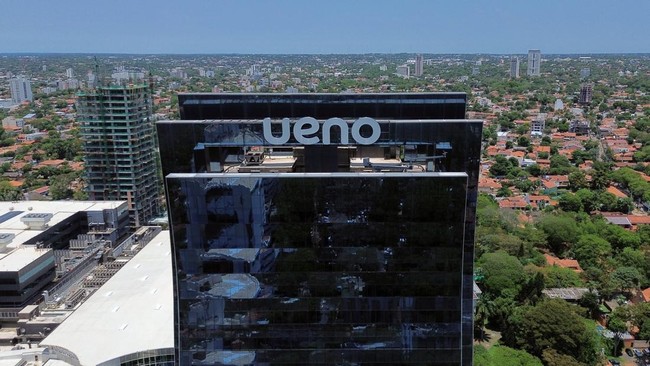
Jakarta, CNBC Indonesia — Paraguayan President Santiago Peña resigned on Thursday local time following the collapse of Ueno, a leading commercial bank with links to his administration. How did it happen, and how did the bank’s collapse lead to the president’s downfall?
What is Ueno?
Ueno, whose name is styled with a lower-case “u”, is a fast-growing digital lender. It began as a small local fintech company and developed into a mid-sized bank in Paraguay.
Launched in 2021, Ueno was compared with other rapidly growing digital banks such as Nubank, Monzo and Revolut. By June, the company said it had around three million customers in a country with a population of 6.5 million, and managed about US$850 million (approximately Rp15.38 trillion) in public funds, including money from state institutions and bodies linked to pension funds.
The bank’s rapid expansion made it one of Paraguay’s most prominent financial success stories. In recent months, however, it has come under close scrutiny from the authorities.
Timeline of the problems
The bank ran into trouble over alleged excessive lending to companies affiliated with its controlling shareholder, Grupo Vazquez. One of Paraguay’s major business conglomerates, it operates across several sectors and is led by Miguel Vazquez Villasanti.
Paraguay’s central bank intervened after determining that Ueno had breached minimum solvency requirements. This triggered a crisis that temporarily left millions of customers unable to access their accounts.
Links to the president
Peña is an economist and was elected in 2023.
He came under political scrutiny over his past business ties to Grupo Vazquez. Peña said he had been a shareholder in the group until March 2025, when he sold his entire stake.
Ueno has said Peña never had a direct relationship with the bank, either as a shareholder or an investor. Opposition lawmakers, however, have accused him of conflicts of interest, misuse of pension funds and institutional efforts to cover up the problems.
Peña, who has repeatedly denied any improper ties, described the controversy as a political escalation of what began as a regulatory issue. He argued that the matter should be resolved through the courts.
Prosecutors have said Peña is among those being investigated in connection with the bank’s failure, although he has not yet been summoned for questioning. This week, prosecutors also issued arrest warrants for eight Ueno executives.
Were regulators failing to supervise the bank?
Questions have been raised about whether regulators adequately monitored Ueno as it expanded, particularly because the country’s central bank governor, Carlos Carvallo, had previously led the digital bank.
Carvallo resigned from the central bank on Tuesday, after it placed Ueno into resolution, a status one step short of immediate liquidation.
The central bank denied there was a conflict of interest, saying Carvallo had recused himself from all decisions concerning Ueno. Pressure nevertheless mounted after details of the regulators’ investigation became public.
What happens to customers now?
The central bank says it is working to transfer Ueno customers’ accounts to other financial institutions. The process has put pressure on the wider banking system and disrupted some banking apps.
Customers are still unable to access their Ueno accounts. This week, some went to the bank’s branches to try to retrieve their savings.
Ueno’s mobile-first business model attracted new customers who had previously been underserved by traditional banks. It also made digital payments, saving and other financial services more accessible to many Paraguayans.
Among those unable to access their accounts are pensioners who receive state benefits through Ueno. The situation has prompted authorities to act quickly to guarantee deposits and protect public funds.
Earlier this week, Peña approved legislation intended to speed up payments to customers affected by the bank’s collapse.
Impact on public finances?
Authorities say the crisis is confined to Ueno and does not reflect broader weaknesses in Paraguay’s banking system. Nevertheless, in a 2026 statement, the bank said it had obtained about US$510 million in funding from development institutions, international funds and capital markets. This included a US$350 million bond issuance on Wall Street led by JPMorgan and Bank of America.
Paraguay has secured investment-grade credit ratings and built a reputation as one of South America’s more stable economies, open to reform. It remains unclear whether the crisis will affect the country’s reputation over the long term.
Source: jawawa.id (https://jawawa.id/newsitem/timeline-of-bank-collapse-that-led-to-presidents-resignation-under-investigation-by-prosecutors-1793937032)
Originally published by CNBC Indonesia (https://www.cnbcindonesia.com/news/20261106075720-4-782826/kronologi-bank-kolaps-buat-presiden-mundur-diperiksa-kejaksaan), translated from Indonesian