
Timeline: How SIA's India bet led to a 25.1% stake in Air India
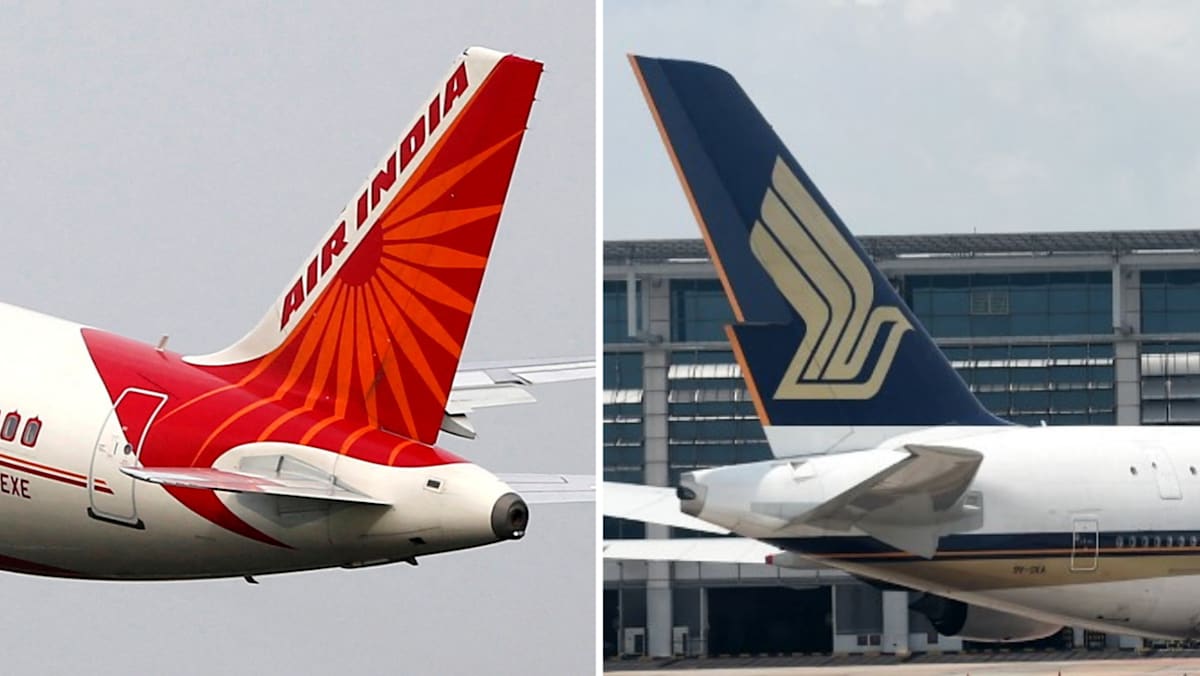
Timeline: How SIA’s India bet led to a 25.1% stake in Air India
SIA’s pursuit of India’s aviation market spans more than three decades. CNA traces how its partnership with Tata led to the launch of Vistara and ultimately a significant minority stake in Air India.
SINGAPORE: Long regarded as one of the world’s fastest-growing aviation markets, India is proving a challenging bet for Singapore Airlines (SIA).
Air India Group posted a record US$2 billion loss in the last financial year, contributing to co-owner Singapore Airlines (SIA) reporting a net loss of S$76 million (US$58.9 million) in the first quarter of 2026. With the airline also reportedly seeking about US$1.5 billion in fresh equity, it could be years before SIA’s investment bears fruit.
Here’s a timeline of how a joint venture with an Indian conglomerate to launch a new airline ultimately resulted in SIA becoming a co-owner of Air India.
February 1995: First formal attempt
Tata and SIA first sought to establish a jointly owned full-service airline in India in the 1990s.
The proposal was formally submitted to India’s foreign investment promotion board in February 1995. It was later cleared and referred for further government consideration, with a Wall Street Journal report in January 1997 valuing the proposed venture at about US$600 million.
However, the venture did not proceed. In 1997, the Indian government adopted a new civil aviation policy that barred foreign airlines from holding equity in Indian domestic carriers.
2000-2001: Air India bid
Tata and SIA next attempted to acquire an interest in an existing carrier rather than establishing a new airline, jointly bidding for a 40 per cent stake in Air India, which was then state-owned.
However, SIA would later withdraw from the Air India bid.
September 2012: India permits foreign airline to invest up to 49 per cent
India’s Cabinet approved a proposal allowing foreign airlines to acquire up to a 49 per cent stake in Indian companies operating scheduled and non-scheduled air transport services, subject to government approval and requirements that substantial ownership and effective control remain vested in Indian nationals.
September 2013: Tata-SIA airline joint venture announced
SIA and Tata Sons announced plans to establish a full-service Indian airline based in New Delhi, with the former owning a 49 per cent share and the latter a 51 per cent share.
“We have always been a strong believer in the growth potential of India’s aviation sector and are excited about the opportunity to partner Tata Sons in contributing to the future expansion of the market,” said SIA CEO Goh Choon Phong then.
“Tata Sons is one of the most established and respected names in India. With the recent liberalisation, the time is right to jointly bring consumers a fresh new option for full-service air travel. We are confident the joint venture airline will help to stimulate market demand and provide economic benefits to India.”
In its annual report for the 2013/14 fiscal year, SIA said it invested S$4.9 million (US$3.9 million) in the joint venture.
April 2014: Aviation ministry clearance
SIA informed the Singapore Exchange (SGX) that the Tata-SIA joint venture had received a No Objection Certificate from India’s aviation ministry, and would proceed to apply for an air operator’s permit.
January 2015: Vistara takes flight
Tata-SIA Airlines, more commonly known by its brand name Vistara, commenced operations on Jan 9, 2015.
By September that year, Tata and SIA had reportedly invested a combined 5 billion rupees (US$75 million), against an initial funding commitment of about 6 billion rupees.
SIA said in its 2014/2015 annual report it injected S$25.7 million into Vistara, retaining its 49 per cent stake in the airline.
In a letter to shareholders, then-SIA chairman Stephen Lee said he was “positive about its prospects, given the huge potential of the Indian market for sustained growth in both domestic and international travel”.
May 2017: SIA’s cumulative investment in Vistara passes S$100 million
SIA had reportedly invested more than S$100 million (US$78.8 million) in Vistara, more than twice its initially planned investment.
April 2018-April 2019: Major expansion funding
Tata and SIA injected a combined 40.2 billion rupees into Vistara over the 12 months to April 2019, raising the airline’s paid-up capital to 56.4 billion rupees.
April 2020-August 2021: COVID-19 pandemic support
During the first seven months of Vistara’s 2020/21 fiscal year, Tata and SIA injected 18.3 billion rupees into the airline to help maintain liquidity during the collapse in air travel caused by the COVID-19 pandemic.
The funds were provided in proportion to their shareholdings.
There were two more publicly reported rounds of funding in May and August 2021, with SIA contributing a combined 5.95 billion rupees across the two rounds.
Based on capital injections disclosed in SIA’s annual reports, the carrier had invested about S$900 million in Vistara by 2023.
January 2022: Tata takes over Air India without SIA
Tata Sons acquired 100 per cent of Air India from the Indian government.
October 2022: SIA confirms merger discussions
In an SGX announcement, SIA disclosed that it was in confidential discussions with Tata concerning Vistara and Air India, but no definitive terms had yet been agreed.
November 2022: Air India-Vistara merger agreement signed
SIA and Tata formally agreed to merge Vistara into Air India.
In exchange for about 25.1 per cent of the enlarged Air India, SIA agreed to contribute its existing 49 per cent stake in Vistara, as well as invest 20.585 billion rupees or about US$250 million in Air India.
SIA also agreed to provide up to another 50.2 billion rupees or US$615 million after the merger is completed, if required.
November 2024: Merger completed
Air India and Vistara legally merged on Nov 12, 2024. SIA’s 49 per cent share in Vistara ceased to exist, and SIA became the owner of about 25.1 per cent of Air India, which c