
Time to Bring Education Out of Hiding
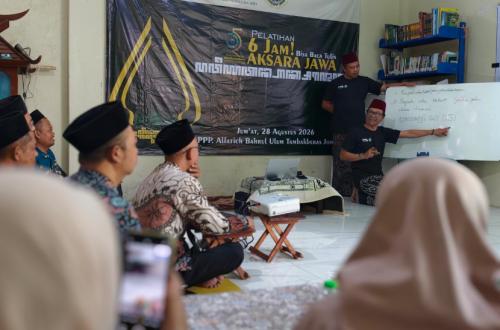
On 5–6 September 2026, educational leaders, academics, and pesantren administrators will convene in Jakarta for the Global Islamic Holistic Education Summit (GIHES). The name of this forum caught my attention with one specific word: holistic. Long before this term became the theme of an international meeting, pesantren had already been practising an education that knows no strict boundaries between the classroom and life.
Therefore, ahead of GIHES, I wish to offer a small, perhaps somewhat unsettling, observation: if we truly wish to discuss holistic education, it may be time to shift the core of education from a hidden curriculum towards a holistic curriculum.
The term ‘hidden curriculum’ did not arise because educational experts lacked vocabulary. It emerged from anxiety regarding the real lives of children in schools. In 1968, Philip W. Jackson published ‘Life in Classrooms’. He did not merely view the classroom as a place where teachers deliver lessons and students receive them; he viewed the classroom as life itself. There are active children and those who wait; those who are frequently praised and those who are reprimanded; those who are fully engaged and those who slowly withdraw. They sit in the same room, but they do not necessarily experience the same education.
Schools easily identify children capable of answering questions. There are grades, rankings, and exam papers. But what about the child who attends every day, causes no trouble, does not stand out, is rarely questioned, and almost never receives praise? They are present, yet almost invisible.
Are they not learning? Of course, they are learning. It is simply that perhaps it is not the subject matter we are currently measuring. They learn when they may speak and when they must remain silent. They learn what it feels like to wait and not be chosen. They learn who receives attention, who holds power, what kind of answers earn praise, and what behaviours invite reprimand.
Jackson observed classroom life through crowds, praise, and power. Children, it turns out, do not only learn mathematics, language, or history; they simultaneously learn how to live within a social structure called a school. This is where we recognise the hidden curriculum: a curriculum that is unwritten but learned; not listed in the timetable but experienced; not tested at the end of the semester, but leaving a lasting imprint on the child. Up to this point, I agree.
However, after more than half a century of discussing it, I am beginning to ask a somewhat ‘rebellious’ question: if we already know there is a hidden curriculum, why do we continue to allow it to remain hidden? If its hiding place has been discovered, then let us no longer keep it hidden.
Jackson helped us discover the hidden curriculum. The challenge for education today is to stop letting it remain hidden. This is where I wish to shift the core of education from a hidden curriculum towards a holistic curriculum.
I am not suggesting that the hidden curriculum is wrong. The concept is highly valuable because it reminds us that children do not only learn from what we teach; they learn from what they experience. However, education should not merely be the work of a detective, uncovering what is hidden. Education is the work of design.
If the environment educates, the environment must be designed. If relationships educate, relationships must be nurtured. If praise and reprimand educate, both must be managed. If experience is the teacher, the student’s experience must not continue to be treated as a mere byproduct of the curriculum. It must enter the very heart of the curriculum itself.
At this point, John P. Miller provides a very clear framework. Holistic education, according to him, strives to develop the human being as a whole: intellectual, emotional, physical, social, aesthetic, and even spiritual. Its framework rests on three pillars: balance, inclusion, and connection. This means that education must not only grow the mind while allowing the heart, body, social relations, and inner life to function in isolation.