
Time for Indonesia to Look at Nuclear Power
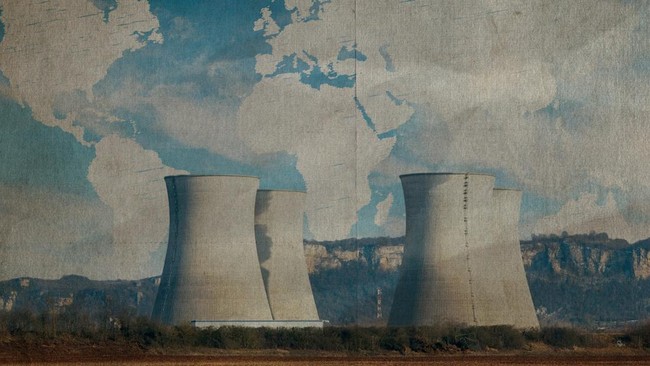
Whenever the word nuclear is mentioned, what usually comes to mind is the atomic bomb or the Chernobyl and Fukushima disasters. It is natural to feel fear, but the facts on the ground show that the world has been using nuclear power for decades and many developed countries rely on it. The first commercial Nuclear Power Plant (PLTN) began operating on 20 December 1951 in Idaho, United States. Currently, there are around 450 licensed PLTNs operating in 30 countries, with an additional 48 units under construction. The world’s largest PLTN is the TEPCO Kashiwazaki-Kariwa plant in Japan with a capacity of 7,965 GW, whilst globally PLTNs contribute about 10 per cent of the world’s total electricity needs. These figures demonstrate that the world has long utilised nuclear power. It is not without risk, but neither is it without experience and learning. Every accident, such as Chernobyl (1986) and Fukushima (2011), has provided valuable lessons that have led to continuously improved safety standards through reactor design enhancements and strengthened safety systems. Nuclear technology has now entered its fourth generation, with designs that are far safer, more efficient, and more flexible than previous generations. Nuclear energy is produced from reactions between particles in the atomic nucleus and has been harnessed by scientists since the early 19th century. It offers a number of advantages that cannot simply be ignored. Firstly, it produces no greenhouse gas emissions during normal operation. Secondly, it does not pollute the air like coal-fired power plants. Thirdly, the solid waste produced is relatively small in volume. Fourthly, fuel costs are low. Fifthly, the availability of fuels such as uranium and plutonium remains abundant. However, the challenges of nuclear energy remain the risk of accidents and nuclear waste. Nuclear energy is a clean energy source and also has advantages over sources like hydroelectric and solar power, as it does not depend on weather or time of day. Solar power plants only operate optimally during daylight hours, whilst wind power plants only generate electricity when the wind blows. Nuclear power, on the other hand, can operate 24 hours a day, 7 days a week, all year round. This is the comparative advantage that makes nuclear power a mainstay for many developed countries such as the US, France, Japan, China, Russia, and South Korea. Unfortunately, in Indonesia, discussions about nuclear power are still hampered by a strong negative stigma. The moment the word nuclear is mentioned, what comes to mind is the atomic bomb, deadly radiation, or power plant disasters. Yet nuclear technology has advanced rapidly. Fourth-generation reactors are designed with passive safety principles, meaning that even without human intervention or external power supply, the reactor will shut itself down automatically if a disturbance occurs. Developed countries did not stop using nuclear power because of Chernobyl or Fukushima. They learned from each incident and then improved their designs and safety standards. The US, France, Japan, China, Russia, and South Korea continue to operate their PLTNs, with China and Russia even building new ones. What needs to be improved in Indonesia is the willingness to open our eyes and start a discussion not based solely on fear. So far, every time the topic of nuclear power arises, the reaction is always the same: outright rejection without in-depth study. Yet the 2060 net-zero emission target is not a light undertaking. Without nuclear power, that target will be far more difficult to achieve. This does not mean Indonesia must build a PLTN tomorrow, but at the very least, serious discussions must begin. Conduct in-depth studies involving all stakeholders: government, academia, industry, and the public. Carry out honest and transparent public education about the potential as well as the risks of nuclear power, because fear is often born from ignorance. Nuclear technology is proven and the world has been operating it for decades. Indonesia also has basic experience through three non-power reactors (Kartini, Triga, and GA Siwabessy) already operating for research, health, food, and agriculture. It is time for Indonesia to look at nuclear power, because achieving maximum clean energy targets requires all available options, and nuclear power is one reliable option that would be a shame to pass up.