
'Time Bomb' Iran Keeps Ticking, Is Nationalism the Answer?
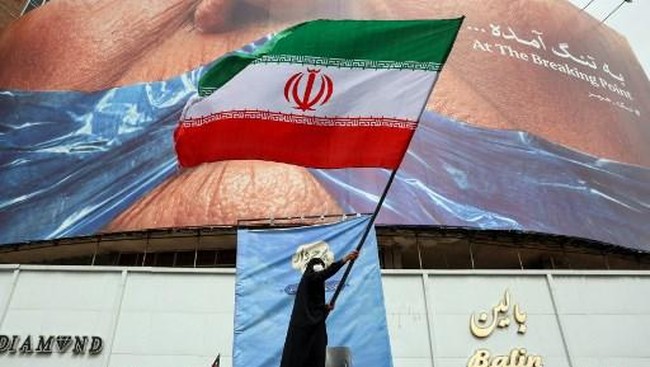
Jakarta, CNBC Indonesia — The Iranian government is intensifying nationalist propaganda amid economic pressure, a prolonged conflict, and rising public discontent at home. In various corners of Tehran, large posters are being displayed to present a narrative of national unity and victory against Western powers.
The propaganda campaign emerged only a few months after the Iranian government was accused of brutal crackdowns on anti-government demonstrations. Now, amid the war and international pressure, the government is attempting to build an image of national solidarity through new patriotic symbols.
The government has even staged mass military-themed weddings, weapon training at mosques, and symbolic parades by the Revolutionary Guards to strengthen the spirit of ‘national resistance’.
Unlike the revolutionary propaganda of Iran in the past, which was steeped in Shiite religious symbolism, the latest campaign places greater emphasis on Persian nationalism and national identity.
‘The old ideology of the Islamic Republic no longer holds broad appeal in society. Therefore, they are trying to mobilise the masses by leveraging other elements of Iranian identity,’ said Ali Vaez, Director of the Iran Project at the International Crisis Group, as quoted by Reuters on Friday (22 May 2026).
Nevertheless, the effectiveness of the propaganda is seen as uncertain amid a society increasingly frustrated by economic and political conditions.
Iran had previously resisted air strikes from the United States and Israel, and pressured U.S. President Donald Trump back to the negotiating table by threatening to close the Strait of Hormuz, the vital artery for global oil distribution.
But behind that victory narrative, Iran’s economy is said to be on the brink of collapse. The government has also tightened crackdown on potential waves of new protests.
Professor of Modern History at the University of St Andrews, Ali Ansari, assesses that the latest Iranian propaganda aims to create the impression that domestic conditions remain stable.
‘This is an effort to show that everything is normal in Iran, that we are all united, and that the government is not slaughtering its own people,’ Ansari said. He added that the strategy may still influence moderate segments of society, but the majority of Iranians remain sceptical.
One of the main focuses of Iran’s propaganda is their claimed success in controlling the Strait of Hormuz. Posters circulating depict the Revolutionary Guards capturing ships and US fighter jets, and visuals that satirise Trump using the geography of the strait.
In addition to anti-Western symbolism, the Iranian government is now beginning to elevate Persian nationalist figures who were previously rarely featured in official propaganda of the Islamic Republic.
One such figure is Rais Ali Delvari, a guerrilla fighter against the British from the Persian Gulf region, who now appears alongside a Revolutionary Guards commander in large posters in Tehran.
Analysts also note major changes in Iran’s power structure during the war. The influence of the clergy is said to be eroding as the power of the Revolutionary Guards grows.
Patriotic propaganda is also reinforced through broadcasts showing the Iran national football team paying tribute to the national flag, and the appearance of the new Supreme Leader Mojtaba Khamenei in various nationalist symbols.
Nevertheless, public response remains divided. Many people view the government as focused on image-building rather than improving the economy.