
Tilling the remaining fields of struggle after Indonesia's independence
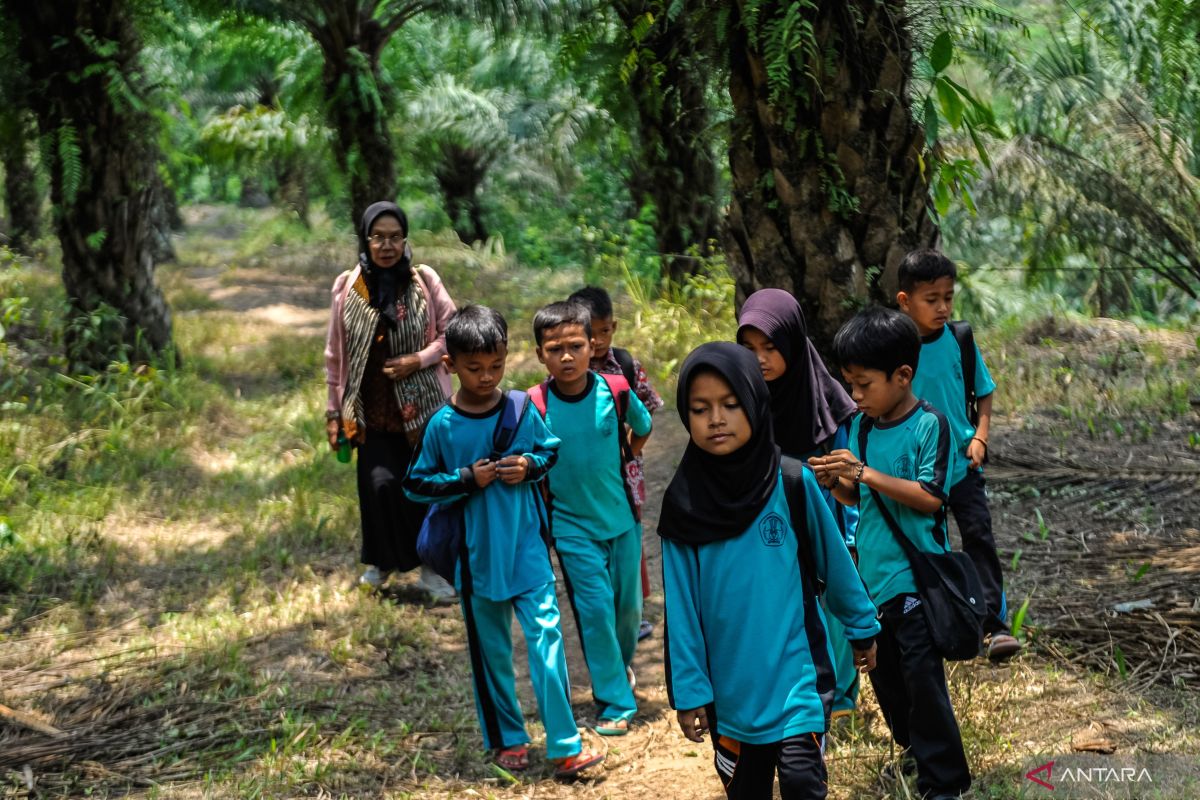
After Indonesia became independent on 17 August 1945, are there still remnants of the fields of struggle that today’s generation can cultivate? The word “remnant” does not mean its value is lower than before.
The field of struggle by taking up arms against the colonisers certainly no longer exists, especially for the present day, as colonial practices are no longer found in this country. Indonesia is already independent.
Like agricultural land, the generation of fighters who led Indonesia’s journey to independence has finished cultivating the conventional fields, and today’s generation only needs to tend that clean inherited land by planting various seeds of goodness.
Beyond the fields that can already be harvested and recultivated, today’s generation can still open new land to inscribe the value of struggle with various seeds of goodness, and for a truly independent Indonesia.
To care for an independent Indonesia, a teacher can cultivate the land of educational institutions by carrying out their profession professionally and with full commitment to help students step into a better future.
A teacher who is a fighter is not merely a figure who appears in front of the class, delivers lesson material, and then goes home when the lesson ends.
The moral title “teachers are unsung heroes” is not meant to lull educators away from the struggle in the realm of enlightening the life of this nation. That noble title must be a spark for how the value of heroism is truly fought for in daily life, including outside lesson hours.
A teacher who is a hero can accompany their students as they grow, not merely help them understand, let alone merely memorise, school subjects. A teacher has many doors to enter the position of hero for students and the nation. Besides being a teacher, they can be a friend and a second parent to their pupils.
In the Javanese Islamic concept, the “catur piwulang” of Sunan Drajat can perhaps serve as a guide for teachers to pursue the value of heroism today. The noble teaching reads: give a stick to those who are blind, give food to those who are hungry, give clothing to those who are naked, and give shelter to those who are caught in the rain.
In this millennial era, the four human conditions described by Sunan Drajat will almost certainly be encountered by teachers if they are sensitive in reading situations at school and in society.
The psychological phenomena experienced by many young people today can be found, such as “blind people” who need a stick to walk upright and straight.
Faced with the onslaught of an information tsunami, many millennial children are blind to their own essence. They are also blind to their future.
These children are also hungry for enlightening knowledge that suits the needs of their souls. They are also naked, one indication of which is their complaints being aired on various social media channels. They do not realise that complaining on such open media is the same as being naked.
At the same time, they also need shelter from the downpour of information and problems that makes them cold. Teachers can, and indeed should, be present to save children trapped in this hypothermia of the soul.
If every teacher has one or two mentored students to whom they embody the spirit of heroism, Indonesia’s dream of facing the Golden Generation of 2045 will certainly be easily realised.