
Tile Company Executive Discusses Impact of US Dollar Surging Past Rp18,000
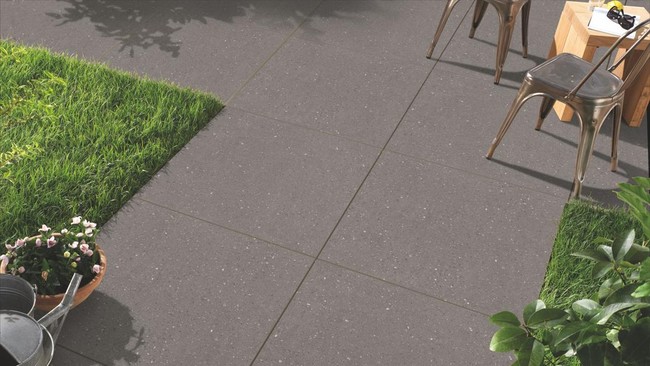
Amidst the weakening of the rupiah exchange rate, which recently touched the level of Rp18,000 per US dollar, the national granite tile or porcelain tile industry is facing the challenge of rising costs for several components still linked to imports. Nevertheless, the level of dependence on imported raw materials is currently relatively limited, so the impact on overall production costs remains manageable.
“In the granite tile industry, some raw materials and certain auxiliary materials still come from imports, including several special materials and specific production support requirements. The proportion is relatively limited, around 10-15% of total production needs,” said the Director of PT Superior Porcelain Sukses, Sie Hai Dong, to CNBC Indonesia on Monday (8/6/2026).
The depreciation of the rupiah does indeed exert pressure on production costs, both from the side of raw materials and other supporting components. However, the company is controlling this impact through various efficiency measures.
“The weakening of the rupiah certainly puts pressure on costs, both from the side of raw materials and other supporting components,” he noted. “However, we continue to implement various mitigation steps through increased use of local raw materials, operational efficiency, and the optimisation of production processes, so that the impact on the overall cost structure can still be well managed.”
According to Refinitiv, as of 09:07 WIB, the rupiah weakened to the level of Rp18,100/US.ThispositioncausedtheGarudacurrencytodepreciatebyapproximately0.50.
If the rupiah’s weakness persists in the long term, the manufacturing industry will indeed face greater cost pressures, including energy components and several production supporting materials still linked to the US dollar. “In the long term, the weakening of the rupiah is certainly a challenge for the manufacturing industry because it increases costs for several components still linked to the US dollar, including energy and several production supporting materials. For the ceramic and granite tile industry, gas costs are also a significant factor because some payment schemes still refer to the US dollar exchange rate,” he explained.
Nevertheless, this condition is also seen as a momentum for local producers to strengthen their competitiveness. While previously imported products eroded local products with much cheaper prices, moving forward, the price increase of imported products has the potential to make consumers look more towards domestic products.
“On the other hand, this condition also opens opportunities for domestic producers. Until now, imported products have dominated the market because the prices sold were cheaper. If the price of imported products becomes more expensive, the competitiveness of local products will increase,” he said. “This provides an opportunity for the national industry to strengthen its domestic market share while encouraging expansion into export markets.”
Currently, the Indonesian granite tile market is largely filled by Chinese products, accounting for more than 50%, followed by India as another major player in this sector. The surge in ceramic and granite tile imports once reached over 70 million square metres in certain periods, triggering anti-dumping (AD) policies by the government since 2024. As a result, domestic products have the potential to be more competitive.
“Therefore, we see this condition more as a challenge that must be managed well, while simultaneously being an opportunity to strengthen the national granite tile industry to become more competitive,” said Sie Hai Dong.