
Tightening of Subsidised Housing Verification
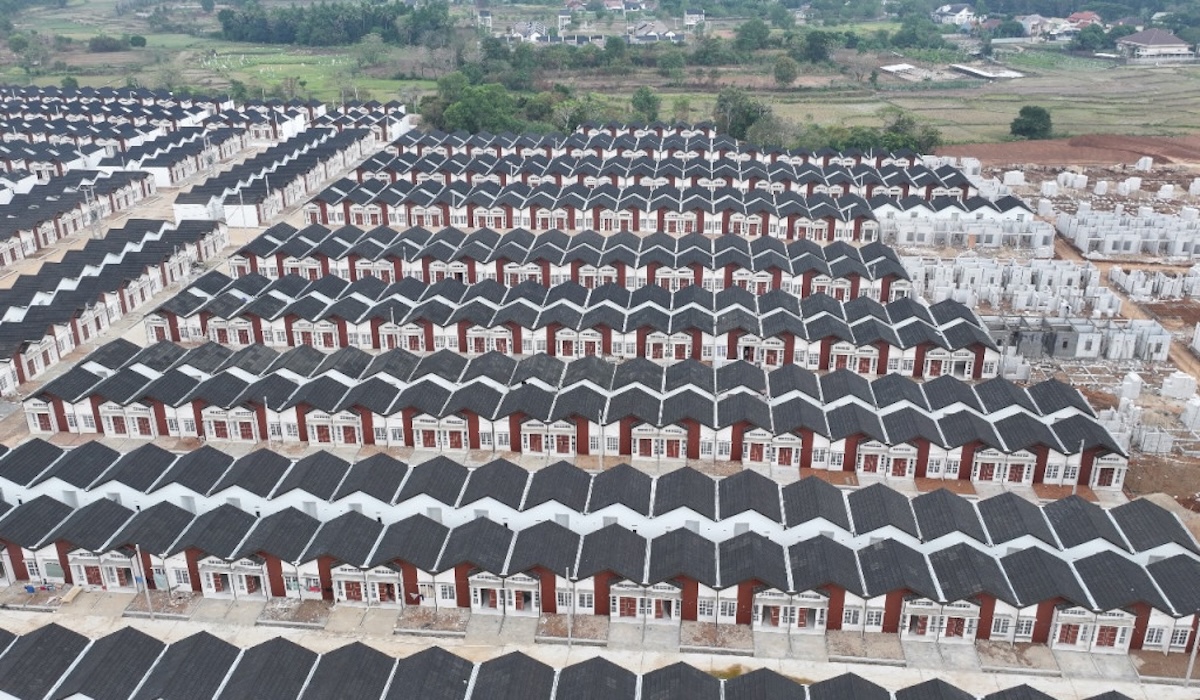
BP Tapera tightens the registration and verification process for subsidised housing to curb risks of data manipulation, fictitious properties, and misappropriation of housing finance.
BP Tapera will tighten the registration and verification process for subsidised housing to reduce risks of data manipulation, fictitious properties, and misappropriation of housing finance.
Alfian Arief, head of the Housing Finance Distribution Division at BP Tapera, said eligibility registration for subsidies must now be carried out directly by the applicant. Developers can no longer register low-income households (MBR) via the BP Tapera app SiKasep.
‘Now developers cannot market to list MBR on SiKasep anymore. It must be the individual, the person’s phone number, facial recognition,’ Alfian said during the Indonesia Housing Creative Forum in Jakarta on Friday (22/5).
Alfian said the mechanism is designed to ensure recipients are valid individuals who directly apply for funding.
Beyond identity verification, BP Tapera is implementing a geotagging-based system under the concept of the ‘Trilogy Stock’. This system is used to ensure the physical existence of the dwelling, the condition of the building, and the unit being transacted.
During the deed process, the house must be documented with photos showing the front view, interior, exterior, as well as social and public facilities. The photos are geotagged so the house location can be verified.
‘So at the time of the deed, you must take front and interior and exterior photos with geotagging. For example, a house in Block A here, Block B there. Then when you are about to transact in Block A, you must photo here,’ Alfian explained.
He said the move is part of mitigating efforts to prevent fraudulent listings of houses or constructions that do not meet eligibility standards.
Regarding the risk of loan default or Non-Performing Loan (NPL), Alfian stressed that the primary responsibility lies with the distributing banks. This follows Government Regulation (Perban) No. 9 of 2021 which regulates the banks’ responsibility for the accuracy of material and non-material data.
‘The veracity of material and non-material data for which responsibility lies is with the distributing bank. Second, non-collection processes or Non-Performing Loans are the responsibility of the distributing bank,’ Alfian said.
Alfian also stated that the country would not incur financial losses if there are risks with developers or consumers, as long as banks continue to meet payment obligations to BP Tapera.
‘The question is, is there a state loss? No. Why? Because banks still pay me a 0.5% base rate over the loan tenor,’ he said.
BP Tapera, he added, can revoke subsidies and bring funds back to the state coffers if violations by developers or MBR are found.
In the same forum, Maria Nelly Suryani, Vice Chairman of the DPP Realestat Indonesia (REI), said oversight of subsidised housing financing must be accompanied by improvements in developer integrity.
Maria said REI continues to build its members, especially since most of them are small and medium-sized developers building subsidised housing.
‘We cultivate what we call a moral obligation. Our training and education agency certifies our members. In events like this, we strive to foster the moral responsibilities of developers,’ Maria said.
According to Maria, REI has development and assessment standards through regional and national forums and the REI Award. Those standards are used as references for neighbourhood quality and developer ethics.
She said rogue developers or moral hazard can disrupt the subsidised housing ecosystem. Therefore, REI emphasises the need to sanction members who do not maintain building quality or business governance.
‘Targets may not be reached, but if one person of poor quality ruins this noble grand plan, we must be firm,’ Maria said.
On the financing side, the Rent-to-Own (RTO) scheme is seen as a risk mitigation instrument before customers enter a mortgage. Property expert and RTO aggregator Marine Novita said the incubation period in RTO can be an early indicator for banks to assess the prospective debtor’s ability to pay.
Marine said a six-month incubation period can be applied to subsidised housing, while commercial housing could use a longer duration, about 12 months.
She said the scheme can be strengthened with government support, including a shared-risk programme to reduce banks’ concerns about potential loan defaults in the informal worker segment. (Z-10)
Housing developers association supports a 40-year mortgage tenor to reduce the housing backlog. The monthly instalment for subsidised homes is expected to drop to around Rp773,000.
Minister PKP Maruarar Sirait targets the construction of 141,000 subsidised rental flats on Meikarta land. Groundbreaking scheduled for 8 March 2026. See details!
The PKP Ministry will issue a decree on subsidised rental flats in January 2026. The regulation includes price adjustments and FLPP schemes to tackle urban backlog.
To support the acceleration of the 3 Million Homes programme, hundreds of prospective developers are being trained intensively by practitioners and the government in Cileungsi, Bogor.
FLPP in 2025 reached 278,868 housing units worth Rp34.64 trillion. This is the highest annual figure since the programme began in 2010.
The rent-to-own scheme is seen as a bridge for informal workers without payslips to access mortgages during the payment incubation period.
The government is speeding up the realisation of the People’s Housing Savings Programme (Tapera) to achieve the target of building and renovating 3 million homes.
Disbursed non-subsidised Mortgage Credit (KPR) by BTN reached Rp106.8 trillion, an 8.1% rise on the same period last year.
Access to housing finance for Low-Income Communities (MBR) is still hampered by the credit history assessment system.
The FLPP facility scheme with a quota of 220 thousand units of homes.