
Tightening Forest Fire Monitoring to Anticipate Extreme El Niño
The Forest Management Unit (BKPH) Region VII in West Nusa Tenggara is tightening supervision of forest areas following the threat of an extreme El Niño phenomenon expected to begin in April 2026. The strengthening of monitoring is focused on preventing encroachment and forest and land fires (karhutla) that could increase during prolonged dry seasons.
Head of BKPH Region VII, Muzakir, stated that a decline in forest cover due to illegal activities would worsen the impacts of drought. “Encroachment reduces the forest’s ability to store water. The remaining biomass from illegal logging also increases fire risks,” said Muzakir on Monday (6/4).
Muzakir explained that the BKPH VII working area, covering the Topaso and Marowa regions in Bima and Dompu Regencies, is vulnerable to fires when rainfall drops drastically. Under such conditions, supervision is not only conducted through routine patrols but also through mapping of vulnerable areas, early detection of hotspots, and cross-agency coordination.
BKPH is partnering with several parties, from the Directorate General of Law Enforcement of the Ministry of Environment and Forestry, TNI, Polri, to businesses operating in forest areas. The involvement of business entities refers to Government Regulation Number 23 of 2021 on Forestry Management, which opens opportunities for collaboration in forest management.
In the Topaso and Marowa regions, one involved partner is PT Sumbawa Timur Mining (STM). According to Muzakir, the company contributes to supporting forest area monitoring, particularly in the Forest Area Utilisation Approval (PPKH) areas.
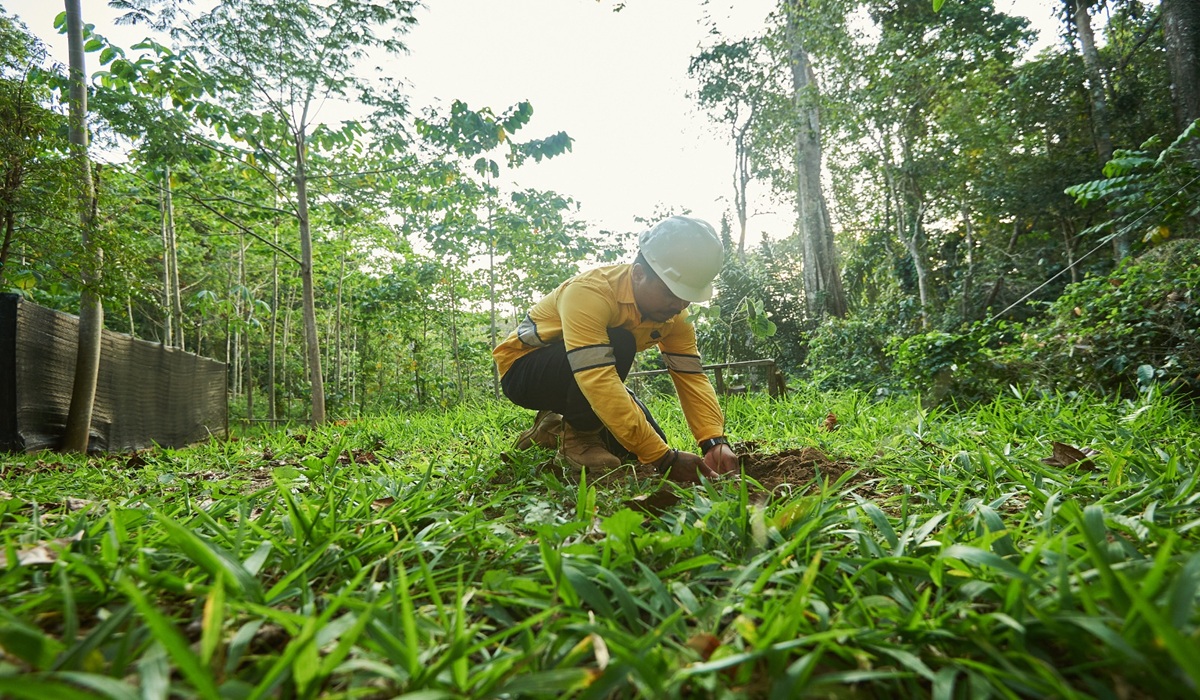
In addition to operational support, STM is also implementing environmental rehabilitation programmes through a nursery facility with a capacity of around 30,000 tree seedlings. These seedlings are used for reforestation of post-exploration lands and distributed to communities.
This collaboration is seen as strengthening the effectiveness of field supervision, especially in accelerating responses to potential fires and illegal activities. However, Muzakir emphasised that prevention efforts must be balanced with law enforcement.
“Disaster mitigation is not enough with just supervision. Law enforcement against violations in forest areas must be carried out firmly,” he said.