
Through DSI, Indonesian Natural Resource Exports Will No Longer Need to Transit Through Other Countries
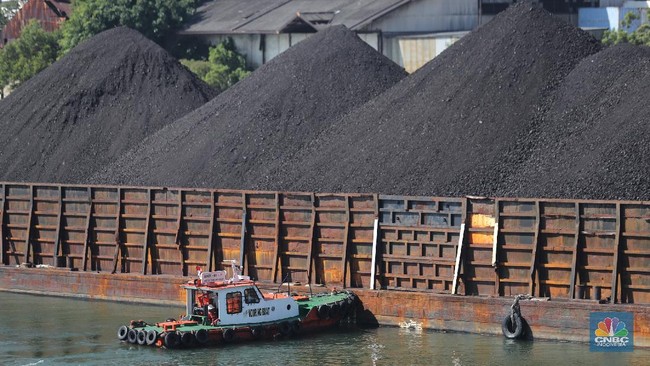
Jakarta, CNBC Indonesia — The National Economic Council (DEN) has commented on a single-channel export scheme for strategic natural resources—coal, crude palm oil (CPO) and ferro-alloys—through state-owned exporter PT Danantara Sumberdaya Indonesia (DSI), starting on 1 January 2027.
The policy is intended to ensure that all shipments of the country’s mining commodities go directly to their destination markets, without “transiting” through intermediary countries.
DEN Executive Secretary Septian Hario Seto said direct shipments to buyers could secure better selling prices for Indonesia. He said the involvement of transit countries suggested that traders were involved and risked reducing the foreign-exchange proceeds received from exports.
“The essence, as we see it, is that if we can ship directly, we hope the economic benefits will be greater. Prices could be better and so on. Transit indicates the involvement of traders. I think this is consistent with the President’s plan for DSI: how we can address under-invoicing or illegal transfer pricing,” he said on the sidelines of the 2026 Minerba Convention & Exhibition (Convex) at JIExpo on Tuesday (3 November 2026).
He said the main priority of the single-channel export system through DSI was to ensure transparency in transaction values. The policy is expected to prevent under-invoicing and illegal transfer pricing, and to ensure that all export proceeds from national commodities return to Indonesia in full.
“With DSI, I think the priority is to make sure there is no under-invoicing or illegal transfer pricing, and that all the foreign exchange proceeds return to Indonesia,” he said.
The government has prioritised the single-channel export scheme through DSI for coal, CPO and ferro-alloys. Exports of the three leading commodities are valued at about US$80 billion, equivalent to Rp1,452 trillion at an exchange rate of Rp18,154 per US dollar.
That figure represents about 30% of Indonesia’s total exports.
“These three commodities are worth almost US$80 billion, including their derivative products. That is significant: US$80 billion is nearly 30% of our total exports,” he said.
Bahlil’s directive
Energy and Mineral Resources Minister Bahlil Lahadalia, who also serves as Coordinating Minister for Downstreaming and Energy Transition, has ordered that natural resources, including coal, be exported directly to their destination countries rather than routed through neighbouring countries.
“Our natural resources—under ESDM—must no longer be sent through another country. If we are shipping goods to China, they should go directly from Jakarta to China, not stop in ‘that’ country. It only stamps the goods and then claims they were exported from its own country. Where did your goods come from?” Bahlil said at Minerba Convex 2026 in Jakarta on Monday (2 November 2026).
“Send them directly. Our goods have been handled this way for too long. I will not let them process our goods; they cannot do that. I have instructed the Director General of Oil and Gas,” he said.
Bahlil’s order also covers natural gas exports, including liquefied natural gas (LNG), which is usually exported to Japan and South Korea.
“Send them directly. Why use another country? They get the tax revenue and improve their trade balance. Then, when there is even a small disaster, they panic. Do not send it there again. Indonesia is sovereign and must not be dictated to,” he said.
Although Bahlil did not name the transit country, he said the audience at Minerba Convex 2026 knew which country he meant.
“You know the country too. Follow your hearts. That country should not just take the benefits,” he said.
Director General of Minerals and Coal Tri Winarno welcomed the ban and questioned why Singapore, which has no mining areas, records a high volume of coal exports.
“Check whether purchases from Singapore appear in the data. They must, right? The coal passing through there—Singapore’s total exports—may be around 50 to 60 million tonnes. There is no coal there, so it is unlikely to be going from Singapore to China or elsewhere. It must come from us,” Tri said at the Energy and Mineral Resources Ministry’s office in Jakarta on Monday (2 November 2026).
Export rules through DSI
The government has issued Government Regulation No. 24 of 2026 on the Governance of Strategic Natural Resource Commodity Exports. It stipulates that strategic natural resource commodities—coal, CPO and ferro-alloys—may be exported only by a state-owned exporter.
The regulation is accompanied by Trade Ministerial Regulation No. 15 of 2026 on export policies and regulations for strategic natural resource commodities, specifically coal.
The ministerial regulation states that registered coal exporter business permits will remain valid only until 31 December 2026. After that date, coal exports may be carried out only by state-owned exporter PT DSI.
The new regulation comprises 13 articles. It was signed by Trade Minister Budi Santoso on 29 May 2026 and came into force on 1 June 2026.
Article 11 of Trade Ministerial Regulation No. 15 of 2026 provides as follows:
Registered coal exporter permits issued before the regulation came into force remain valid until 31 December 2026, or until their expiry date if that is earlier.
Until 31 December 2026, businesses may use the registered coal exporter permit referred to in point (a) and a surveyor’s report as customs supporting documents when exporting strategic coal commodities through a state-owned exporter. This must be evidenced by the number and date of registration of the export customs declaration at the customs office.
For such exports through a state-owned exporter, businesses must submit export documents, sales contracts and other relevant documents to the state-owned exporter, and/or provide any additional data and information it requires through a system integrated with the exporter, which may operate automatically.
If responsibility for coal exports has been fully transferred to the state-owned exporter before 31 December 2026, coal exports may be carried out only by that exporter.
Coal exports made after 31 December 2026 may be carried out only by a state-owned exporter.
Coal exports for which an export customs declaration was registered before the regulation came into force may still be processed by the Directorate General of Customs and Excise at the Ministry of Finance.
Surveyors appointed to conduct export verification or technical inspections of coal before the regulation came into force may continue their duties, provided this does not conflict with the regulation.
Source: jawawa.id (https://jawawa.id/newsitem/through-dsi-indonesian-natural-resource-exports-will-no-longer-need-to-transit-through-other-countries-1793703160)
Originally published by CNBC Indonesia (https://www.cnbcindonesia.com/news/20261103150910-4-781936/lewat-dsi-ekspor-sda-ri-tak-perlu-lagi-transit-di-negara-lain), translated from Indonesian