
Through BRI Export Training, This Jayapura SME Reaches Global Markets
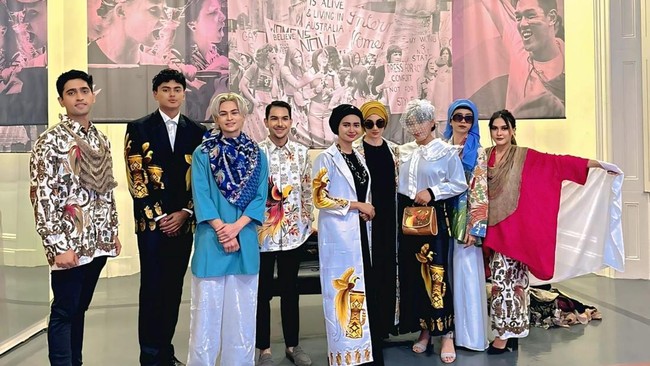
Papua is known as one of Indonesia’s regions rich in cultural heritage and handicrafts. Behind every piece produced lies the skill of local artisans, passed down from generation to generation.
Despite their beauty, many of these works have yet to reach a wider market. Recognising this potential, Sukma Ayu Mayangsari started her business in Jayapura in 2022 through a simple online shop.
Driven by a desire to introduce Papuan crafts to more people, she began marketing the works of local artisans. Over time, the business she founded grew into PT MJEthnic Craft Indonesia. Today, the enterprise has transformed into a distributor of various Indonesian SME products while opening pathways for local works to be recognised in international markets.
Initially, PT MJEthnic Craft Indonesia focused on marketing Papuan handicrafts. Growing customer trust and market demand allowed the company to expand, offering a range of SME products from various regions across Indonesia, from handicrafts, fashion items, and accessories to regional culinary specialities.
For Sukma, every product marketed carries a story about the culture and lives of the artisans behind it. Her business therefore seeks not only to introduce Indonesia’s cultural wealth to the world but also to create benefits for the communities whose livelihoods depend on their craft.
This commitment is realised through the empowerment of local artisans, particularly women, and by setting aside 2.5 per cent of every sale to help underprivileged communities in Papua. For her, a business holds greater meaning when it can grow together with the community around it.
Amid her business’s development, Sukma has continued to equip herself to face the challenges of the global market. One step she took was participating in the Export Training programme from Peduli BRI, part of efforts to enhance the capacity of SME players so they are better prepared to enter international markets.
“The BRI Peduli Export Training added to my knowledge and insight about the export world. I also had the opportunity to expand my network with colleagues from various regions in Indonesia,” said Sukma in a written statement on Tuesday (18/8/2026).
She said the training not only enriched her knowledge but also opened greater opportunities for developing her business in the global market.
The journey that began from the land of Papua is gradually paving the way to international markets. Currently, various products marketed by PT MJEthnic Craft Indonesia have reached Australia, the Netherlands, Uzbekistan, Italy, Malaysia, the United Kingdom, and the United States.
For Sukma, the support provided by BRI is one of the important factors encouraging SME players to continue growing and to dare to step into international markets.
“I greatly appreciate BRI’s commitment and consistency in supporting local business players to move up a class and penetrate international markets. BRI is not only present as a financial institution but also as a sociopreneur partner in Indonesia. Thank you, BRI, for providing real and impactful support for local SMEs. In line with our motto, Small Business, Big Impact,” she said.
Separately, BRI Corporate Secretary Dhanny said that through its Social and Environmental Responsibility Programme, BRI Peduli consistently delivers various empowerment programmes to encourage SMEs to move up a class, including the Export Training Programme. Through this programme, SME players are equipped with an understanding of the export process so they can develop their businesses and improve competitiveness in international markets.
The training programme covers various materials, such as export strategy, international trade regulations, export document preparation, global market research, and product packaging and branding suited to international market needs.
“The story of Sukma Ayu Mayangsari and PT MJEthnic Craft Indonesia is one example that when the spirit of SME players meets the right learning access, opportunities to grow and reach international markets become increasingly open,” he concluded.