
Through BRI Empowerment, Suhita Lebah Indonesia Develops Community-Based Sustainable Honey Business
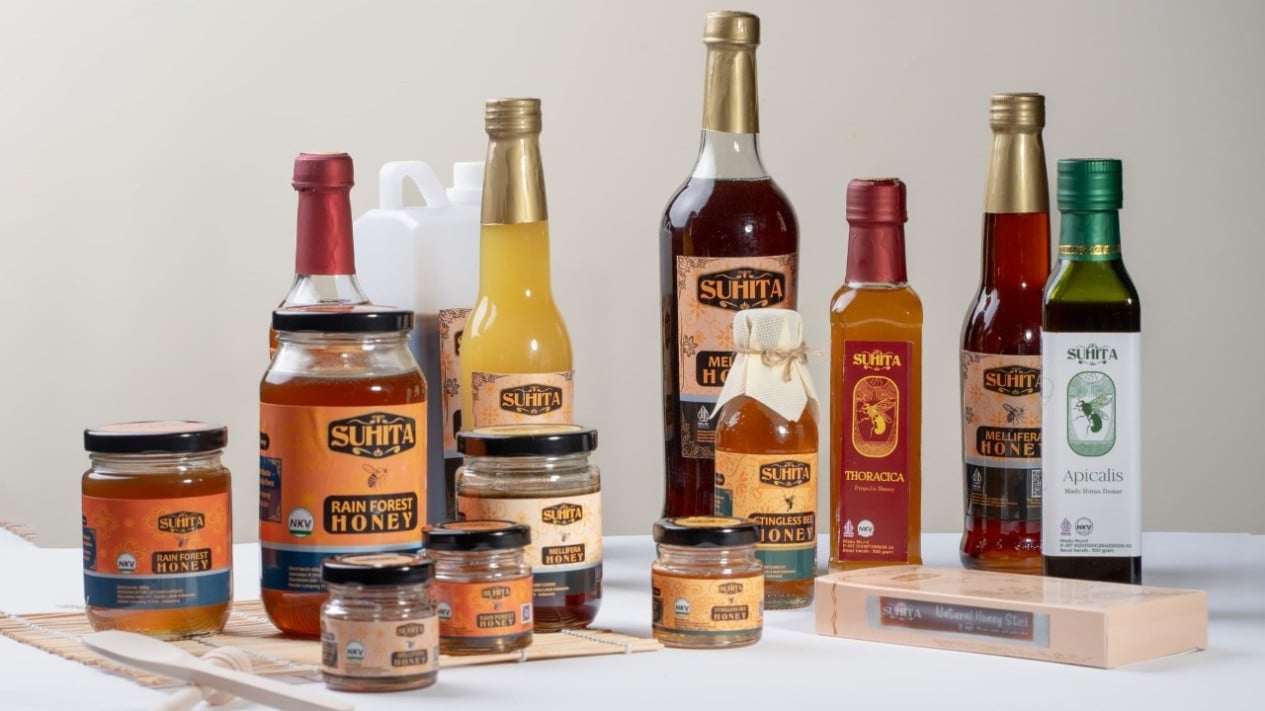
In Bandar Lampung, Suhita Lebah Indonesia is developing a honey business by maintaining quality right from the source. The involvement of communities around forest areas is part of how this enterprise grows, alongside efforts to preserve product quality all the way to the consumer. Suhita Lebah Indonesia has built a business flow connected from the forests of Sumatra through to the processing and marketing stages. In this process, Suhita Lebah Indonesia collaborates with beekeepers and bee researchers, whilst also involving forest communities through beekeeping training and supply chain strengthening. The products include Trigona Honey, Rain Forest Honey, and Melifera Honey. Marketing is conducted through offline and online channels, reaching from Lampung to various regions across Indonesia. Owner of Suhita Lebah Indonesia, Isnina, revealed that from the outset, the business has been run with an integrated approach from upstream to downstream. ‘Suhita Lebah Indonesia preserves the culture of the Nusantara with pure honey as a companion to daily activities. Since 2016, we have focused together with beekeepers and researchers in the field of bees and their derivative products, creating an integrated production system from the primary forests of Sumatra to modern marketing, so that product quality, quality, and traceability can be maintained,’ said Isnina. ‘We also invite communities around the primary forests of Sumatra to participate as Suhita beekeepers through honey bee cultivation training, forest plant conservation, and maintaining the natural ecosystem of bees,’ she stated. In its management, Suhita Lebah Indonesia enhances product quality through packaging that meets food safety standards, supported by a number of certifications and distribution permits. These include NKV and distribution permits for pure natural nectar honey, as well as Halal, HACCP, and TKDN certifications for processed, blended, and herbal honey products. ‘We have our own farm, partner farms, and also involve local farmers and beekeepers who are integrated with a packaging facility that meets food safety standards,’ said Isnina. ‘We also apply post-harvest handling technology without high temperatures through a method of reducing the water content of honey, so that the nutrition and quality of the honey are maintained according to SNI standards, whilst also making the production process faster, more energy-efficient, and environmentally friendly,’ she said.