
Three Years of Genocide: Gaza Women Face Death and Miscarriage
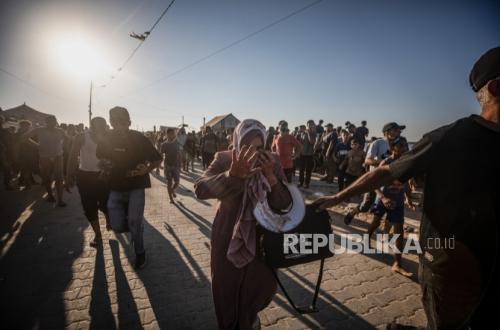
Three years since the start of the Israeli attacks on the Gaza Strip, Palestinian women and girls continue to face severe impacts, ranging from death and injury to the loss of family members and deteriorating reproductive health.
According to Palestinian and United Nations (UN) data reported by Middle East Monitor on Wednesday (7/10/2026), the collapse of the healthcare system in Gaza has further exacerbated the condition of pregnant women. They struggle to access healthcare services, with some forced to give birth at home or in displacement camps without adequate medical support.
The Palestinian Central Bureau of Statistics recorded on 18 July 2026 that 12,400 women, excluding girls, have died in Gaza since 7 October 2023. The bureau also noted that women and children account for 4,700 of the 11,200 people reported missing.
Meanwhile, UN Women, in its report ‘The Costs of War on Women and Girls’ published in April 2026, estimated that more than 38,000 women and girls were killed between October 2023 and December 2025. This figure is equivalent to an average of almost 47 women and girls dying every day.
The report also estimates that nearly 11,000 women and girls have suffered injuries causing long-term impacts. UN Women warned that the death toll is likely lower than the actual situation due to the collapse of information and health reporting systems in Gaza.
The reproductive health crisis has become one of the most serious impacts faced by Gaza’s women. Attacks on healthcare facilities, limited medical services, repeated displacement, and malnutrition have placed pregnant women at increasing risk.
The International Planned Parenthood Federation stated in July 202lar that miscarriage rates in Gaza increased by at least 300 per cent in the first nine months of the war.
Physicians for Human Rights, in a report in January 2026, also documented 2,600 cases of miscarriage during the first half of 2025. The report noted 220 pregnancy-related deaths and 1,460 premature births. Additionally, more than 2,500 newborns required intensive care.
Previous data from the Gaza Ministry of Health showed that 57.1 per cent of pregnant women registered in 2025 suffered from anaemia.
Conditions have shown no significant improvement. The latest Gaza Ministry of Health data recorded approximately 3,958 cases of miscarriage between January and June 2026.
A ministry infographic on 20 July showed that the miscarriage rate reached 208.5 per 1,000 live births in the first half of 2026. This is an increase from 64 per 1,000 live births in the second half of 2025.
In April 2026, the monthly miscarriage rate even reached 377.25 per 1,000 live births, while June recorded the highest number of monthly miscarriage cases, at 790.
A total of 73.6 per cent of miscarriages occurred in the first trimester, or before 13 weeks of pregnancy. The remaining 26.4 per cent occurred in the second trimester, between 13 and 24 weeks.
The collapse of healthcare services has also made the childbirth process increasingly risky. UN Women noted that approximately 130 births occurred every day in Gaza in March 2025, with more than a quarter performed via caesarean section.
Many women are forced to give birth at home or in displacement sites because they cannot access hospitals. Even after the ceasefire, approximately 15 births per week still take place outside of hospitals, often without trained midwives and in unsafe conditions.
Food and nutritional shortages further increase the risks for mothers and babies. These conditions include an increased likelihood of low birth weight, premature birth, stillbirth, and maternal death.
UN Women noted that approximately 40 per cent of pregnant and breastfeeding women in Gaza suffered from malnutrition in July 2025. Around 500,000 women and girls also face the risk of starvation.
In a report published in June 2026, UN Women stated that approximately one million women and girls in Gaza lack access to clean water, while another 690,000 live in overcrowded shelters.
The impact of the war has also altered the family structure in Gaza. Death, injury, the loss of husbands, and the loss of income have forced more women to take on the responsibility of being both breadwinners and caregivers.
UN Women noted that the proportion of female-headed households in Gaza increased from nine per cent before the war to 14 per cent during the conflict. Currently, it is estimated that there are 58,600 female-headed households as a result of the war.
This shift adds an economic and social burden to women, particularly as they face the responsibilities of caregiving, displacement, poverty, and the loss of family members.
Amidst these conditions, Israeli attacks in Gaza are reported to continue. The Gaza Ministry of Health recorded 1,460 Palestinians killed and 5,116 others injured in attacks following the ceasefire that began on 10 October 2025.
Since October 2023, more than 74,000 Palestinians have been reported killed and over 175,000 others injured. Approximately 90 per cent of the infrastructure in the Gaza Strip is reported to have been damaged or destroyed.
Source: jawawa.id (https://jawawa.id/newsitem/three-years-of-genocide-gaza-women-face-death-and-miscarriage-1791356220)
Originally published by Republika (https://news.republika.co.id/berita/tmix2f393/tiga-tahun-genosida-perempuan-gaza-hadapi-kematian-hingga-keguguran), translated from Indonesian