
Three Years of Gaza's Destruction: What Can Indonesia Do?
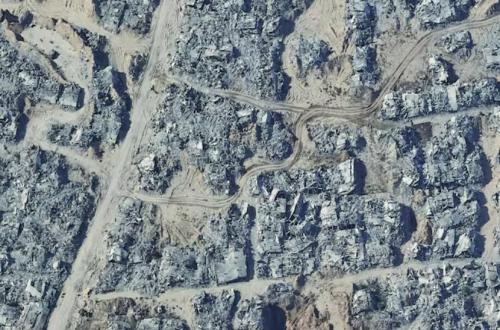
As of 7 October 2026, the war in Gaza between Palestine and Israel has entered its third year. However, historical records show that the occupation and seizure of Palestinian land by Israel has been ongoing since 1948—more than 78 years since the unilateral declaration of the State of Israel on 14 May 1948, and the Nakba on 15 May 1948, which marked the mass expulsion of Palestinians from their homes.
Over these three years, Israel has not only destroyed physical buildings and essential lifelines, but the people of Gaza have also faced continuous killings, including civilians and children who are not combatants. It is therefore unsurprising that the UN International Court of Justice has affirmed that genocide, crimes against humanity, and war crimes have occurred in Gaza.
According to UNRWA situation reports as of 24 September 2026, 1,394 Palestinians were killed after the ‘ceasefire’ announced on 10 October 2025 collapsed. Consequently, the total death toll since October 2023 has reached 73,914 (UN Security Council Report). Meanwhile, water production in Gaza has dropped to approximately 40 per cent of pre-war levels (UNRWA). For the more than two million residents of Gaza, a ‘ceasefire’ means living amongst rubble, enduring sporadic Israeli attacks, and waiting for a justice that never arrives.
Three years is enough time for the world to stop pretending that Gaza is fine.
A ceasefire without an exit strategy is a trap
The peace plan mediated by the United States and endorsed by the UN Security Council via Resolution 2803 in November 2025 promised several stages: the release of hostages, the disarmament of Hamas, the withdrawal of Israeli forces, the establishment of a Palestinian technocratic government, and subsequent reconstruction. One year later, these stages have stalled.
Second-stage negotiations are hindered by repeated Israeli attacks and disputes over an unfair disarmament process, where only Hamas is required to disarm while Israeli forces are not subject to the same condition. This presents a logical inconsistency: who is the aggressor, and who is being disarmed?
In May 2026, Israel stated it had controlled 60 per cent of the Gaza territory and intended to expand this to 70 per cent. The Palestinian Technocratic Committee (NCAG), which is intended to govern Gaza, has prepared a six-month recovery programme, but has been unable to enter from its temporary headquarters in Cairo (UN Security Council Report). The Gaza recovery plan, valued at 2.45 billion USD and announced by the Board of Peace on 23 September 2025, remains dependent on the same stalled conditions.
Therefore, without clear deadlines and enforcement mechanisms, a ceasefire risks freezing into a new status quo: neither full-scale war nor lasting peace. Gaza remains trapped in a state of limbo and permanent suffering (UN News).
Source: jawawa.id (https://jawawa.id/newsitem/three-years-of-gazas-destruction-what-can-indonesia-do-1791330760)
Originally published by Republika (https://analisis.republika.co.id/berita/tmicgc483/tiga-tahun-penghancuran-gaza-indonesia-bisa-apa), translated from Indonesian