
Three Years of Gaza Genocide: What Does It Mean for the Global Community?
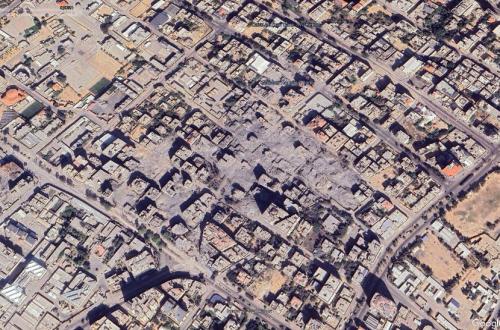
Today, 7 October 2026, marks exactly three years since the world witnessed a new chapter of the Palestinian tragedy, following the Hamas attacks on 7 October 2023 and the large-scale Israeli war in Gaza.
Three years. For the media, three years might only be a series of statistics, diplomatic conferences, UN resolutions, political statements, and changing headlines. But for the people of Gaza, three years means the loss of parents, children, siblings, homes, schools, hospitals, livelihoods, and a sense of security.
What is more concerning is that when a tragedy lasts too long, humans can experience empathy fatigue. News of the deaths of dozens of people, which once shook the world, gradually becomes merely numbers on a phone screen.
This leads to the vital question: after three years in Gaza, what has actually changed within the global community?
The Gaza War and the Test of Civilisation
Gaza has changed the way the world discusses war. War no longer takes place solely on the battlefield. It occurs in international courtrooms, universities, parliaments, social media, financial markets, major city streets, and even at family dining tables.
Gaza has become a mirror reflecting how major powers apply the principles of human rights, humanitarian law, sovereignty, and international justice.
Therefore, the significance of Gaza does not stop at the Israel-Palestine conflict. It has become a test of the credibility of the global order itself.
Does international law apply equally to all? Does human life have the same value? Is the protection of civilians truly universal? And are international institutions still capable of preventing military force from turning law into mere rhetoric?
These questions will continue to haunt the world even after the Gaza war ends.
Gaza Loses Homes, the World Loser Illusions
For decades, parts of the global community lived with the belief that Middle East conflicts could ultimately be managed through diplomacy without addressing the root causes of the Palestinian issue.
The last three years have demonstrated the fragility of that assumption.
Even after a ceasefire was announced in October 2025, the war has not truly transformed into peace.
Reuters reported on 6 October 2026 that the primary objectives of the United States’ peace plan—including the disarmament of Hamas, the full withdrawal of Israeli forces, and the reconstruction of Gaza—remain at a deadlock. Israel still controls approximately two-thirds of Gaza, while more than 1,400 Palestinians have reportedly been killed since the ceasefire took effect.
Thus, the issue in Gaza is no longer “How do we stop the war?” but rather: “How do we build a peace that does not just stop the gunfire, but ends the structures of conflict that cause war to recur?”
The Western World is Also Changing
One of the most significant changes over the last three years has occurred in Europe. The European Union is now openly pushing for the implementation of a ceasefire, unhindered humanitarian aid, the reconstruction of Gaza, support for the Palestinian Authority, and a two-state solution. The EU also supports the implementation of UN Security Council Resolution 2803.
The United Kingdom, alongside several European nations and Canada, has expressed readiness to implement or support trade restrictions on goods from Israeli settlements deemed illegal under international law.
In September 2026, London also announced a new package of humanitarian support and early recovery for Gaza, including healthcare, clean water, sanitation, the rehabilitation of injured children, and mental health support.
France is becoming increasingly consistent in pushing for a two-state solution. Paris recognised the State of Palestine in 2025 and continues to place the formation of a sovereign and viable Palestinian state, living alongside Israel, as its primary diplomatic goal.
However, this shift in European attitude does not mean Europe has entirely abandoned Israel. Indeed, this is where the complexity lies.
Europe is attempting to maintain two objectives simultaneously: the security of Israel and the right of the Palestinian people to independence.
The problem is that as occupation, settlement expansion, and violence continue to erode the possibility of a Palestinian state, this diplomatic balance becomes increasingly difficult to maintain.
Source: jawawa.id (https://jawawa.id/newsitem/three-years-of-gaza-genocide-what-does-it-mean-for-the-global-community-1791338136)
Originally published by Republika (https://analisis.republika.co.id/berita/tmijo9451/tiga-tahun-genosida-gaza-apa-artinya-bagi-masyarakat-dunia), translated from Indonesian