
Three World Analysts Expose Europe's Rearmament and the Risk of Internal Clashes
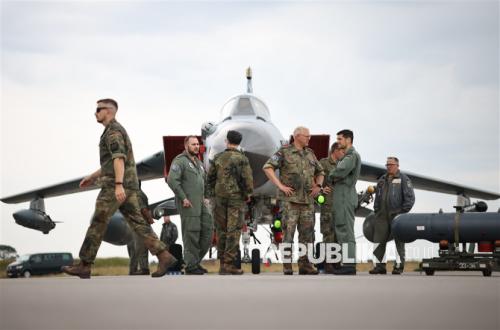
REPUBLIKA.CO.ID, JAKARTA — Europe is moving quietly, yet with a clear direction: strengthening its military amid deepening global uncertainties. From Berlin to Brussels, from discussions of integration to the reality of new alliances beyond the region, one question arises: is Europe preparing to stand alone as a global military power? The answer to that question is scattered across analyses by international experts. When pieced together, a big picture emerges: Europe is no longer in its post-Cold War comfort zone. It is entering a new phase, a phase of rearmament fraught with risks, yet full of geopolitical calculations. Berlin An article by military expert Linus Holler in Defense News illustrates how Germany is now taking a central role in this transformation. Berlin is no longer merely an economic power but is openly targeting itself to become Europe’s strongest conventional military force by 2039. German Defence Minister Boris Pistorius describes this phase as a strategic turning point. “Military strategies are rarely as crucial as in this historical phase,” he stated. This statement is not mere rhetoric but a reflection of a fundamental shift in how Germany views threats and its role in the region. The new strategy even explicitly positions Russia as the primary threat, while expanding Germany’s security scope into a “one theatre” approach, linking NATO, the Middle East, to the Indo-Pacific as an interconnected strategic space. This means conflicts are no longer seen as regional but global and integrated. The New Imbalance However, it is at this point that criticism begins to emerge. Economist and historian Adam Tooze, in his Financial Times article, sees that Europe’s military build-up, particularly in Germany, risks creating a new imbalance within the region itself. He notes that the pace of military spending among European countries is not uniform. “Germany and Poland are arming themselves massively… while France, Italy, and Spain do not see the urgency or cannot afford it,” Tooze writes. This disparity has the potential to disrupt the balance that has long been the foundation of European integration. In Tooze’s view, the solution to this dilemma is not merely increasing national budgets but deeper military integration. “Europe needs a European armed force,” he asserts. This statement revives the old discourse on a European army, an idea that has been held back for decades by national interests and the shadow of NATO.