
Three Waste-to-Energy Projects Under Construction Could Generate 100 MW
Jakarta, CNBC Indonesia — Three first-phase waste-to-energy (PSEL) projects under construction in Indonesia are expected to generate a combined total of up to 100 megawatts (MW) of electricity.
That estimate assumes each of the three projects—in Denpasar, Bekasi City and Greater Bogor—will produce between 31 MW and 36 MW.
Dimas Adi Wibowo, chief operating officer of PT Daya Energi Bersih Nusantara (Denera), said physical construction at the Denpasar and Bekasi City facilities had reached the piling stage.
Of the planned 1,100 piles, between 500 and 600 have been completed, with work expected to finish by mid-November.
“Progress on the piling, which is one of the initial stages of construction, has been very good. Of the approximately 1,100 piles currently planned, nearly 500 to 600 have been completed. We expect the work to be finished from early to mid-November,” Dimas said in Jakarta on Monday (19 October 2026).
The first-phase PSEL facilities are designed to process more than 1,500 tonnes of municipal waste per day. All the electricity generated from the waste will be purchased by state-owned electricity company PT PLN (Persero), in accordance with the agreed power purchase agreement (PPA).
“Going forward, the waste managed, both municipal and other types, will generate around 31 to 36 megawatts of electricity, which PLN will absorb under the agreed PPA. Construction remains on track,” he said.
Denera chief executive Fadli Rahman added that the first-phase projects are scheduled to begin commercial operations in the first half of 2028. He said construction had been accelerated so that the projects could get under way within a year of the PSEL presidential regulation being issued in October 2025.
“Looking back, the regulation was only issued on 19 October 2025, and it has now been exactly one year. After one year, construction is under way at these three sites and piling has begun. Hopefully, by the end of next year we will have waste-processing facilities up and running,” Fadli said at the same event.
To support development in the next phase, Denera and Danantara have established a lenders’ panel involving 34 financial institutions, with financing commitments exceeding US$4 billion.
“Our total financing requirement is approximately US$1 billion for eight cities. We have received more than US$4 billion, or 3.6 times the amount sought,” Fadli said.
At least three waste-to-energy facilities have officially begun construction: PSEL Denpasar Raya in Bali, PSEL Bekasi City and PSEL Greater Bogor 1. Their details are as follows.
- PSEL Denpasar Raya
Danantara Indonesia’s Investment Management Agency (BPI) officially began construction of the Denpasar Raya waste-to-energy project in Bali on 8 July 2026. The facility is designed to meet European environmental standards.
Danantara Indonesia chief investment officer Pandu Sjahrir said the project’s groundbreaking took place alongside the signing of its power purchase agreement.
“Today, Wednesday 8 July 2026, PSEL Denpasar Raya has reached an important stage with the signing of the power purchase agreement and the official start of construction. This marks its readiness to advance an integrated waste-management solution in Indonesia, beginning in Greater Denpasar,” Pandu said at the ceremony.
He said the Bali facility was designed in line with the European Industrial Emissions Directive (EU IED), with the aim of ensuring environmentally friendly waste processing.
“PSEL Bali is designed to make a tangible contribution to waste management, green energy and the local economy, while meeting the European Industrial Emissions Directive, or EU IED, standards,” he said.
Pandu said the facility is expected to process more than 500,000 tonnes of waste a year, or over 40 per cent of Bali’s waste generation. The project is also forecast to cut emissions from landfill sites by up to 80 per cent and reduce carbon emissions by around 640,000 tonnes of CO2 a year.
“On the energy side, this initiative will produce green energy to meet the needs of around 100,000 homes in Bali. The project is worth Rp3 trillion, is expected to create 1,200 green jobs and will reduce the land required for landfill by around 80 per cent,” he said.
- PSEL Bekasi City
The Danantara Indonesia Investment Management Agency officially began construction of the waste-to-energy facility in Ciketing Udik, Bantar Gebang, Bekasi City, West Java, on Wednesday, 26 August 2026.
The facility is expected to process 500,000 tonnes of waste a year, or around 1,500 tonnes per day. Electricity generated from the waste is expected to supply 100,000 homes and create jobs for more than 1,000 people.
The PSEL project, with an investment value of Rp3 trillion, will process 70 per cent of the area’s total waste generation.
Danantara chief investment officer Pandu Sjahrir said the facility would reduce the land needed for final disposal sites by up to 90 per cent and create 1,000 new jobs.
He said the project had undergone an evaluation process since January 2026, assessing six consortia before two partners were selected.
“The project is expected to manage more than 500,000 tonnes of waste a year, or around 70 per cent of the waste generated in Bekasi City. Environmentally, PSEL Bekasi City is also projected to cut emissions from final disposal sites by up to 80 per cent and reduce carbon emissions by 640,000 tonnes of CO2 equivalent a year,” he said at the groundbreaking ceremony in Ciketing Udik, Bantar Gebang, Bekasi, on Wednesday (26 August 2026).
The infrastructure is designed to supply electricity to 55,000 homes in the Bekasi area. Alongside reducing carbon emissions by 640,000 tonnes a year, the project will operate in accordance with the European Industrial Emissions Directive (EU IED).
“On the energy side, this initiative will produce green energy to meet the needs of 55,000 homes in Bekasi City. The project, with an investment value of Rp3 trillion, is expected to create around 1,000 green jobs and reduce the land needed for final disposal sites by around 90 per cent,” he said.
- PSEL Greater Bogor
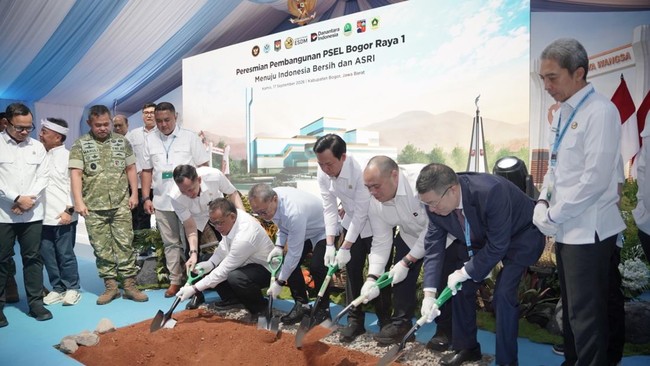
Danantara Indonesia, through PT Danantara Investment Management (DIM) and PT Daya Energi Bersih Nusantara (Denera), officially began construction of the PSEL Greater Bogor 1 facility in Galuga village, Cibungbulang district, Bogor regency, on Thursday, 17 September 2026.
PSEL Greater Bogor 1 is the third facility to enter the construction phase, following the projects in Greater Denpasar, Bali, and Bekasi City. Serving the Bogor regency and Bogor City urban area, the facility forms part of Danantara Indonesia’s efforts to speed up the development of sustainable, technology-based urban waste-management solutions, in line with Presidential Regulation No. 109 of 2025.
Danantara Indonesia chief investment officer Pandu Sjahrir said PSEL Greater Bogor 1 was designed to deliver tangible benefits for waste management, green energy development and the local economy.
“The project is expected to manage more than 500,000 tonnes of waste a year, reduce emissions from final disposal sites by up to 80 per cent and cut carbon emissions by around 640,000 tonnes of CO2 equivalent a year,” Pandu said on Thursday (17 September 2026).
Zulkifli Hasan, Indonesia’s coordinating minister for food affairs, said the waste problem was an emergency that had to be addressed. “Previously, around 160 regulations made the process complicated; now we have cut that number to just three. This will allow waste-to-energy projects to proceed more quickly and benefit the public,” he said.
PSEL Greater Bogor 1 is intended not only to provide an environmental solution but also to create sustainable economic value and new opportunities for the public, including around 1,200 green jobs. The project is designed to act as a catalyst for a sustainable waste-management ecosystem and help promote a circular economy.