
Three Volcanoes in North Maluku and NTT Erupt This Morning
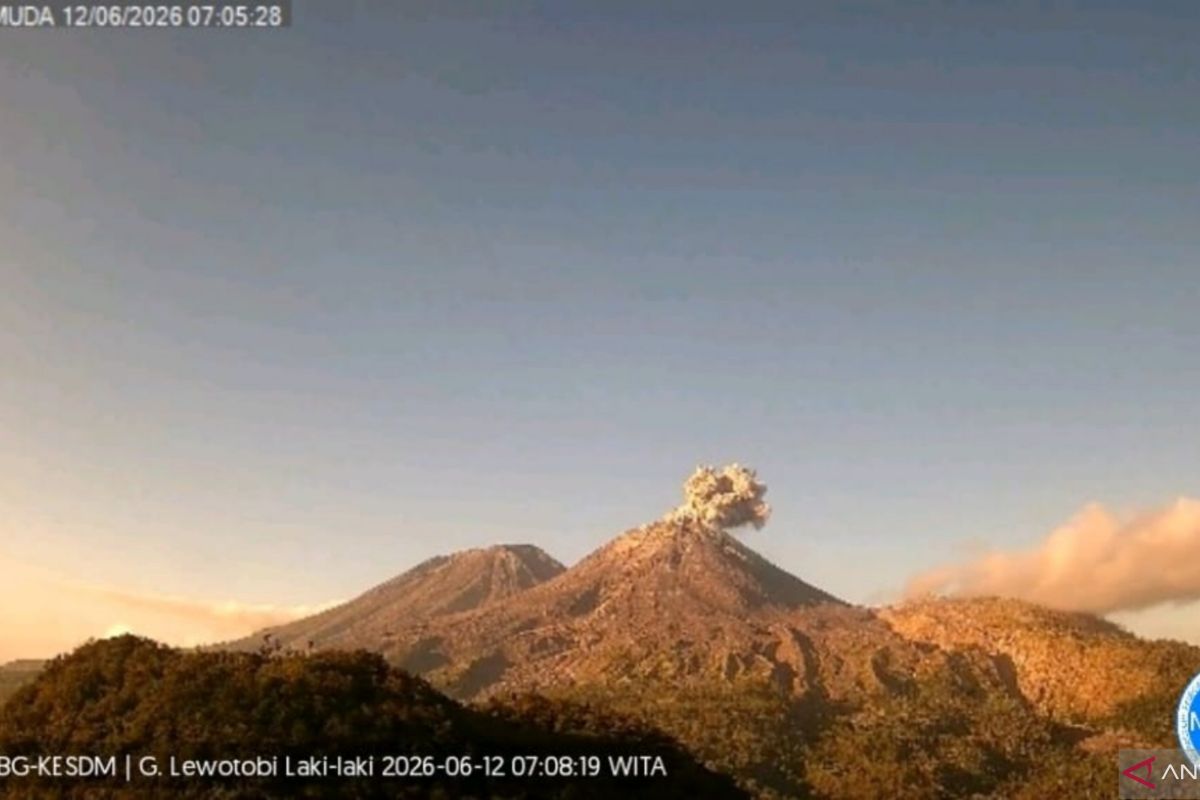
Three active volcanoes in eastern Indonesia—Mount Dukono and Mount Ibu in North Maluku, and Mount Lewotobi Laki-laki in East Nusa Tenggara (NTT)—erupted on Friday morning, according to the Geological Agency of the Ministry of Energy and Mineral Resources.
Acting Head of the Geological Agency Lana Saria stated in Jakarta on Friday that the volcanic activity occurred in close succession, with each eruption ejecting ash columns ranging from 400 to 500 metres above their respective craters.
The first eruption occurred at Mount Dukono in North Halmahera at 06:15 WIT, followed by Mount Lewotobi Laki-laki in East Flores at 07:04 WITA, and finally Mount Ibu in West Halmahera at 07:45 WIT.
Lana explained that Mount Dukono produced a thick white-to-grey ash column reaching 500 metres, drifting northwest, with a maximum seismogram amplitude of 12 millimetres. The eruption was reported to be ongoing.
Meanwhile, Mount Lewotobi Laki-laki ejected a grey ash column 400 metres high, moving west and northwest, with a recorded maximum amplitude of 47.3 millimetres over 46 seconds.
Mount Ibu recorded a thick grey ash column 400 metres high, directed west, with a maximum seismogram amplitude of 28 millimetres and a rumble duration of approximately 45 seconds.
Regarding activity status, the Geological Agency has placed Mount Lewotobi Laki-laki at Level III (Alert), while Mount Ibu and Mount Dukono are both at Level II (Advisory).
In line with the Alert status for Mount Lewotobi Laki-laki, Lana urged residents and tourists to comply with safety recommendations by not conducting any activities within a five-kilometre radius of the eruption centre.
The agency also warned communities at the foot of Mount Lewotobi Laki-laki, particularly in Dulipali, Klatanlo, and Hokeng Jaya, to be vigilant against the threat of cold lava floods along rivers originating from the peak during heavy rainfall.
For the areas around Mount Ibu and Mount Dukono, residents are advised to stay outside the respective safe radii of two to four kilometres and to always have eye protection and face masks ready to guard against volcanic ash exposure.