
Three Trade Ministry Programmes Boost Trade Performance in Cabinet’s First Two Years
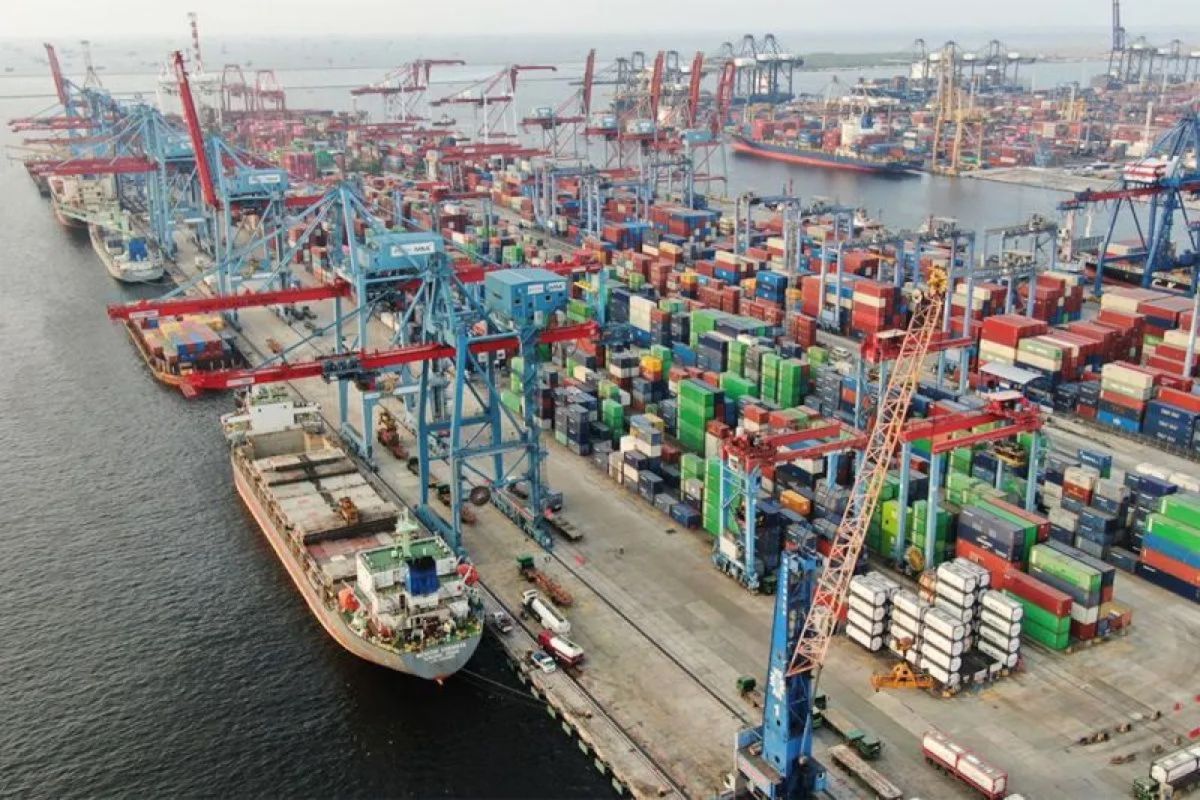
Jakarta (ANTARA) – The Ministry of Trade has pursued three priority programmes to boost trade performance: Protecting the Domestic Market, Expanding Export Markets and From Local to Global.
The programmes are intended to strengthen the domestic market, broaden export access and improve the competitiveness of local products.
“The Ministry of Trade continues to implement its three priority programmes, which have also delivered various positive results,” Trade Minister Budi Santoso said in a written statement in Jakarta on Monday, as part of an evaluation of the Red and White Cabinet’s first two years.
Santoso said Indonesia’s exports reached US$193.64 billion in January–August 2026. Manufacturing was the mainstay, contributing 82.40 per cent, or US$159.55 billion, of total exports.
Under the Protecting the Domestic Market programme, the ministry has worked with retail associations to increase the reach of local products through a national shopping programme. From January to October 2026, domestic products recorded Rp259.3 trillion in market penetration, while 6,383 small and medium-sized enterprises (SMEs) received assistance and support in establishing partnerships with modern retailers.
The ministry has also promoted local products through the GASPOL (Wear Local on Thursdays) movement and facilitated 4,100 barcodes to help SMEs enter modern retail networks.
To maintain price stability, the ministry monitors the prices of essential goods in 550 markets across 514 regencies and cities through the Market and Staple Goods Monitoring System (SP2KP). The daily data provides a basis for price interventions when necessary.
SME protections in online trade have been strengthened through Trade Ministerial Regulation No. 19 of 2026 on Trading Businesses through Electronic Systems (PMSE). Among other provisions, it requires platform recommendation systems to prioritise exposure for SME products.
Investigations into anti-dumping duties and safeguard duties also helped protect industry value worth a potential US$54.49 million between October 2024 and October 2026.
Under the Expanding Export Markets programme, the 41st Trade Expo Indonesia (TEI), held from 14 to 18 October 2026, recorded potential transactions of US$22.94 billion. Potential SME transactions rose to US$510.79 million, up from US$474.7 million the previous year.
The ministry has also automated the issuance of Certificates of Origin through e-SKA on the INATRADE application. The system has been implemented in 20 countries, including the United Arab Emirates.
Export and import deregulation has also been carried out through seven ministerial regulations on exports and three on imports, including measures to support greater competitiveness through downstream processing.
Efforts to address trade barriers in export destination countries helped preserve access to export markets worth US$64.1 million in January–September 2026 and US$437 million over the course of 2025.
The From Local to Global programme comprises four components. The first, SMEs Dare to Innovate and Adapt for Export (BISA Ekspor), facilitated 797 business-matching meetings with potential transactions worth US$361.55 million in January–September 2026. In 2025, 662 such meetings generated potential transactions of US$134.87 million.
The second component, Export-Ready Villages (Desa BISA Ekspor), has developed 787 villages into exporting villages. By September 2026, the ministry had also mapped 121 small and medium-sized industrial centres to promote exports of local products.
The third component, SME partnerships, helped 1,203 SMEs enter modern retail networks, including those operated by state-owned enterprises, between January and October 2026.
The fourth, Campuspreneur, has established 27 partnerships with universities to develop businesses run by members of the academic community and students. Campus businesses participating in the 41st TEI recorded potential transactions worth US$24.57 million.
“The government remains committed to improving domestic trade performance, boosting exports, increasing business operators’ capacity and strengthening the competitiveness of local products so they can compete globally,” Santoso said.