
Three Tiny Islands Could Determine the Fate of the US-Iran War
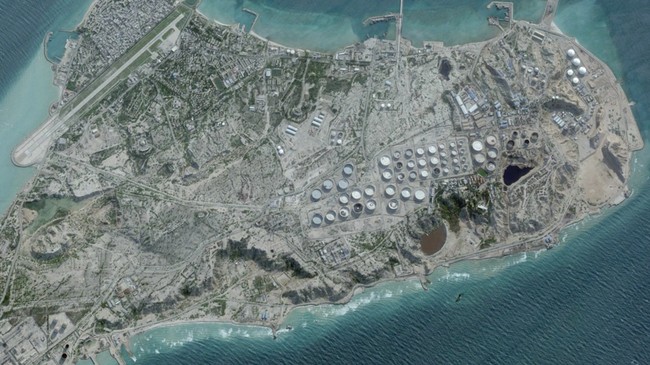
Three small Iranian islands at the mouth of the Strait of Hormuz are back in the spotlight after the US military struck two of them in the latest escalation of the conflict with Tehran. Though their combined area is only about 25 square kilometres, Abu Musa, Greater Tunb and Lesser Tunb hold a highly strategic position. They sit directly on the main shipping route of one of the world’s most critical energy chokepoints.
The islands have long served as an Iranian military base, allowing Tehran to monitor and control ship movements in the Strait of Hormuz, a waterway through which about a fifth of the world’s oil and natural gas trade passes in peacetime. The recent US military attacks on Abu Musa and Greater Tunb have reignited speculation about the future of the three rocky islands. The islands remain a disputed territory between Iran and the UAE, with Iran having seized them on 30 November 1971, just two days before the UAE was officially formed.
Despite their small size, the islands sit directly on the deep-water route used by vessels entering and exiting the Strait of Hormuz for the Persian Gulf. The largest, Abu Musa, houses a small village but primarily functions as a base for Iran’s Islamic Revolutionary Guard Corps (IRGC). Iran has deployed fast attack craft, missiles and air defence systems there, which have been used for years to harass international shipping. Greater Tunb also hosts air defence systems and military installations, while Lesser Tunb is inhabited solely by military personnel.
Iran has used the islands as a base of operations since the 1980s ‘Tanker War’, when the US Navy escorted oil tankers through the region under threat of Iranian attack. From these islands, Iran monitored activity in the Strait and launched vessels to lay mines or attack ships directly. US government data estimates Iran attacked more than 160 vessels during that conflict. In the current war, the Joint Maritime Information Centre, a coalition overseen by the US Navy, has recorded more than 50 attacks on ships and oil facilities.
In recent days, the US military struck Abu Musa and Greater Tunb as part of the escalating conflict, prompting speculation that Washington may consider a military operation to seize the islands. A Dubai-based columnist described Abu Musa as Iran’s ‘permanent aircraft carrier’, noting that together the islands act as a layered defence system over the world’s most critical energy chokepoint. While analysts believe the US has the military capability to capture the islands with Marines and airborne troops already in the region, holding them afterwards would be far more difficult. A Quincy Institute analyst warned that American forces would be highly vulnerable to Iranian ballistic missiles and drones, making protection a significant challenge even with naval air support.
In recent years, the UAE has successfully lobbied China and Russia to include language in joint statements supporting the resolution of the island dispute through negotiation or international courts, a move that angered Tehran. A UAE legal expert argued the world has misunderstood the issue, stating that what is called a bilateral territorial dispute is fundamentally a strategic claim over a global trade chokepoint. She added that managed ambiguity over such a critical waterway is not a neutral position but a choice with a cost, and the world is now receiving the bill. The UAE, which hosts US military bases and has been targeted by Iranian attacks during the war, is expected to try to reclaim the islands after the conflict ends.