
Three Sumatran elephant deaths raise conservation concerns in Aceh
The deaths came as Indonesia intensified efforts to preserve the Sumatran elephant, a subspecies found only on Sumatra and classified as critically endangered by the International Union for Conservation of Nature (IUCN).
The first case emerged Sunday, Aug. 9, when residents found a dead Sumatran elephant in an oil palm plantation in Kaloy Village, Tamiang Hulu Subdistrict, East Aceh District.
Teuku Irmansyah, head of Conservation Region I at the Aceh Natural Resources Conservation Agency, said officers immediately traveled to the site after receiving the report.
The carcass was found in Afdeling B, Block 34, according to local officials and conservation authorities. Kaloy Village Chief Andi said residents found the elephant lying on a road between oil palm trees around midday.
“The cause of death is not yet known,” Andi said, adding that he accompanied police officers to the site despite difficult road conditions.
Two days later, another death raised fresh concern among officials, this time involving Yuna, a young captive female Sumatran elephant less than 3 years old, who died Tuesday evening, Aug. 11, at the Saree Elephant Training Center in Aceh.
Aceh Conservation Agency Chief Ujang Wisnu Barata said a preliminary diagnosis pointed to Elephant Endotheliotropic Herpesvirus, or EEHV, a potentially fatal disease in young elephants.
Yuna had appeared active earlier Tuesday and showed no obvious signs of illness during routine observation. Around 4 p.m., her mahout found her weak, with swollen, reddened eyes, a swollen face and a pale bluish tongue.
Veterinarians from the Aceh conservation agency, assisted by mahouts, immediately provided emergency treatment, including intravenous fluids and multivitamins. But her condition deteriorated. She collapsed and died at 8:48 p.m., after which the medical team began a necropsy.
The necropsy and burial were completed around 12:30 a.m. Wednesday, ending a medical crisis that unfolded within only hours. Before her death, Yuna was monitored daily and received comprehensive health evaluations every three months, according to the conservation agency.
Her most recent examination, conducted in June, found her healthy, with a Body Condition Index score of 5.5. A score between 5 and 7 is considered ideal for captive elephants, according to the agency.
No signs of illness or physical deterioration had been detected during the two days before Yuna’s death, Ujang said. The speed of Yuna’s decline is consistent with the danger posed by EEHV, which can cause severe internal bleeding and sudden death.
The virus primarily threatens young elephants by attacking the endothelial lining of blood vessels, causing blood and fluid to leak into internal organs. In severe cases, resulting shock can become fatal within 24 to 48 hours.
Mortality among affected young elephants can reach 80 percent, according to conservation authorities. To reduce the risk of further infections, Aceh officials began screening other elephants younger than 14 years under their care.
“We are conducting medical testing and early detection of other young elephants, particularly Gerry, Yuyun and Dilan,” Ujang said.
The screenings aim to identify possible infections early and reduce the risk of the virus spreading among elephants under conservation management. But the deaths were not confined to captive elephants. On Friday, Aug. 14, another dead elephant was discovered in East Aceh.
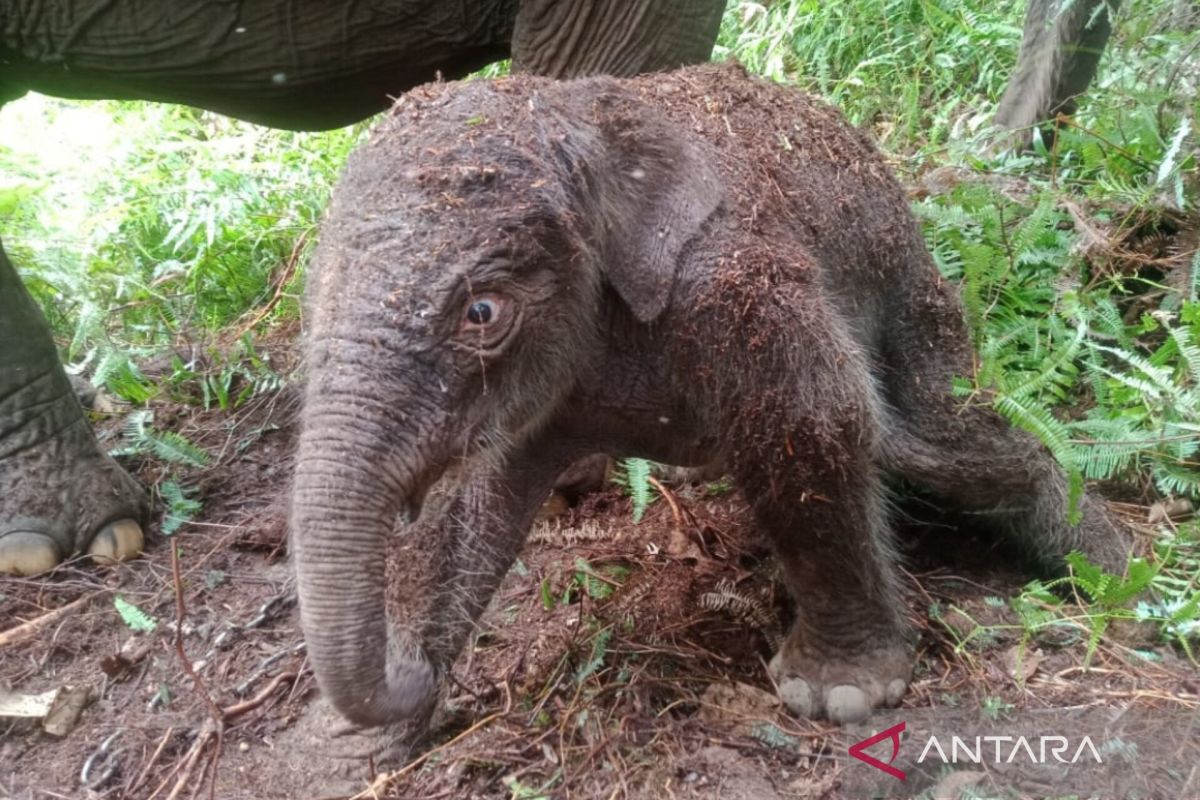
Premature Sumatran elephant calf
A premature Sumatran elephant calf was found at a former plantation concession in Seumanah Jaya Village, Ranto Peureulak Subdistrict, East Aceh.
Patrol officers found the calf lying on muddy ground, with its placenta still present, indicating a recent premature birth. Ujang said the initial assessment suggested the calf died during a natural birth or miscarriage in the wild.
“This was a birth or miscarriage in the wild,” he said, adding that the carcass would be handled under wildlife conservation procedures.
The third death raised another question, whether the first elephant, found at the Kaloy oil palm plantation, also died from natural causes. Aceh conservation officials deployed veterinarians to conduct a field necropsy to determine how the adult elephant died.
“We have not received the results, so we cannot determine the cause of death,” Ujang said. The agency will report its findings after laboratory and field examinations are completed.
The first carcass was discovered by a worker at an oil palm plantation operated by PT MPLI around noon on Aug. 9. The worker reported it to police, who notified the Aceh conservation agency, prompting a joint response involving authorities and the plantation operator.
Officials secured the site and conducted an initial examination of the protected animal. The male elephant had both tusks intact, and no visible wounds were found on the carcass, Ujang said.
The cause of death therefore remains unresolved pending necropsy results. For conservationists, the circumstances matter. A death in an agricultural landscape can raise questions about habitat fragmentation, human-wildlife conflict, disease and protection of remaining elephant corridors.
The Sumatran elephant is protected under Indonesian law and found only on Sumatra. The IUCN classifies the subspecies as critically endangered, the highest risk category before extinction in the wild. Critically endangered means the species faces an extremely high risk of extinction in the wild, according to the IUCN classification system.
Indonesia’s conservation authorities have urged communities to protect forests, avoid capturing or harming elephants, and refrain from activities that could threaten wildlife.
Authorities also warn against possessing, transporting or trading protected animals, whether alive or dead, and against using traps or poison that could kill them.
Violations involving protected wildlife can result in criminal penalties under Indonesian law, adding a legal dimension to the conservation chal