
Three Strategic Relevancies for the Establishment of Indonesia's International Financial Centre
The plan to establish the Indonesia International Financial Centre (IIFC) holds three key strategic relevancies: Indonesia’s strategic geo-economic position, the vast potential of its domestic market, and the ongoing momentum of capital market regulatory reforms under the Financial Services Authority (OJK) and Bappebti.
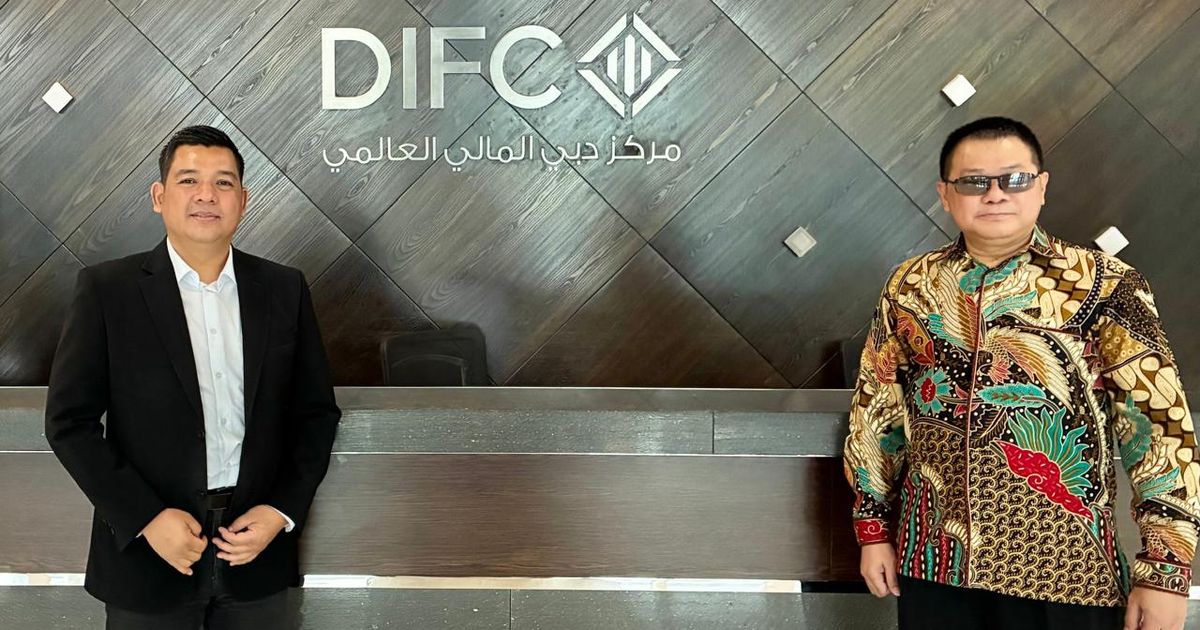
This was revealed by Indonesian economist and capital market expert, Lucky Bayu Purnomo, during a meeting with the Consul General of the Republic of Indonesia (KJRI) in Dubai, Denny Lesmana, last week. The meeting discussed the strategic direction for developing Indonesia’s international financial and investment centre.
During the discussion, Lucky Bayu Pumbomo presented an independent strategic view on the idea of forming the Indonesia International Financial Centre, with primary locations planned for Bali and Jakarta. “This initiative is designed as a strategic step for Indonesia to strengthen its position on the global financial stage, with the long-term target of being able to compete with established international financial centres such as Singapore and Dubai,” he stated.
Lucky explained that the formation of the IIFC would serve as a primary pillar to drive both national and international economic growth. The concept is supported by various strategic sectors and opportunities for cooperation that can be developed between Indonesia and Dubai. “Cross-sector collaboration, covering finance, trade, investment, and regional development, will strengthen the IIFC’s position as an economic catalyst for Indonesia within the global financial network,” he added.
Lucky emphasised two critical reasons for establishing the IIFC. First, global regulatory compliance: the incentive schemes are designed to align with the Global Minimum Tax (GMT) provisions for multinational corporations, ensuring no conflict with Indonesia’s international commitments. Second, the strategic objective of strengthening Indonesia’s competitive position in attracting global capital while transforming the national financial services sector towards international standards and scale.
He also shared views on capital market cooperation schemes to support investment programmes integrated with the implementation of the IIFC. According to him, synergy between capital market authorities, financial industry players, and international investment partners is a key element for the IIFC to operate in an integrated and sustainable manner. The presence of an international financial centre in Bali and Jakarta is seen as a catalyst for foreign direct investment, expanding the institutional investor base, and strengthening Indonesia’s connectivity with global capital hubs.
Responding to these views, the Indonesian Consul General in Dubai, Denny Lesmana, welcomed the ideas, noting that the visit would open space for strategic dialogue and diplomacy between Indonesia and Dubai. This is particularly relevant as Dubai has actively developed the Dubai International Financial Centre (DIFC), established in 2004.
According to Denny Lesmana, the economic scale and achievements of the DIFC can serve as a strategic benchmark and reference for Indonesia in designing the regulatory framework, institutional structure, and growth targets for the IIFC, while opening opportunities for further cooperation and knowledge exchange between the two nations in the finance and investment sectors.
From an economic value perspective, the achievements of the DIFC demonstrate significant scale. Based on official data from the Dubai government and DIFC, the number of active companies in the DIFC is projected to grow by 28% to 8,844 companies by 2025, with total combined revenue increasing by 20% to AED 2.13 billion, up from AED 1.78 billion in 2024. Net profit for the same period grew by 28% to AED 1.48 billion, from a previous AED 1.16 billion. In terms of wealth management, as of the end of 2024, 120 high-net-worth individuals (HNWI) within the DIFC ecosystem managed assets valued at more than USD 1.2 trillion. These figures confirm the DIFC’s position as one of the fastest-growing and highest-value financial centres in the world.
Source: jawawa.id (https://jawawa.id/newsitem/three-strategic-relevancies-for-the-establishment-of-indonesias-international-financial-centre-1785642705)
Originally published by investortrust.id (https://investortrust.id/financial/111458/ada-3-relevansi-strategis-pendirian-pusat-finansial-internasional-indonesia), translated from Indonesian