
Three Stages of Constitutional Court Rulings Transform the Face of Indonesia's Insurance Industry
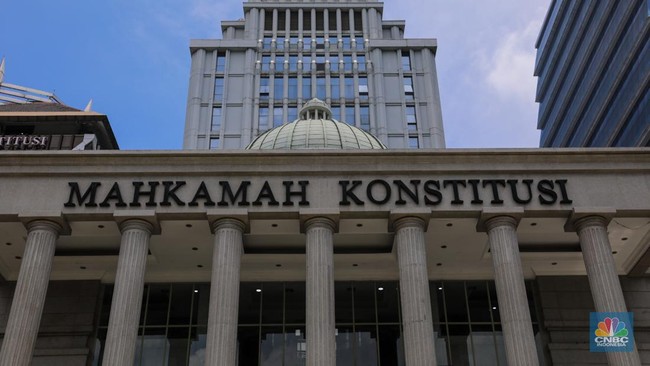
The relationship between insurance companies and policyholders has entered a new era. While disputes between insurers and policyholders previously centred on claim payments, the focus has now shifted to substantial issues regarding insurance contracts.
Through three separate lawsuits brought before the Constitutional Court (MK) between 2023 and 2026, the cases under review concerned the contractual relationship in insurance, specifically regarding utmost good faith, the cancellation of coverage, and the clarity of claim conditions.
This series of cases is notable for its gradual progression. In 2023, a client challenged Article 251 of the Indonesian Commercial Code (KUHD), which has long served as a fundamental basis for the principle of utmost good faith. That petition was declared inadmissible.
Two years later, a similar lawsuit was filed against the same article. On this occasion, the Constitutional Court declared the norm in Article 251 of the KUHD conditionally unconstitutional and provided a new interpretation regarding the mechanism for cancelling coverage.
Most recently, in September 202lar, the Constitutional Court further altered the legal construction of insurance policies through Decision Number 25/PUU-XXIV/2026. The Court ruled that claim conditions agreed upon from the outset must be explicitly integrated into the policy.
This progression demonstrates that insurance issues in the Constitutional Court are no longer merely about who pays a claim. The issue has evolved into how clearly the rights and obligations of all parties have been agreed upon from the start of the contract.
Stage I: Policyholders Challenge the Principle of Utmost Good Faith
This journey traces back to Case Number 52/PUU-XXI/2023, filed by Leonardo Siahaan. Siahaan challenged Article 251 of the KUHD against the 1945 Constitution. The article essentially stipulates that incorrect or untrue notifications, or the concealment of facts known by the insured—even if done in good faith—may render an insurance agreement void if such information is so significant that the insurer would not have entered into the agreement, or would not have done so under the same terms, had the true circumstances been known.
This raised fundamental questions regarding the principle of utmost good and good faith. In insurance contracts, the insured is required to disclose material facts regarding the risks to be insured. Conversely, insurance companies, as the insurers, have a responsibility to perform risk assessments and draft contracts based on the available information.
The core problem arises during claim disputes: to what extent can information be considered material, who determines that materiality, and does the concealment of information automatically lead to the voiding of a policy?
Leonardo’s case was significant because it brought these issues into the constitutional realm. However, on 27 June 2023, the Constitutional Court declared the petition inadmissible.
Consequently, in this specific case, the Court did not yet alter the substance of Article 251 of the KUHD. This means the 2023 ruling was not a substantive victory or defeat for either party regarding the validity of the utmost good faith principle. The Court’s decision was limited to the admissibility of the petition and did not change the norm of Article 251.
Nevertheless, the case served as an early warning that Article 251 of the KUHD had the potential to become a source of dispute between policyholders and insurance companies.
Stage II: The Meaning of Article 251 of the KUHD is Finally Altered
This issue resurfaced in Case Number 83/PUU-XXII/2024, filed by Maribati Duha. This time, the dispute became much more concrete. The petitioner held interests in a life insurance policy and questioned the use of Article 251 of the KUHD in the context of paying insurance benefits.
During the proceedings, the emerging issue was not only about utmost good faith but also about the mechanism for cancelling insurance agreements.
The primary question was whether an insurance company can immediately declare coverage void if there is incorrect information or undisclosed facts by the insured.
The Constitutional Court provided an answer that differed from the previous legal position. On 3 January 2025, through Decision Number 83/PUU-XXII/2024, the Court declared Article 251 of the KUHD conditionally unconstitutional. The Court interpreted that the cancellation of coverage must be based on an agreement between the insurer and the insured, subject to a court decision.
The Court assessed that the previous norm in Article 251 of the KUHD had the potential to lead to diverse interpretations, particularly when there were allegations of concealed facts by the insured.
According to the Court’s considerations, the previous norm did not clearly regulate the mechanism for cancellation in the event of incorrect or concealed information. The norm only determined the consequence but did not provide a definitive procedure for the cancellation process.
This marked a significant turning point. Article 251 of the KUHD can no longer be read solely as a basis for declaring coverage void; it must now be placed within a legal mechanism that provides certainty for both parties.
The Court also emphasised the need for protection and fair legal certainty in insurance agreements. However, it is important to note that the Court’s decision does not mean the principle of utmost good faith is being removed from the insurance industry. On the contrary, the principle of good faith remains the foundation of the contractual relationship.
What has changed is the consequence and the mechanism when disputes arise regarding the information provided by the insured. Thus, insurance companies still have an interest in obtaining true and complete information during the underwriting process.
However, when a company determines that material information has not been disclosed, the matter does not end with the company’s internal decision to void the policy. The company must now face a more robust mechanism of proof and dispute resolution.
For the industry, the consequences are substantial. The underwriting process becomes increasingly critical, as the quality of information at the time of issuance…
Source: jawawa.id (https://jawawa.id/newsitem/three-stages-of-constitutional-court-rulings-transform-the-face-of-indonesias-insurance-industry-1789721645)
Originally published by CNBC Indonesia (https://www.cnbcindonesia.com/research/20260918132453-128-769015/3-babak-putusan-mk-ubah-wajah-industri-asuransi-ri), translated from Indonesian