
Three Scenarios and Potential 'Success' of the Trump-Xi Jinping Summit in the US
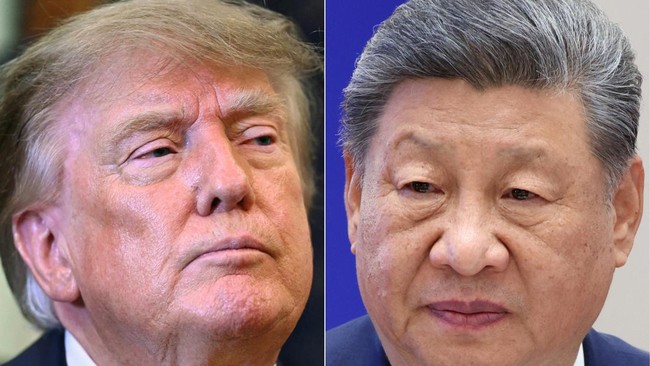
Four months after meeting in Beijing, President Donald Trump and President Xi Jinping are set to face each other again in Washington from 23-25 September. Relations between the United States and the People’s Republic of China have become calmer, but the results of the Beijing meeting have not been fully implemented.
The Beijing summit produced ideas regarding constructive strategic stability, a Board of Trade, and a Board of Investment, alongside commitments to purchase agricultural products and at least 200 Boeing aircraft. However, implementation has lagged. Boeing orders have not fully transitioned into contracts, agricultural purchases are progressing slowly, and the supply of rare earths remains uncertain.
Ahead of the Washington meeting, US Treasury Secretary Scott Bessent and USTR Jamieson Greer have met with Chinese Vice Premier He Lifeng. They discussed the Board of Trade and the possibility of a notification mechanism in the event of AI incidents impacting national security. However, there are no signs that issues regarding tariffs, rare earths, Boeing, and agricultural products have been resolved at the ministerial level.
This means ministers are merely setting the table. Trump and Xi must still determine for themselves what can be exchanged. The primary question is no longer whether stability can be maintained, but how much economic certainty Xi is willing to provide, and how much geopolitical ambiguity—particularly regarding Taiwan—Trump can accept in return.
Positive Scenario: A Tangible Transactional Package
The best realistic outcome would be a transactional package. Not a grand bargain, nor the end of strategic rivalry, but something concrete enough to reduce some costs and risks.
A tariff truce ending on 10 November could be extended for at least one year. Both nations could reduce tariffs on non-strategic goods with a trade value of approximately US$30 billion. China could increase agricultural purchases and confirm Boeing orders, while the US provides limited concessions in sectors not deemed strategic.
The most critical part for Washington remains rare earths. A promise to improve supply is insufficient. Success must be evidenced by licences that can be used for more than one shipment, broader access for verified civilian users, more transparent approval criteria, and, most importantly, the restoration of export flows. There must also be a consultation mechanism in case shipments are disrupted again. Without this, China’s concessions could be reversed at any time.
The package could be supplemented by actions against fentanyl precursors and the establishment of an AI dialogue. However, the greatest obstacle remains Taiwan. Xi is unlikely to offer high-value economic concessions without discussing US arms sales and deliveries to Taiwan. Trump, conversely, cannot appear to trade Taiwan’s security for trade transactions.
I place the probability of this scenario at around 30 per cent. Not because an economic deal is impossible, but because Taiwan could limit the bargaining space for both leaders.
Baseline Scenario: Fragile Stability
A more likely outcome is an agreement large enough to be announced as a success, but not detailed enough to eliminate sources of dispute.
A tariff truce is extended. An AI dialogue is announced, but details are left to technical officials. The Board of Trade begins working without a fully agreed-upon product list. China accelerates some rare earth licences but maintains control over scope, duration, and recipients. Boeing and agricultural products are mentioned again, while implementation is left loose enough to be renegotiated.
Such a result suits Xi’s interests. He requires stability in relations and trade but has no interest in providing full certainty regarding rare earths. Uncertainty itself holds strategic value. Xi wants more stable relations while maintaining optionality over pressure instruments.
Trump also has his own needs. The summit takes place weeks before Congressional elections. He needs quick results that are easy to explain to voters: Boeing purchases, agricultural products, tariff reductions, or improved critical mineral supplies. However, he must also avoid appearing weak towards China. Therefore, large-scale transactions in terms of figures may be more attractive to him than complex implementation mechanisms.
Beyond economics, the Iran War could be a significant part of the transaction. Trump needs Beijing’s help to pressure Tehran, maintain the Strait of Hormuz, and stabilise oil prices. Xi could offer mediation or limited economic influence, but will not act as the executor of Washington’s strategy. Ukraine will also be discussed, though the room for compromise is smaller. The US wants China to pressure Moscow, while Beijing will not sacrifice its strategic relationship with Russia. In both wars, the likely outcome is merely risk management.
Taiwan remains managed through ambiguity. Xi pressures Trump to reduce arms sales, while Trump withholds a final decision, maintaining it as a bargaining chip.
In my view, this is the most likely outcome, with a probability of around 55 per cent. However, most likely does not mean most stable. US companies may again complain about rare earth shipments. Beijing may accuse Washington of being slow to reduce tariffs or grant technology concessions, while Boeing and agricultural orders do not proceed as expected. The Board of Trade may host these complaints, but it is not certain it can resolve them.
The summit will look successful on the day of its announcement. A few months later, that success may begin to unravel.
Negative Scenario: Taiwan Undermines the Economic Package
The final possibility is a state visit that…
Source: jawawa.id (https://jawawa.id/newsitem/three-scenarios-and-potential-success-of-the-trump-xi-jinping-summit-in-the-us-1790135603)
Originally published by CNBC Indonesia (https://www.cnbcindonesia.com/opini/20260923092210-14-770100/ini-3-skenario-potensi-keberhasilan-ktt-trump-xi-jinping-di-as), translated from Indonesian