
Three Paradoxes of Natural Wealth: The Unfinished Business of Reform
Whenever we discuss natural wealth, we return to a sentence in the Constitution: the land, waters and natural resources contained within them are controlled by the state and used for the greatest prosperity of the people. Article 33, paragraph 3 of the 1945 Constitution was drafted by the nation’s founders in response to the bitter experience of colonialism, when foreign capital controlled the country’s land, forests and mines, while Indonesians were reduced to labourers in their own country.
Twenty-eight years after Reformasi, that sentence still feels more like an aspiration than a reality. Reformasi changed the way we elect our leaders, but has done little to change how the state manages energy, forests and industry. In my view, three paradoxes explain why this unfinished business remains unresolved.
First paradox: green promises, coal-fired electricity
Indonesia ratified the Paris Agreement through Law No. 16 of 2016. The government has pledged to achieve net zero emissions by 2060 and set a target for the forestry and land-use sector to absorb more carbon than it emits by 2030. At international forums, Indonesia presents itself as a country serious about tackling the climate crisis.
At home, however, our electricity still relies heavily on coal, which remains one of the country’s main sources of foreign-exchange revenue. The Just Energy Transition Partnership, announced at the G20 Summit in Bali in 2022, promised international funding to accelerate the shift to renewable energy. But implementation has been slow, and most of the funding takes the form of loans rather than grants. Developed countries, which spent two centuries burning coal to build their industries, are now asking developing countries to stop, while offering debt as the way forward.
This paradox will not be resolved by adding more commitment documents. It requires clear political and legal decisions: how much longer coal-fired power plants will remain in operation, who will bear the cost of the transition, and what will happen to workers and regions dependent on mining. Without those decisions, our green promises will continue to be powered by dirty electricity.
Second paradox: downstreaming under the shadow of a lawsuit
For decades, Indonesia exported its natural resources in raw form: timber, mineral ore, crude palm oil and coal. Other countries captured the added value. The downstreaming policy, implemented in part through the ban on exports of unprocessed ore under Law No. 4 of 2009 on Mineral and Coal Mining and its amendments, is an effort to break that pattern.
That effort immediately ran up against the global trading system. When Indonesia banned nickel ore exports in 2020, the European Union challenged the measure at the World Trade Organization. A panel ruled in the EU’s favour in late 2022, and Indonesia’s appeal remains pending because the Appellate Body is paralysed. Ha-Joon Chang calls this phenomenon “kicking away the ladder”: developed countries that once built their industries through protection and restrictions on raw-material exports now prevent developing countries from following the same path (Chang, 2002).
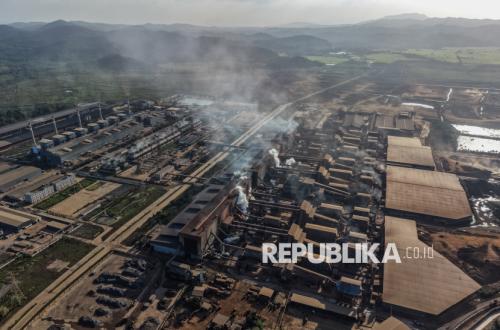
But this paradox has another, equally important side. Downstreaming that merely relocates processing to Indonesia, while capital, technology and even labour continue to come from abroad, does not automatically bring prosperity to the people. If processing zones leave polluted rivers, cleared forests and displaced local communities in their wake, we have simply replaced one form of exploitation with another. Downstreaming must be measured not only by export figures, but also by the nation’s command of technology and the wellbeing of people living near industrial sites.
This is where the law becomes decisive. Requirements for technology transfer, partnerships with domestic businesses, local employment and rigorously enforced environmental standards must be integral to every processing permit. Otherwise, downstreaming will be a new name for the old pattern: wealth is extracted from beneath our soil, while the profits flow elsewhere.
Third paradox: democracy controlled by a few
Reformasi promised democracy, and democracy promised that power would rest in the hands of the people. In reality, natural-resource policies are often produced through rushed processes with little public participation. Why?
Jeffrey Winters offers a persuasive explanation. In his view, democratisation in Indonesia did not eliminate oligarchy; it changed its form. Under the New Order, oligarchs depended on a single patron at the apex of power. In the Reformasi era, they compete in elections, fund parties and candidates, and then secure their interests through channels that appear democratic (Winters, 2011). Vedi R. Hadiz and Richard Robison reach a similar conclusion: forces that grew under the New Order successfully reorganised themselves and took control of the new democratic institutions (Hadiz and Robison, 2013).
This oligarchy is not merely a moral issue; it is an economic one too. Growth controlled by a handful of concession and permit holders generates rents rather than innovation. This is one reason Indonesia has struggled to escape the middle-income trap: the condition in which a country reaches middle-income status but fails to progress to high-income status (Gill and Kharas, 2007).
The oligarchic imprint can be seen in how natural-resource laws are made. Amendments to the Mineral and Coal Mining Law in 2020 were debated in a short period, during the pandemic, when opportunities for public participation were severely limited. The Job Creation Law was drafted using an omnibus method that amended dozens of laws at once. The Constitutional Court declared it conditionally unconstitutional due to formal defects, including a lack of meaningful public participation. This pattern is no accident. When the interests of a small number of investors converge with political interests, the speed of legislation takes precedence over its quality and fairness.
Source: jawawa.id (https://jawawa.id/newsitem/three-paradoxes-of-natural-wealth-the-unfinished-business-of-reform-1794293457)
Originally published by Republika (https://opini.republika.co.id/berita/to9wgj415/tiga-paradoks-kekayaan-alam-pekerjaan-rumah-reformasi-yang-belum-selesai), translated from Indonesian