
Three Muhammadiyah Cadres Challenge Isbat Session for Determining Ramadan and Eid al-Fitr Start Dates at Constitutional Court
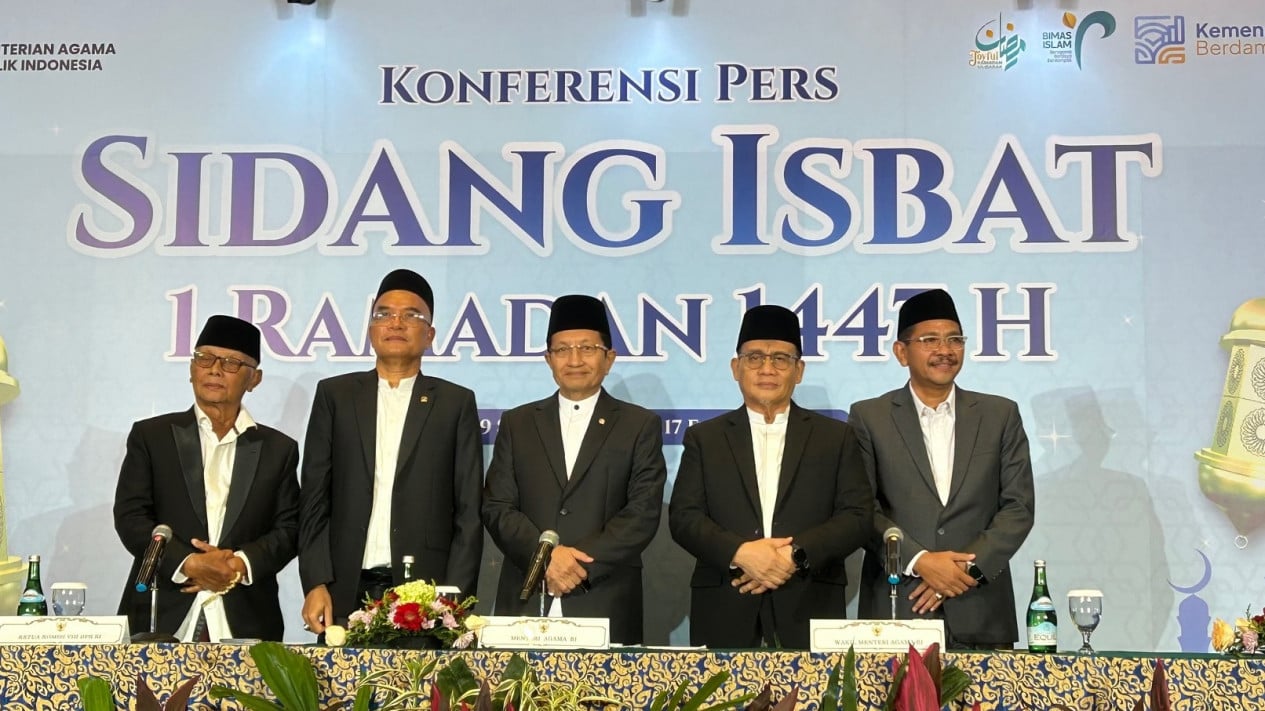
The Constitutional Court (MK) held a preliminary hearing on Tuesday, 9 June 2026, to review the material content of the Religious Court Law concerning the official determination (isbat) of the start and end of Ramadan.
The preliminary hearing for the judicial review of Law Number 3 of 2006, which amends Law Number 7 of 1989 concerning the Religious Court, took place in the plenary courtroom of Building I of the Constitutional Court in Jakarta.
The petition regarding the Religious Court Law’s provisions on the determination of the start and end of Ramadan was filed by Andri Sumarna, Muhammad Fajri Nur Rizky, and Rozak Daud.
The three Muhammadiyah members are challenging Article 52A and its explanation within the Religious Court Law, which they claim contradicts the 1945 Constitution.
Article 52A of the Religious Court Law states, “The religious court provides isbat for the testimony of rukyat hilal in determining the beginning of months in the Hijri year.”
The explanation for Article 5sebA of the Religious Court Law states, “To date, religious courts have been requested by the Minister of Religious Affairs to provide a determination (isbat) regarding the testimony of individuals who have seen or witnessed the hilal at the start of Ramadan and the beginning of the month of Syawal in the Hijri year, as part of the Minister of Religious Affairs issuing a national determination for 1 Ramadan and 1 Syawal. Religious courts may also provide information or advice regarding differences in determining the qibla direction and prayer times.”
According to the petitioners, the enforcement of Article 52A and its explanation has caused constitutional loss to those who rely on the ‘hisab’ method to determine the start of Hijri months, including 1 Ramadan, 1 Syawal, and other days of worship.
This loss is believed to arise because the explanation of the norm in question grants the Minister of Religious Affairs the authority to establish the start of the Hijri months nationally, specifically 1 Ramadan and 1 Syawal, through the mechanism of isbat for rukyat hilal testimony. The Minister of Religious Affairs then uses this isbat as the basis for declaring religious holidays nationally.
The petitioners argue that the construction and interpretation of this norm cause the ‘rukyat hilal’ method to gain a status as a method officially recognised by the state and recognised as a national determination, whereas the ‘hisab’ method, which is believed and used by the petitioners, does not receive equal recognition.
Source: jawawa.id (https://jawawa.id/newsitem/three-muhammadiyah-cadres-challenge-isbat-session-for-determining-ramadan-and-eid-al-fitr-start-dates-at-1781041856)
Originally published by VIVA.co.id (https://www.viva.co.id/berita/nasional/1904736-tiga-kader-muhammadiyah-gugat-soal-sidang-isbat-penentuan-awal-ramadhan-dan-idul-fitri-ke-mk), translated from Indonesian